

Thursday, July 9, 2026
Science
No Result
View All Result
  • Login
  • HOME
  • SCIENCE NEWS
  • CONTACT US
  • HOME
  • SCIENCE NEWS
  • CONTACT US
No Result
View All Result
Scienmag
No Result
View All Result
Home Science News Policy

Study Finds 50 Million Americans Lack Access to Radiation Oncology Clinics

July 9, 2026
in Policy
Reading Time: 2 mins read
0
Study Finds 50 Million Americans Lack Access to Radiation Oncology Clinics

Study Finds 50 Million Americans Lack Access to Radiation Oncology Clinics

65
SHARES
587
VIEWS
Share on FacebookShare on Twitter
ADVERTISEMENT

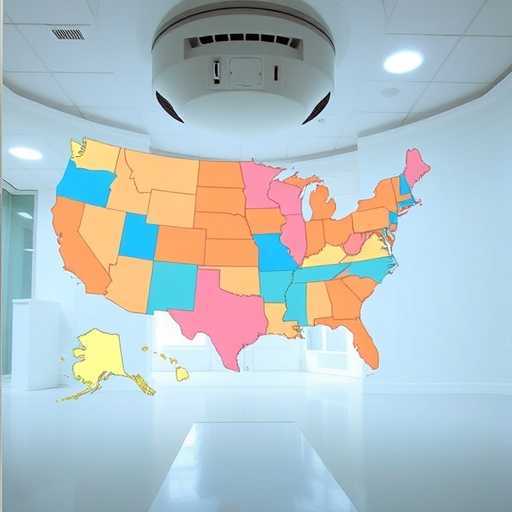
A groundbreaking study published in the International Journal of Radiation Oncology • Biology • Physics reveals a troubling decline in the availability of radiation oncology treatment sites across the United States, with over 50 million Americans now residing in counties without access to these vital cancer care facilities. The research, led by Dr. Kunal K. Sindhu and colleagues, presents a comprehensive county-level analysis of the net change in radiation oncology practice sites between 2018 and 2025, highlighting a disproportionate loss in rural and community-based environments.

Radiation therapy is a cornerstone in oncologic treatment, utilized in more than half of all cancer cases. The therapy typically requires patients to attend multiple sessions over an extended period, making geographic accessibility a critical factor in treatment adherence and outcomes. The study’s findings underscore the severe disparity in care access: while urban areas that lost facilities often maintained multiple alternatives, rural counties frequently faced the complete loss of local radiation treatment options.

The analysis quantified that 68.5% of U.S. counties lacked a radiation oncology site by 2025, affecting approximately 50.8 million people. Furthermore, 427 counties experienced a net site loss during the study period. Statistical modeling revealed rural practice sites had a 44% higher likelihood of closure than their urban counterparts, and freestanding, community-based centers were 56% more likely to shutter compared to hospital-affiliated facilities. These vulnerabilities manifest against a backdrop of socioeconomic challenges; counties without radiation oncology access typically report lower median incomes, higher uninsured rates, and fewer primary care physicians per capita.

Exacerbating the crisis are the steep Medicare reimbursement cuts implemented in 2026, which were not reflected in the current data but threaten to deepen the financial instability of community-based practices. The payment reductions jeopardize the sustainability of freestanding oncology centers, force closures, and further restrict cancer treatment access in already underserved areas. This financial pressure underscores the urgent necessity for targeted policy intervention to stabilize and safeguard oncology infrastructure.

Experts emphasize that these closures carry profound consequences beyond mere inconvenience. Previous research correlates increased distance to radiation therapy facilities with elevated cancer mortality, signifying that diminished local access translates directly into poorer patient survival rates. “When a rural community loses a radiation oncology clinic, patients may lose local access entirely, compounding hardship during an already difficult diagnosis,” said Dr. Sindhu.

ASTRO, the American Society for Radiation Oncology, is advocating for reform through legislative proposals such as the Radiation Oncology Case Rate (ROCR) Act, which aims to shift Medicare reimbursement toward a patient-centered, episode-based payment system. Such reforms seek to mitigate financial strain on clinics, particularly in vulnerable rural and community settings, aiming to preserve critical access for patients nationwide.

The study not only documents the ongoing erosion of the United States’ radiation oncology delivery system but also serves as a clarion call for systemic change. Without urgent policy solutions, cancer patients in rural and economically disadvantaged areas risk losing life-saving therapy, underscoring the intersection of healthcare access, socioeconomic inequity, and health outcomes in modern oncology.


Subject of Research: Structural Vulnerability in Radiation Oncology Access in the U.S.
Article Title: Structural Vulnerability in the United States Radiation Oncology Delivery System: Predictors and Consequences of Practice Site Disappearance
News Publication Date: July 9, 2026
Web References: https://www.redjournal.org/article/S0360-3016(26)03986-6/fulltext
Image Credits: International Journal of Radiation Oncology • Biology • Physics (Red Journal)
Keywords: Radiation therapy, cancer treatment access, healthcare disparities, rural health, oncology practice closures, Medicare reimbursement, healthcare policy

Tags: barriers to cancer treatment in underserved communitiescounty-level analysis of radiation therapy site lossdecline of radiation oncology clinics from 2018 to 2025disparities in oncology care infrastructureeffects of healthcare facility closures on rural populationsgeographic distribution of radiation treatment facilities in the UShealthcare access inequality in cancer careimpact ofimpact of radiation therapy availability on cancer treatment outcomesimportance of radiation therapy in cancer managementpolicy implications for expanding radiation oncology servicesRadiation oncology access disparity in rural America
Share26Tweet16
Previous Post

Center for BrainHealth Appoints Dr. Sexton to Lead Global Brain Health Initiatives

Next Post

Link Between Smell Loss and Depression Revealed

Related Posts

Study Questions Accuracy of AI Health Predictions from Unreliable Data
Policy

Study Questions Accuracy of AI Health Predictions from Unreliable Data

July 9, 2026
Public Universities Lead in Scientific Output, IUNE 2026 Reports
Policy

Public Universities Lead in Scientific Output, IUNE 2026 Reports

July 9, 2026
Cutting Vehicle Emissions Could Save Thousands of Canadian Lives
Policy

Cutting Vehicle Emissions Could Save Thousands of Canadian Lives

July 8, 2026
Sister Projects Urge Stronger EU Measures to Save Europe’s Wetlands
Policy

Sister Projects Urge Stronger EU Measures to Save Europe’s Wetlands

July 8, 2026
Korea University and UNIST chosen for K-MediST health program
Policy

Korea University and UNIST chosen for K-MediST health program

July 6, 2026
At DFG annual gathering, researchers rally to safeguard scientific freedom—and deliver a blistering rebuke to AfD’s research agenda
Policy

At DFG annual gathering, researchers rally to safeguard scientific freedom—and deliver a blistering rebuke to AfD’s research agenda

July 6, 2026
Next Post
Link Between Smell Loss and Depression Revealed

Link Between Smell Loss and Depression Revealed

  • Mothers who receive childcare support from maternal grandparents show more

    Mothers who receive childcare support from maternal grandparents show more parental warmth, finds NTU Singapore study

    27656 shares
    Share 11059 Tweet 6912
  • University of Seville Breaks 120-Year-Old Mystery, Revises a Key Einstein Concept

    1061 shares
    Share 424 Tweet 265
  • Bee body mass, pathogens and local climate influence heat tolerance

    682 shares
    Share 273 Tweet 171
  • Researchers record first-ever images and data of a shark experiencing a boat strike

    546 shares
    Share 218 Tweet 137
  • Groundbreaking Clinical Trial Reveals Lubiprostone Enhances Kidney Function

    531 shares
    Share 212 Tweet 133
Science

Embark on a thrilling journey of discovery with Scienmag.com—your ultimate source for cutting-edge breakthroughs. Immerse yourself in a world where curiosity knows no limits and tomorrow’s possibilities become today’s reality!

RECENT NEWS

  • Uncovering the Mysterious Presence Within Orion’s Nebula Shell
  • Study Explores AI-Powered Personal Training Effectiveness
  • Unraveling the Epigenome Behind Leukemia Diversity
  • New high-throughput method accelerates catalyst and reaction discovery

Categories

  • Agriculture
  • Anthropology
  • Archaeology
  • Athmospheric
  • Biology
  • Biotechnology
  • Blog
  • Bussines
  • Cancer
  • Chemistry
  • Climate
  • Earth Science
  • Editorial Policy
  • Marine
  • Mathematics
  • Medicine
  • Pediatry
  • Policy
  • Psychology & Psychiatry
  • Science Education
  • Social Science
  • Space
  • Technology and Engineering

Subscribe to Blog via Email

Enter your email address to subscribe to this blog and receive notifications of new posts by email.

Join 5,146 other subscribers

© 2025 Scienmag - Science Magazine

Welcome Back!

Login to your account below

Forgotten Password?

Retrieve your password

Please enter your username or email address to reset your password.

Log In
No Result
View All Result
  • HOME
  • SCIENCE NEWS
  • CONTACT US

© 2025 Scienmag - Science Magazine

Discover more from Science

Subscribe now to keep reading and get access to the full archive.

Continue reading
