


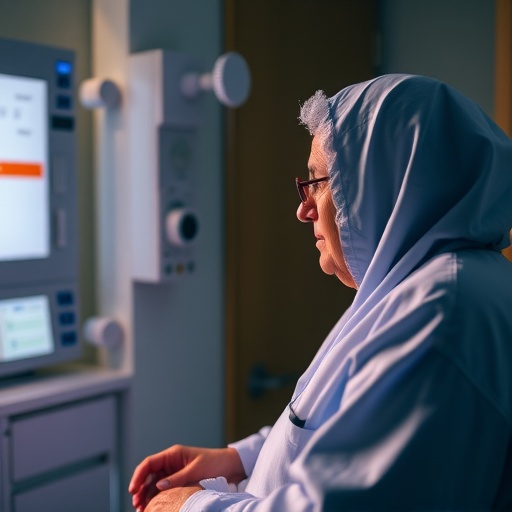
A large retrospective study of older adults in Turkey has identified a striking set of factors associated with returning to the emergency department within 30 days of discharge, including previous hospital use, specialist outpatient care and access to home healthcare. The analysis, based on electronic records from 36,205 patients aged 65 and older who revisited the emergency department of a public training and research hospital, suggests that emergency visits are shaped not only by acute illness but also by how care is organized after patients leave the hospital. Patients who had visited the hospital during the preceding 30 days were 37 per cent more likely to return, while those who received home healthcare were 65 per cent less likely to do so. The findings, published in Ageing International, point to continuity of care as a potentially important influence on repeated emergency use among older people.
Emergency department revisits are closely watched by health systems because they can signal unresolved symptoms, complications, difficulties with medication or inadequate discharge planning. For older adults, the risks are amplified by multimorbidity, frailty, impaired mobility, cognitive decline and the presence of several clinicians prescribing or adjusting treatments. A return visit is not automatically evidence that an earlier decision was wrong: some conditions evolve after discharge, and some patients appropriately seek urgent help when symptoms worsen. Nevertheless, repeated emergency use can expose patients to long waits, diagnostic testing, hospital-acquired infections and disruptions to regular care, while also contributing to crowding and resource pressure. The Turkish study focused on a 30-day window after an “index” emergency visit—the initial encounter from which a later return was measured—allowing the researchers to examine patterns of early reuse.
The investigators, Şirin Özkan of Uludag University, Ahmet Kar of Kırıkkale University and Yusuf Çelik of Acibadem Mehmet Ali Aydinlar University, used routinely collected electronic health records rather than following participants prospectively. Patients were classified as revisiting if they returned to the emergency department within 30 days after being discharged from their index visit. The researchers first summarized patient and service-use characteristics, then applied binary logistic regression to estimate how selected factors were associated with the odds of a revisit. Logistic regression is commonly used when an outcome has two categories—here, return or no return—and calculates the relationship between explanatory variables and that outcome while considering several predictors in the same model. The design can reveal associations in a large real-world population, but it cannot establish that any single service directly caused a return or prevented one.
One of the clearest signals involved triage status and hospital admission. Emergency triage systems sort patients according to urgency, often using colour-coded categories. A red tag generally denotes an immediate or life-threatening priority, whereas yellow indicates an urgent but less immediately critical condition. In the study, patients assigned a red triage tag were more than six times as likely to be hospitalized as those assigned a yellow tag. This result is clinically intuitive: the triage colour reflects the severity observed at presentation, and patients judged to be at highest risk are more likely to require inpatient monitoring or treatment. It also shows why revisit statistics should not be interpreted without considering illness severity. A population containing many high-acuity patients may have very different return patterns from one dominated by less urgent cases, even if both hospitals use the same 30-day measure.
The association with recent hospital use was more unexpected in its scale and potentially more revealing about the structure of care. Older patients who had visited the hospital within the previous 30 days had a 37 per cent higher likelihood of returning to the emergency department. A recent encounter may indicate unstable chronic disease, a new diagnosis, incomplete recovery or a complex treatment plan. It may also identify people who lack timely access to primary care or who move repeatedly between outpatient clinics and emergency services when symptoms are difficult to manage. The study does not show which of these explanations predominated, nor does it demonstrate that the earlier visit caused the later one. Still, the finding supports the idea that a recent hospital contact can act as a marker for vulnerability and a need for more structured follow-up after discharge.
Use of several outpatient specialties was also associated with greater revisit likelihood. Visits to internal medicine were linked to a 94 per cent increase, cardiology visits to a 142 per cent increase and pulmonology visits to a 244 per cent increase in the likelihood of returning to the emergency department. These percentages describe relative changes in odds, not necessarily the absolute probability that an individual patient will revisit. They should therefore not be read as meaning that a pulmonology appointment causes emergency care or that a patient’s risk literally becomes 244 per cent certain. Instead, specialist attendance may be a proxy for underlying disease burden. Cardiology patients may be living with heart failure, arrhythmias or coronary disease; pulmonology patients may have chronic obstructive pulmonary disease or other respiratory conditions that can deteriorate rapidly. More specialist contact can thus reflect greater medical complexity rather than harmful care.
The apparent protective association of home healthcare provides a contrasting clue. Older adults who received home healthcare were 65 per cent less likely to revisit the emergency department. Home-based services can include clinical assessment, medication support, monitoring of chronic conditions and help with care plans, although the study summary does not specify which interventions each patient received. By bringing some care into the patient’s living environment, such services may identify deterioration earlier, reduce transportation barriers and help families interpret symptoms or follow treatment instructions. Yet selection effects are also possible. People enrolled in home healthcare may differ from other patients in social support, diagnosis, functional status or access to services. Because this was an observational analysis of existing records, the researchers could identify the association but could not prove that home healthcare itself prevented emergency visits.
The authors argue that the results should encourage stronger links among emergency departments, primary-care providers, specialists and family physicians. A discharge plan that simply instructs a patient to seek help if symptoms worsen may be insufficient for someone taking multiple medicines, living alone or unable to travel easily. More reliable communication could include rapid primary-care appointments, medication reconciliation, clear warning signs, direct lines for advice and electronic transfer of discharge information. The study also highlights remote follow-up systems as a possible tool. Telephone or video checks, remote monitoring of symptoms and vital signs, and coordinated reviews by nurses or physicians could be particularly useful during the vulnerable period after discharge. Such approaches would not eliminate necessary emergency visits, but they might redirect preventable or manageable problems to services better suited to ongoing care.
The research has important limitations that temper its implications. It was retrospective and conducted at a single public training and research hospital, so its results may not represent older adults elsewhere in Turkey or in other health systems. The available summary does not report the absolute proportion of all emergency patients who revisited, the detailed diagnoses, the exact reasons for return, mortality outcomes or whether revisits were clinically necessary. Electronic records can also omit social circumstances, functional limitations, caregiver availability and care received outside the hospital. The investigators received ethical approval from the relevant provincial research and education committee, reported no competing interests and stated that the study had no financial support. Future work could combine hospital data with primary-care records and patient interviews, distinguish planned from unplanned returns, and test whether targeted discharge programmes or home-based monitoring actually reduce avoidable revisits.
For now, the study’s central message is that repeated emergency use among older adults is not simply a matter of individual choice or isolated episodes of illness. It appears to be connected to a broader network of disease severity, previous hospital contact and access to continuing care. Red-tag patients’ markedly higher admission rates underline the role of acute clinical need, while the elevated revisit associations among people using cardiology and pulmonology services point to the challenges of managing chronic disease over time. The lower revisit likelihood among home-healthcare recipients suggests that support delivered beyond hospital walls may help close gaps between urgent episodes. As populations age and emergency departments face increasing demand, the most effective response may be less about discouraging older people from seeking emergency help and more about ensuring that they have timely, coordinated alternatives when urgent hospital treatment is not required.
Cite Scienmag News
Ophelia Keating. (August 27, 2026). Study Examines Emergency Department Revisits Among Older Turkish Patients. Scienmag. https://scienmag.com/study-examines-emergency-department-revisits-among-older-turkish-patients/
Ophelia Keating. "Study Examines Emergency Department Revisits Among Older Turkish Patients." Scienmag, 27 August 2026, https://scienmag.com/study-examines-emergency-department-revisits-among-older-turkish-patients/. Accessed 3 September 2026.
Ophelia Keating. "Study Examines Emergency Department Revisits Among Older Turkish Patients." Scienmag. August 27, 2026. https://scienmag.com/study-examines-emergency-department-revisits-among-older-turkish-patients/


