

Thursday, July 30, 2026
Science
No Result
View All Result
  • Login
  • HOME
  • SCIENCE NEWS
  • CONTACT US
  • HOME
  • SCIENCE NEWS
  • CONTACT US
No Result
View All Result
Scienmag
No Result
View All Result
Home Science News Biology

Study Challenges Rising Global Trade in Critically Endangered Sand Tiger Sharks

July 10, 2026
in Biology
Reading Time: 2 mins read
0
Study Challenges Rising Global Trade in Critically Endangered Sand Tiger Sharks

Study Challenges Rising Global Trade in Critically Endangered Sand Tiger Sharks

65
SHARES
587
VIEWS
Share on FacebookShare on Twitter
ADVERTISEMENT

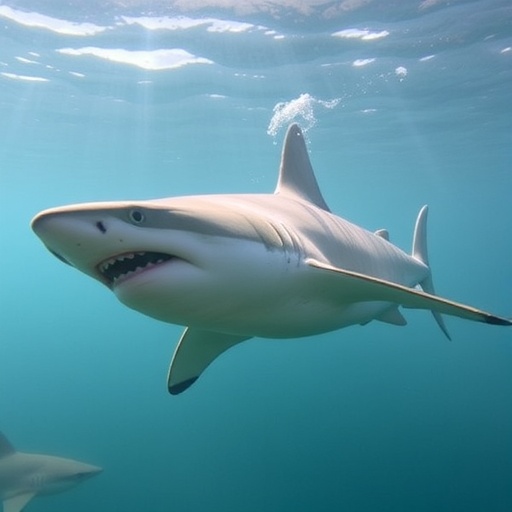
A recent study led by researchers Aaron Carlisle and Ed Hale at the University of Delaware has brought to light alarming developments in the international trade of sand tiger sharks, a species globally classified as critically endangered. The research underscores significant concerns over the sustainability and conservation implications of increasing shark harvests for aquarium display, particularly focusing on populations in the Northwest Atlantic, including Delaware Bay.

While the Northwest Atlantic sand tiger shark population is considered more robust than others worldwide due to longstanding U.S. fisheries protections, there remains a critical knowledge gap. No formal stock assessment has been conducted on this regional population, leaving uncertainty about the long-term impacts of current levels of removal. This knowledge deficiency is troubling given recent trends in shark collection practices.

Historically, American public aquariums gathered only a handful of sand tiger sharks sporadically, maintaining relatively low extraction rates. This pattern shifted markedly in 2018, when private collection entities began exploiting scientific permits purportedly for public display purposes, but at dramatically higher rates. Between 2018 and 2024, 80 individuals were removed from Delaware waters—a figure that now represents approximately 27% of all sand tiger sharks exhibited globally.

Of particular concern is the destination of these collected sharks. Nearly 90% of specimens caught in Delaware Bay over recent years have been exported, predominantly to countries such as China, the United Arab Emirates, South Korea, and Thailand. This international distribution raises ethical and ecological questions about foreign institutions benefiting from a species protected by decades-long conservation efforts in the United States.

The study points out a disconnect between current conservation protocols and regulatory oversight of international aquarium trade. Without rigorous scientific data informing sustainable harvest limits, and enhanced oversight measures, the expanding global demand risks undermining the recovery successes achieved in some of the last relatively stable sand tiger shark populations.

Moreover, the research highlights potential conflicts between conservation goals and commercial interests, calling for a reassessment of existing management frameworks. The unchecked growth in shark exports could inadvertently drive population declines, pushing this already endangered species closer to extinction.

This case exemplifies broader challenges in balancing conservation science with industry pressures in wildlife trade. It emphasizes the urgent need for transparent data sharing, cross-border collaboration, and policy reforms to ensure that exploitation for aquariums does not compromise species survival.

In conclusion, the University of Delaware study serves as a critical scientific alert, urging the global community to reconcile the objectives of marine species conservation with the demands of international aquarium trade, particularly for vulnerable sharks that represent invaluable components of marine ecosystems.

Subject of Research: Animals
Article Title: Reconciling conservation and management objectives with the international aquarium trade of the globally critically endangered Sand Tiger Shark
News Publication Date: 25-May-2026
Web References: http://dx.doi.org/10.3389/fcosc.2026.1797608
Keywords: Marine biology, Marine life, Endangered species, Extinction, Marine conservation, Marine reserves, Conservation policies

Tags: conservation implications of shark removalCritically endangered sand tiger sharkseffects of increased shark harvestingglobal shark trade regulationimpact of private aquariums on shark populationsinternational shark trademarine biodiversity and species declinenortheast Atlantic shark populationsshark conservation and sustainabilityshark stock assessment gapssustainability challenges in marine species collectionUS fisheries protections for sharks
Share26Tweet16
Previous Post

First visual focus in new places is as unique as fingerprints

Next Post

Chronic Pain Patients Can Lower Opioid Use by Slow Voluntary Tapering

Related Posts

Cemiplimab and fianlimab with neoadjuvant chemotherapy in early-stage high-risk -negative breast cancer
Biology

Cemiplimab and fianlimab with neoadjuvant chemotherapy in early-stage high-risk -negative breast cancer

July 30, 2026
Combined phage therapy and faecal microbiota transplantation to treat recurrent urinary tract infection: a case series
Biology

Combined phage therapy and faecal microbiota transplantation to treat recurrent urinary tract infection: a case series

July 30, 2026
Essential genetic mutations impair DNA damage repair and modulate tumor immune microenvironment in ccRCC
Biology

Essential genetic mutations impair DNA damage repair and modulate tumor immune microenvironment in ccRCC

July 30, 2026
Microbiota-derived 10-hydroxystearic acid activates PPARα to restore gut epithelial barrier integrity and enhance anti-retroviral therapy
Biology

Microbiota-derived 10-hydroxystearic acid activates PPARα to restore gut epithelial barrier integrity and enhance anti-retroviral therapy

July 30, 2026
Amazonian ‘zombie’ fungus harbors a hidden stage inside forest mosses, new study reveals
Biology

Amazonian ‘zombie’ fungus harbors a hidden stage inside forest mosses, new study reveals

July 30, 2026
Shining a light on constructing blood supply systems for artificial tissues
Biology

Shining a light on constructing blood supply systems for artificial tissues

July 30, 2026
Next Post
Chronic Pain Patients Can Lower Opioid Use by Slow Voluntary Tapering

Chronic Pain Patients Can Lower Opioid Use by Slow Voluntary Tapering

  • Mothers who receive childcare support from maternal grandparents show more

    Mothers who receive childcare support from maternal grandparents show more parental warmth, finds NTU Singapore study

    27656 shares
    Share 11059 Tweet 6912
  • University of Seville Breaks 120-Year-Old Mystery, Revises a Key Einstein Concept

    1061 shares
    Share 424 Tweet 265
  • Bee body mass, pathogens and local climate influence heat tolerance

    682 shares
    Share 273 Tweet 171
  • Researchers record first-ever images and data of a shark experiencing a boat strike

    546 shares
    Share 218 Tweet 137
  • Groundbreaking Clinical Trial Reveals Lubiprostone Enhances Kidney Function

    531 shares
    Share 212 Tweet 133
Science

Embark on a thrilling journey of discovery with Scienmag.com—your ultimate source for cutting-edge breakthroughs. Immerse yourself in a world where curiosity knows no limits and tomorrow’s possibilities become today’s reality!

RECENT NEWS

  • Ancient DNA reveals Ice Age humans preferred female mammoths
  • Public research and development money unlocks private investment and lasting economic growth
  • Satellite mapping reveals global inequities in lake water quality: over one-third of lakes fail to meet good water quality standards
  • One million euros allocated to six EUniWell study programmes on the way towards the Joint European Degree Label

Categories

  • Agriculture
  • Anthropology
  • Archaeology
  • Athmospheric
  • Biology
  • Biotechnology
  • Blog
  • Bussines
  • Cancer
  • Chemistry
  • Climate
  • Earth Science
  • Editorial Policy
  • Marine
  • Mathematics
  • Medicine
  • Pediatry
  • Policy
  • Psychology & Psychiatry
  • Science Education
  • Social Science
  • Space
  • Technology and Engineering

Subscribe to Blog via Email

Success! An email was just sent to confirm your subscription. Please find the email now and click 'Confirm Follow' to start subscribing.

Join 5,147 other subscribers

© 2025 Scienmag - Science Magazine

Welcome Back!

Login to your account below

Forgotten Password?

Retrieve your password

Please enter your username or email address to reset your password.

Log In
No Result
View All Result
  • HOME
  • SCIENCE NEWS
  • CONTACT US

© 2025 Scienmag - Science Magazine
