


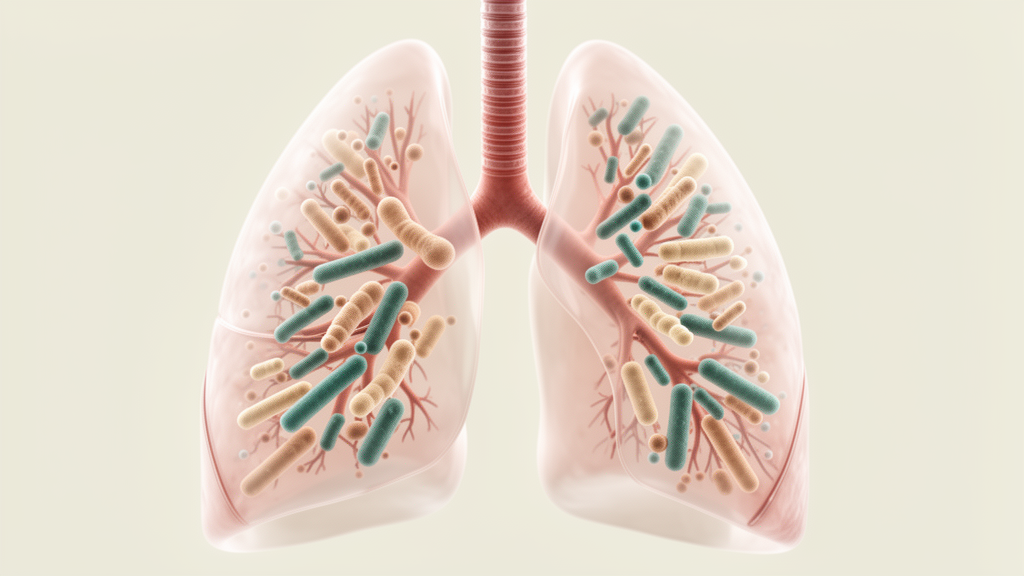
A multidisciplinary research collection published in 2026 shows that nontuberculous mycobacterial pulmonary disease is shaped by the organisms involved, the clinical and radiological evidence used to diagnose it, the anatomical site of infection, the host response and the pharmacology of available treatments. The editorial synthesizes work spanning epidemiology, diagnosis, bacterial physiology, immunology and therapeutic modeling, much of it presented at the 2025 Colorado Mycobacteria Conference. Rather than advancing a single treatment, the collection identifies links among disease burden, laboratory detection, persistence, immune defense and drug delivery that will require clinical validation before they can inform patient care.
The evidence comes from several forms of research rather than a single clinical trial or prospective cohort. It includes analysis of hospital discharge records, a review of diagnostic methods, laboratory investigations of Mycobacterium abscessus, experiments in murine models and a physiologically based pharmacokinetic model of inhaled tigecycline. These approaches address different parts of the problem: where nontuberculous mycobacterial disease is being recorded, how organisms and resistance can be identified, how bacteria adapt under antimicrobial stress, how tissue location alters immune activity and how a drug might reach the affected part of the lung. The editorial argues that progress depends on connecting these fields, while noting that findings from population records, bacterial models, animal experiments or computational modeling do not by themselves establish improved outcomes in patients.
Epidemiology provides a starting point but also demonstrates the difficulty of measuring the true burden of disease. Baham and colleagues analyzed eight years of hospital discharge data in Texas. Their study identified more than 12,000 nontuberculous mycobacteria diagnosis-coded inpatient discharges among approximately 23 million records. The discharges particularly affected elderly White women, showed substantial geographical variation and were accompanied by considerable mortality among affected patients. These observations describe coded inpatient encounters rather than the complete population living with nontuberculous mycobacterial infection. Discharge data also cannot independently distinguish infection from colonization or determine whether pulmonary disease met the required clinical, radiological and microbiological criteria. The analysis therefore illustrates both the uneven distribution of recorded disease and the limitations of using diagnosis codes alone to estimate its true prevalence.
Accurate burden estimates depend on accurate diagnosis, and a review by Singh and colleagues examines the continuing challenge of separating nontuberculous mycobacterial infection from colonization and differentiating nontuberculous mycobacterial pulmonary disease from tuberculosis and other chronic respiratory infections. Species-level identification is particularly important because pathogenic potential and antimicrobial susceptibility differ substantially among nontuberculous mycobacteria. The review discusses molecular diagnostics, matrix-assisted laser desorption ionization time-of-flight mass spectrometry, whole-genome sequencing, artificial intelligence and luciferase reporter mycobacteriophage assays as potential tools for faster identification and resistance characterization. The central interpretive challenge remains unchanged by these technologies: the presence of an organism in a specimen does not by itself establish clinically meaningful disease. Diagnosis still requires integration of clinical, radiological and microbiological evidence.
The biological studies in the collection help explain why M. abscessus can be difficult to eradicate. Canestrari and colleagues investigated the SigM regulatory network and characterized a regulon that includes the ESX-4 secretion system, which the editorial identifies as implicated in pathogenesis. Their findings connect secretion systems with stress-responsive transcriptional regulation, showing that bacterial adaptation involves interconnected regulatory systems rather than isolated resistance genes. This matters because responses to hostile conditions may influence which physiological programs remain active during treatment, not simply whether a bacterium survives exposure to a particular antimicrobial. The work was conducted as a laboratory study of the organism, and the collection does not present it as a clinically validated predictor of persistence or treatment outcome in people with pulmonary disease.
Amin and colleagues extended this focus on bacterial adaptation by examining the accessory genome of M. abscessus. They identified the VapB5-VapC5 toxin-antitoxin system as a determinant that reshapes bacterial physiology during antimicrobial stress. VapC5 was reported to induce growth arrest, modulate the WhiB7 regulatory program and promote a persistent physiological state. The authors characterized VapC5 as a broad physiological modulator whose effects on antimicrobial susceptibility depend on the mechanism of the drug involved. Their results suggest that bacterial genotype may eventually help researchers anticipate which antimicrobial mechanisms are likely to remain effective against a particular isolate. The evidence remains mechanistic: the research does not establish VapC5 as a routine clinical test, prove that genotype can guide treatment in patients or demonstrate improved outcomes from genotype-directed therapy.
The host environment introduces another level of complexity. Haist and colleagues used murine models to compare M. abscessus infection involving obstructed airways with infection in the alveolar space. These anatomical sites produced different cellular environments, and resident alveolar macrophages contributed differently to bacterial control depending on the location of infection. The findings provide a biological rationale for considering the anatomical distribution of infection when investigating persistence, particularly in the context of structural lung disease. They do not show that airway obstruction alone causes nontuberculous mycobacterial pulmonary disease in people, nor do they establish how often the observed cellular pattern occurs in clinical cohorts. As an animal study, the work offers experimentally observed evidence about infection context and immune contribution rather than a directly measured clinical effect.
Together, the bacterial and host studies portray persistence as an emergent state that depends on interactions among antimicrobial pressure, regulatory responses, tissue location and the contribution of particular immune-cell populations. The editorial particularly associates this perspective with M. abscessus, noting that prolonged antimicrobial therapy frequently fails to achieve durable microbiological clearance. The studies do not show that one regulatory pathway or one immune-cell deficit explains every patient outcome. Instead, they indicate that experimental models may need to reproduce relevant anatomical and physiological conditions if they are to support predictions about treatment. The wider implication is that persistence cannot be assigned solely to an intrinsic property of the microorganism or to the host in isolation; it develops through their interaction in a particular pulmonary environment.
Drug delivery is another target for therapeutic innovation. Park and colleagues used physiologically based pharmacokinetic modeling to examine inhaled tigecycline. The modeled strategy aimed to increase pulmonary exposure while limiting systemic exposure and associated adverse effects, rather than seeking greater drug concentrations through increased systemic dosing. The contribution demonstrates how delivery can be evaluated within the anatomical compartment where disease occurs and how a proposed regimen may be designed around the balance between local exposure and systemic effects. The modeling does not establish clinical efficacy, safety or improved disease outcomes. Any advantage of the proposed approach would require prospective human testing, and the editorial’s emphasis on connecting research areas includes recognizing the need to validate such experimental and modeling strategies in patients.
The combined evidence points toward management that considers multiple patient, organism and treatment characteristics, but the collection does not present a validated treatment algorithm. According to the editorial, future decisions may increasingly depend on species and strain characteristics, molecular resistance determinants, bacterial physiological state, the anatomical distribution of infection, host factors and penetration of a drug into the relevant pulmonary compartment. Prospective clinical studies are needed to test biomarkers and molecular predictors identified in experimental systems, while standardized approaches could allow epidemiology, microbiology, immunology and pharmacology to inform one another. The collection’s principal contribution is therefore a connected research agenda: define the burden more accurately, identify organisms and resistance with greater precision, determine where and how bacteria persist, characterize the host environments that shape infection and test whether therapies can reach those environments effectively. Its authors conclude that the next challenge is to transform these advances into clinically validated strategies for improving care in nontuberculous mycobacterial infection.
Subject of Research: Epidemiology, pathogenesis, diagnosis and treatment of nontuberculous mycobacterial pulmonary disease
Article Title: Editorial: Advances in the understanding and management of non-tuberculous mycobacteria infections
Article References: Ojha, A. K., & Kremer, L. (2026). Editorial: Advances in the understanding and management of non-tuberculous mycobacteria infections. Frontiers in Tuberculosis, 4, Article 2012273. https://doi.org/10.3389/ftubr.2026.2012273
Image Credits: AI Generated
DOI: 10.3389/ftubr.2026.2012273
Keywords: nontuberculous mycobacteria, Mycobacterium abscessus, pulmonary disease, epidemiology, molecular diagnostics, bacterial persistence, host immunity, antimicrobial stress, inhaled tigecycline, pharmacokinetic modeling, Editorial, Advances
Cite Scienmag News
Barbara Leach. (October 20, 2026). Studies map complexity of nontuberculous mycobacterial lung disease. Scienmag. https://scienmag.com/studies-map-complexity-of-nontuberculous-mycobacterial-lung-disease/
Barbara Leach. "Studies map complexity of nontuberculous mycobacterial lung disease." Scienmag, 20 October 2026, https://scienmag.com/studies-map-complexity-of-nontuberculous-mycobacterial-lung-disease/. Accessed 20 October 2026.
Barbara Leach. "Studies map complexity of nontuberculous mycobacterial lung disease." Scienmag. October 20, 2026. https://scienmag.com/studies-map-complexity-of-nontuberculous-mycobacterial-lung-disease/


