


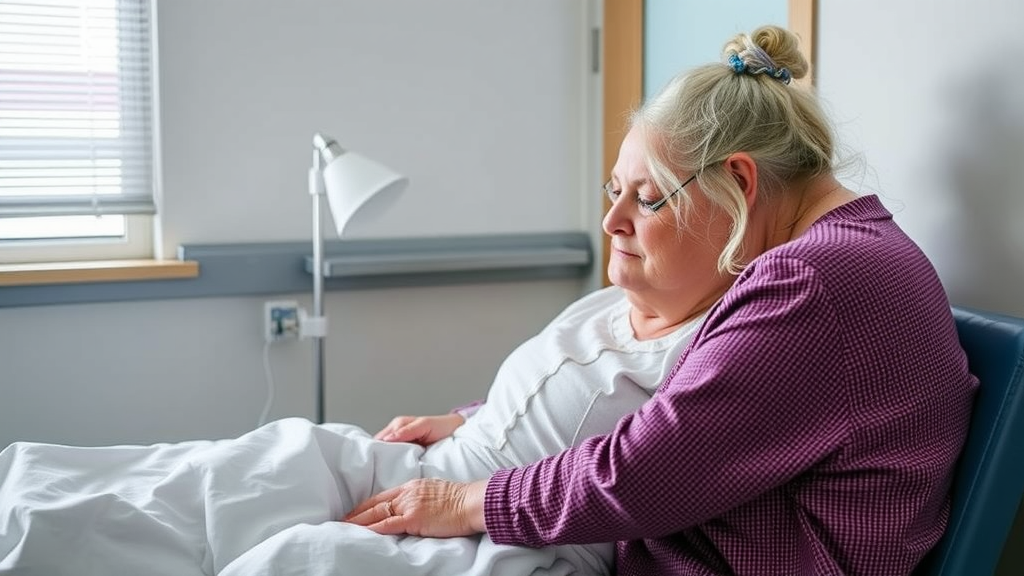
Every stroke sets two journeys in motion at once. The first belongs to the patient, moving from sudden neurological crisis through diagnosis, treatment, and slow, uncertain recovery. The second belongs to the family caregiver, who is often thrust into an unfamiliar medical world overnight and expected to absorb information, make decisions, and prepare for a future no one has fully explained. A new longitudinal qualitative study published in BMC Nursing follows both journeys simultaneously, mapping how the needs, frustrations, and emotions of stroke patients and their caregivers evolve from the first hours of hospital admission to the final day before discharge.
The research, led by Jinxia Rong and Zhixue Ye of the Department of Emergency Medicine at the First Affiliated Hospital of Ningbo University in China, together with colleagues in neurology and nursing, set out to answer a deceptively simple question: what do stroke patients and their families actually need at each stage of an in-hospital stay, and how do those needs change as the crisis recedes and the reality of life after hospital approaches? The answer, the authors argue, is that support systems built around a single snapshot of the patient miss most of the story.
The study employed a longitudinal qualitative descriptive design, a method that deliberately revisits the same participants over time rather than capturing a single interview. Fourteen patient-caregiver dyads were enrolled, meaning that each person recovering from stroke was interviewed alongside the primary family caregiver who supported them. Each dyad was interviewed jointly at two carefully chosen time points: once during the acute phase, within 48 hours of admission, and again during the discharge preparation phase, within 24 hours before leaving the hospital. This pairing of moments is analytically powerful, because it brackets the entire in-hospital experience, from the disorientation of emergency arrival to the anxiety of stepping back into everyday life.
All interviews were audio-recorded and transcribed verbatim, then analyzed using conventional content analysis, a qualitative technique in which researchers code the data inductively, allowing categories to emerge from the participants’ own words rather than from a predetermined framework. The resulting codes were subsequently organized within a patient journey framework, a structured way of visualizing healthcare experiences as a sequence of stages, each with its own needs, pain points, and emotional texture. The analysis yielded 28 subcategories, which the team assembled into a patient journey map spanning symptom onset to discharge preparation.
What that map reveals is a striking shift in the center of gravity of patients’ and caregivers’ concerns. In the acute phase, attention converges on urgent diagnosis and treatment: understanding what has happened, whether the damage can be limited, and what the immediate interventions will be. Emotions at this stage are dominated by shock, fear, and a desperate hunger for information from clinicians. Patients and caregivers alike describe the first two days as a blur in which even basic explanations can be hard to absorb, making the timing and clarity of communication from medical staff a decisive factor in how much control families feel they have.
By the discharge preparation phase, the emotional landscape has transformed. The immediate threat has typically passed, but a new set of worries has taken its place: how recovery will proceed, what rehabilitation will involve, whether functional abilities will return, and how the caregiver will manage medications, mobility, feeding, and follow-up appointments at home. The study found that needs migrate from urgent treatment concerns toward recovery, rehabilitation, and discharge-related support. Families who felt well-supported during the emergency often report feeling underprepared at the point of transition, when the safety net of round-the-clock nursing is about to be removed.
This pattern, the authors argue, exposes a structural weakness in stroke care. Hospitals are typically organized around clinical phases, with protocols optimized for thrombolysis, monitoring, and acute management, while the psychosocial and educational needs of families receive less systematic attention. Yet the patient journey map shows that the discharge transition is not a single event but a process that begins well before the patient leaves the ward. Caregivers who are not gradually equipped with practical skills and realistic expectations during the hospital stay face a steeper, more frightening adjustment afterward, with potential consequences for adherence, safety, and caregiver burnout.
The longitudinal, dyadic design is what gives the study its distinctive power. By interviewing patients and caregivers together at both time points, the researchers captured not just individual experiences but the interaction between them: how a caregiver’s anxiety shapes a patient’s confidence, how shared uncertainty compounds stress, and how joint conversations with clinicians can either align or divide a family’s understanding of what comes next. Joint interviews also acknowledge a practical reality of stroke care, that the caregiver is not a bystander but an integral part of the care unit whose needs deserve to be assessed in their own right.
The implications for nursing practice are direct. The authors conclude that continuous, stage-specific, and patient-centered support may help address unmet needs and improve care experiences during the transitions from acute treatment to recovery and discharge. In practical terms, that could mean structured communication protocols in the first 48 hours, when information uptake is poorest; progressive discharge education that begins days before departure rather than hours; skills training for caregivers in medication management, mobility assistance, and recognizing warning signs; and emotional support that acknowledges the evolving psychological burden on both members of the dyad. Patient journey mapping, the method at the heart of the study, offers hospitals a concrete tool for identifying exactly where in the pathway families are most at risk of falling through the cracks.
The research also carries a broader message for health systems facing rising stroke burdens. As survival rates improve, more patients live for years with residual disability, and the quality of the hospital-to-home transition increasingly determines long-term outcomes. Mapping the journey from the patient’s and caregiver’s own perspective, rather than from the institution’s, reframes quality measurement around the moments that matter most to the people living through them. The 28 subcategories identified in this study, spanning urgent treatment concerns, recovery anxieties, rehabilitation needs, and discharge preparation challenges, provide a granular starting point for designing interventions that meet families where they actually are, at each stage of a journey that changes character far faster than most care systems do.
Subject of Research: The evolving experiences and needs of stroke patients and their family caregivers across the in-hospital care journey from acute onset to discharge preparation.
Article Title: Exploring the stroke care journey from acute onset to discharge preparation: a longitudinal qualitative study
Article References: Rong, J., Ye, Z., Yu, J., Chen, Q., Xu, Q., & Xu, Q. (2026). Exploring the stroke care journey from acute onset to discharge preparation: a longitudinal qualitative study. BMC Nursing. https://doi.org/10.1186/s12912-026-05385-2
Image Credits: AI Generated
DOI: 10.1186/s12912-026-05385-2
Keywords: stroke, caregivers, patient journey mapping, qualitative research, nursing, discharge planning, acute care, rehabilitation, patient-centered care, longitudinal study, content analysis, care transitions
Cite Scienmag News
Cassandra Pierce. (September 22, 2026). Stroke Patients and Caregivers Face Shifting Needs From Emergency to Discharge, Study Finds. Scienmag. https://scienmag.com/stroke-patients-and-caregivers-face-shifting-needs-from-emergency-to-discharge-study-finds/
Cassandra Pierce. "Stroke Patients and Caregivers Face Shifting Needs From Emergency to Discharge, Study Finds." Scienmag, 22 September 2026, https://scienmag.com/stroke-patients-and-caregivers-face-shifting-needs-from-emergency-to-discharge-study-finds/. Accessed 4 October 2026.
Cassandra Pierce. "Stroke Patients and Caregivers Face Shifting Needs From Emergency to Discharge, Study Finds." Scienmag. September 22, 2026. https://scienmag.com/stroke-patients-and-caregivers-face-shifting-needs-from-emergency-to-discharge-study-finds/


