


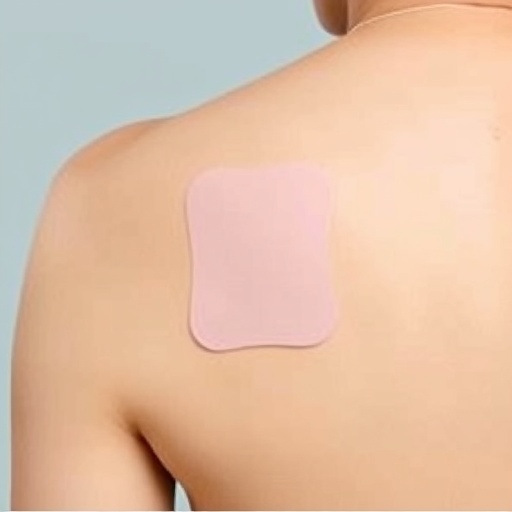
A groundbreaking innovation in the fight against melanoma, one of the most aggressive and fatal skin cancers, has emerged from recent research published in ACS Nano. Scientists have engineered a novel, noninvasive treatment modality in the form of a stretchable, heat-activated skin patch that promises to revolutionize melanoma therapy by potentially eliminating the need for conventional surgical interventions. This pioneering patch is designed to deliver targeted cytotoxic effects to melanoma cells while sparing the healthy surrounding tissue, addressing one of the most significant challenges in skin cancer treatment.
Melanoma originates primarily in the epidermis and the upper dermis layers of the skin, posing a therapeutic challenge due to the delicate balance required between eradicating cancerous cells and preserving normal skin structure. Traditional treatments usually involve surgical excision, often accompanied by significant morbidity and aesthetic concerns. Advancements in nanotechnology and materials science have paved the way for more selective and less invasive therapies. The research team developed a patch composed of laser-induced graphene, a porous, laser-etched carbon nanomaterial, which serves as the functional backbone for controlled drug delivery.
The innovative skin patch integrates copper(II) oxide nanoparticles within the porous graphene matrix and embeds this composite into a silicone polymer, resulting in a flexible, breathable, and biocompatible material. The copper ions released from the patch, when activated by mild heating, exhibit potent anti-cancer properties through mechanisms involving oxidative stress and DNA damage specifically targeted at melanoma cells. This enables the exquisite targeting of tumor cells without systemic toxicity, an achievement that could markedly enhance patient outcomes and reduce side effects.
The patch remains chemically inert, soft, and comfortable when applied to the skin under normal conditions. Activation is achieved using a low-power laser that gently raises the patch temperature to about 42 degrees Celsius (108 degrees Fahrenheit). This precise thermal trigger initiates the release of copper ions, which diffuse locally into melanoma tumors, inducing oxidative damage that compromises cancer cell viability. Moreover, this ion release is hypothesized to provoke an immune response, creating a multifaceted attack on the tumor and reducing its capacity to metastasize.
In vitro investigations established the patch’s efficacy by culturing melanoma cells and applying the activated patch directly above them. The modest elevation in temperature prompted the controlled release of copper ions, resulting in significant apoptosis of melanoma cells and inhibition of their motility. This dual action not only eradicated cancerous cells but also diminished their invasive potential, suggesting promising implications for preventing tumor spread through the lymphatic system or bloodstream.
Subsequent in vivo studies on murine models of melanoma corroborated the patch’s therapeutic promise. Mice were treated by placing the patch over melanoma lesions, with laser activation conducted for an hour on days 1 and 5. Remarkably, this protocol yielded a 97% reduction in tumor volume, a substantial therapeutic effect rarely observed in preliminary studies. Histological analyses confirmed that cancer cells were confined within the original tumor boundaries, and importantly, the surrounding healthy skin remained intact and unharmed.
A critical concern in any such localized treatment is the systemic distribution of cytotoxic agents. This study demonstrated that copper ions released from the patch did not accumulate in vital organs or enter the bloodstream at detectable levels, underscoring its safety profile. The local action of the patch ensures a high concentration of copper ions where needed without the potential systemic side effects often seen with chemotherapy or radiotherapy.
Furthermore, the patch boasts practical benefits, including reusability and ease of application, potentially allowing patients to self-administer treatment in outpatient settings. This contrasts sharply with current invasive procedures that demand hospital stays, surgical expertise, and extended recovery periods. The patch could pave the way for more accessible cancer care, particularly in resource-limited environments or for patients adverse to surgery.
The material science aspects of the patch also contribute to its success. The laser-induced graphene provides exceptional mechanical resilience and electrical conductivity, facilitating efficient heat conduction and controlled ion release. Embedding copper oxide nanoparticles within this framework ensures sustained, regulated delivery, capitalizing on nanoscale properties to amplify therapeutic outcomes. This synergy between graphene technology and nanomedicine signifies a new frontier in smart drug delivery devices.
Future directions for this technology include further optimization of ion-release kinetics, extended safety and efficacy studies in larger animal models, and eventual clinical trials in human subjects. The research team envisions adapting the platform for other dermatological cancers or localized infections, leveraging the heat-activation mechanism to customize treatment as needed. Integration with wearable technology could also facilitate remote monitoring and control of patch activation.
In conclusion, this heat-activated, stretchable graphene-copper oxide patch heralds a transformative shift in melanoma therapy by combining nanoengineering, materials science, and oncology. It offers hope for a noninvasive, targeted, and effective treatment capable of overcoming many limitations inherent in current surgical and systemic approaches. As research progresses, this technology might redefine the standard of care for melanoma patients worldwide.
News Publication Date: 5-Mar-2026
Web References: http://dx.doi.org/10.1021/acsnano.5c21102
References: Adapted from ACS Nano 2026, DOI: 10.1021/acsnano.5c21102
Keywords
Chemistry, Cancer, Cancer cells, Skin cancer
Cite Scienmag News
Nathaniel Bowman. (April 1, 2026). Stretchy, Heat-Activated Skin Patch Offers Non-Surgical Melanoma Treatment. Scienmag. https://scienmag.com/stretchy-heat-activated-skin-patch-offers-non-surgical-melanoma-treatment/
Nathaniel Bowman. "Stretchy, Heat-Activated Skin Patch Offers Non-Surgical Melanoma Treatment." Scienmag, 1 April 2026, https://scienmag.com/stretchy-heat-activated-skin-patch-offers-non-surgical-melanoma-treatment/. Accessed 3 September 2026.
Nathaniel Bowman. "Stretchy, Heat-Activated Skin Patch Offers Non-Surgical Melanoma Treatment." Scienmag. April 1, 2026. https://scienmag.com/stretchy-heat-activated-skin-patch-offers-non-surgical-melanoma-treatment/


