


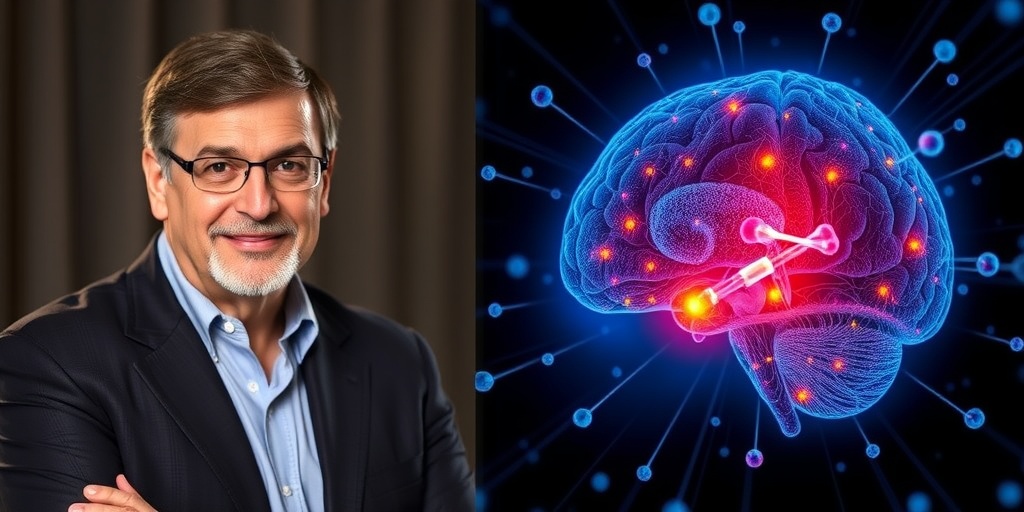
Acclaimed neuro-immunologist Stephen Hauser has been recognized with the prestigious 2025 Breakthrough Prize in Life Sciences for his groundbreaking advancements in the understanding and treatment of multiple sclerosis (MS). Hauser, who currently serves as a professor of neurology and director of the Weill Institute for Neurosciences at UCSF, has been instrumental in shifting the scientific narrative regarding the mechanisms underlying MS. His innovative approach has not only challenged longstanding assumptions but has also led to the development of revolutionary therapies that have transformed patient outcomes.
Understanding multiple sclerosis requires a comprehensive grasp of the disease’s pathophysiology. Traditionally, the focus has been on T cells as the primary agents of damage to the myelin sheath that insulates nerve fibers. However, Hauser’s persistence and unconventional thinking initiated a significant paradigm shift by identifying B cells as the principal drivers of this damage. This crucial discovery not only refuted the prevailing scientific consensus but also set the stage for novel therapeutic interventions that target B cells, a strategy that has proven remarkably effective in clinical settings.
Hauser’s theoretical breakthrough was met with skepticism initially, as it contradicted decades of research emphasizing T cells’ role in MS. His innovative methodology involved unlocking biological mechanisms at a cellular level, showcasing B cells as central players in mediating immune responses that lead to myelin damage and subsequent neuroinflammation. This unprecedented focus paved the way for therapies that could precisely target the immune system’s B cells, thereby mitigating the disease’s debilitating effects.
The approval of ocrelizumab in 2017 marked a significant milestone in multiple sclerosis treatment, becoming the first therapy approved that explicitly targets B cells. This medication has transformed the therapeutic landscape for MS patients, significantly reducing the frequency of relapses and delaying disability progression. Hauser’s work illustrates how compelling evidence and innovative thinking can lead to substantial enhancements in clinical practice, offering renewed hope to those afflicted by this complex disease.
Hauser’s journey into the depths of MS research was catalyzed by a poignant experience during his medical residency. Encountering a young woman profoundly affected by the disease instilled in him an urgency and determination to seek answers and solutions. This personal narrative emphasizes the human aspect of scientific endeavor, affirming that the quest for knowledge transcends mere academic curiosity; it is deeply intertwined with the lives of individuals facing formidable health challenges.
Over the years, Hauser encountered numerous obstacles, including initial failures in securing funding and skepticism from the broader medical community. However, these setbacks only fueled his determination. His innovative experiments utilized animal models that more accurately replicated the pathological features of human MS, leading to groundbreaking findings regarding B cells. These explorations underscored the necessity of refining research approaches to match the complexities of human diseases, reinforcing the importance of translational research that connects laboratory discoveries to clinical applications.
The scientific community has recognized the immense value of Hauser’s contributions, exemplified by the Breakthrough Prize—a testament to the collaborative nature of scientific innovation. His recognition alongside Alberto Ascherio, a pioneer in identifying the link between Epstein-Barr virus infection and increased MS risk, highlights the collective efforts of researchers pushing the boundaries of knowledge. Such collaboration is vital in navigating the multifaceted challenges posed by diseases like multiple sclerosis, where various biological pathways intersect and influence patient outcomes.
Looking to the future, Hauser remains optimistic about advancing therapeutic options for patients with MS, particularly for those with progressive forms of the disease. Although B-cell therapies have revolutionized care for many, a subset of patients responds less favorably. Hauser’s ongoing research aims to decode the genetic underpinnings of MS, uncovering potential targets that could lead to novel treatment pathways. This endeavor exemplifies the realization that medical research is an ever-evolving field, perpetually driven by new discoveries and insights garnered from both the laboratory and clinical practice.
The implications of Hauser’s research extend beyond individual therapies; they serve as a paradigm for understanding other autoimmune conditions. His focus on immune mechanisms provides a framework for exploring shared pathways among different diseases, emphasizing the interconnectedness of biological systems. The methodologies employed in his research underscore the importance of an interdisciplinary approach, combining insights from immunology, neurology, and genetic studies to forge new avenues in therapeutic development.
As patients with MS continue to benefit from the B-cell-targeted therapies developed through Hauser’s pioneering work, the narrative of multiple sclerosis treatment is being rewritten. No longer should newly diagnosed individuals face the bleak prospects that once accompanied an MS diagnosis. The progress made in understanding this complex disease fosters an environment of hope, where effective treatments are not only possible but are becoming the standard of care. Indeed, the optimism expressed by Hauser reflects a growing realization that modern science can indeed change the trajectory of chronic illnesses, offering transformative capabilities that were once unimaginable.
Hauser’s recognition with the Breakthrough Prize is not merely a celebration of his individual achievements but a call to action for the scientific community at large. It underscores the need for continued investment in innovative research, a commitment to challenging established norms, and an unwavering focus on the patient experience. The strides made in the field of multiple sclerosis signify that progress is attainable, provided the scientific community embraces a spirit of inquiry and collaboration.
In conclusion, the revolutionary advancements made by Stephen Hauser in multiple sclerosis research not only reflect significant scientific achievements but also embody the essence of medical science—translating complex biological understanding into tangible patient benefits. His work serves as a beacon of hope for patients, illuminating the path towards a future where chronic diseases can be managed more effectively and compassionately. Through continued research and collaboration, the goal of improving the quality of life for individuals living with MS is not just a distant aspiration; it is a professional commitment that stands at the forefront of modern medicine.
Cite Scienmag News
Courtney Benton. (April 7, 2025). Stephen Hauser Honored with Breakthrough Prize for Pioneering Contributions to Multiple Sclerosis Research. Scienmag. https://scienmag.com/stephen-hauser-honored-with-breakthrough-prize-for-pioneering-contributions-to-multiple-sclerosis-research/
Courtney Benton. "Stephen Hauser Honored with Breakthrough Prize for Pioneering Contributions to Multiple Sclerosis Research." Scienmag, 7 April 2025, https://scienmag.com/stephen-hauser-honored-with-breakthrough-prize-for-pioneering-contributions-to-multiple-sclerosis-research/. Accessed 4 September 2026.
Courtney Benton. "Stephen Hauser Honored with Breakthrough Prize for Pioneering Contributions to Multiple Sclerosis Research." Scienmag. April 7, 2025. https://scienmag.com/stephen-hauser-honored-with-breakthrough-prize-for-pioneering-contributions-to-multiple-sclerosis-research/


