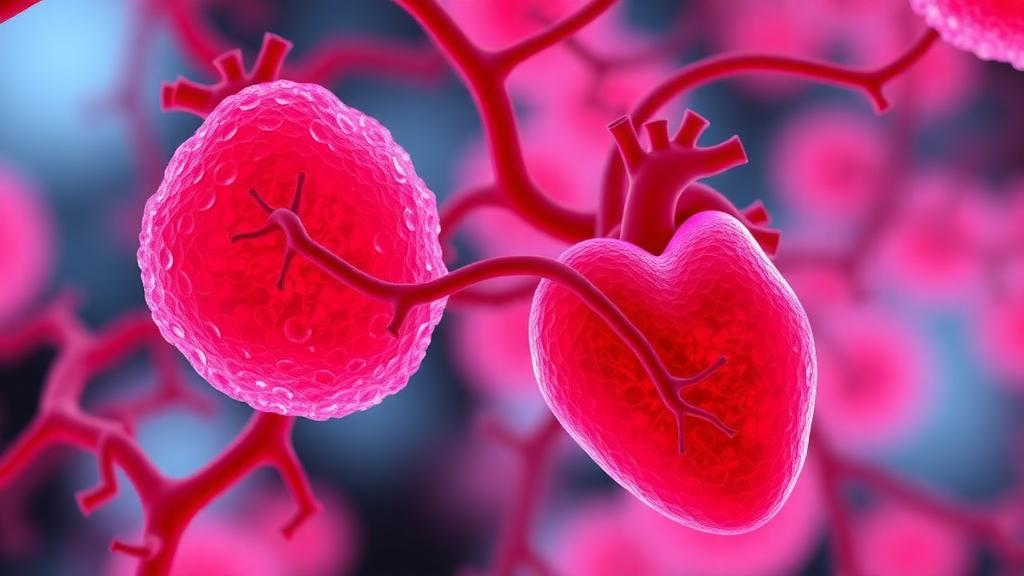
Scientists have mapped, in unprecedented detail, how the fat molecules inside human stem cells are rebuilt as those cells transform into beating heart cells. The study, published in iScience, followed human embryonic stem cells through five distinct developmental stages on their way to becoming cardiomyocytes, the contractile cells of the heart. By combining ultra-sensitive lipidomics with transcriptomic and epigenomic profiling, the researchers uncovered a stage-by-stage remodeling of the cellular lipidome that mirrors the metabolic switch every developing heart cell must make: from a sugar-burning, rapidly dividing progenitor into an energy-hungry, fat-oxidizing mature muscle cell. The findings offer what the authors describe as the first systematic lipidomic atlas of human cardiomyocyte differentiation, and they point to phospholipid supplementation as a potential tool for steering lab-grown heart cells toward a more adult-like state.
The team, led by Wuming Wang of The Chinese University of Hong Kong together with colleagues including Haite Tang, Raina Liu, and Zhiqiang Xiong, induced differentiation of the H1 human embryonic stem cell line using sequential small-molecule modulation of WNT signaling, a standard protocol that recapitulates key steps of fetal cardiac development. They sampled cells at day zero, when the cells were still pluripotent stem cells; day three, when they had become mesoderm, the embryonic layer from which the heart arises; day six, when cardiac progenitor cells appeared; day ten, when immature cardiomyocytes emerged; and day thirty, when the cells had acquired mature features. Quality control was rigorous: by day ten, cardiac troponin T-positive cardiomyocytes made up 90 to 94 percent of the culture, and by day thirty, 88 to 95 percent of cells expressed MLC2v, a hallmark of ventricular lineage maturation.
To confirm that the day-thirty cells were genuinely mature, the researchers deployed multiple validation strategies. Confocal imaging revealed highly organized, parallel-aligned myofibrils with clear periodic striations corresponding to sarcomeric Z-lines, the repeating contractile units of heart muscle. The cells also displayed abundant, elongated mitochondria, consistent with the oxidative metabolism of adult cardiomyocytes. Microelectrode array recordings captured spontaneous extracellular spike patterns, demonstrating electromechanical competence. An induced pluripotent stem cell clone carrying an endogenous MYL2 fluorescent tag showed robust MLC2v signals in spontaneously beating cells. Together, these data established that the differentiation system reliably produced stage-specific, high-purity cardiomyocyte populations suitable for stage-resolved molecular profiling.
The lipidomic analysis itself was a technical tour de force. Using a low-input, trace lipidomics method adapted from protocols developed for early mammalian embryo studies, the team quantified 781 lipid species spanning 31 major lipid classes, each measured against a panel of stable isotope internal standards. Principal component analysis showed clean separation between developmental stages with tight clustering within groups, and a Shannon diversity index revealed that overall lipid diversity gradually declined as differentiation proceeded. The researchers then sorted every lipid subclass into four temporal patterns: monotonically decreasing, rising then falling, falling then rising, and monotonically increasing across the differentiation time course.
The earliest pattern was striking. Cardiolipins, the four-tailed phospholipids that populate the inner mitochondrial membrane, together with diacylglycerols, bis(monoacylglycero)phosphates, and simple glycosylceramides, all peaked at the pluripotent stem cell stage and declined thereafter. The authors propose that this abundance of relatively simple membrane lipids supports rapid membrane biogenesis and the maintenance of stem cell identity. Cardiolipin biology is particularly relevant to the heart: its biosynthesis is known to be essential for postnatal cardiomyocyte maturation, supporting the assembly of mitochondrial cristae and the accumulation of oxidative phosphorylation complexes. Notably, the cardiolipin acyl chains observed here shifted over time from shorter, monounsaturated species toward longer, more polyunsaturated forms containing C18:2, C20:3, and C20:4 fatty acids.
A second wave of remodeling occurred at the mesoderm and cardiac progenitor stages. Sphingolipids, sphingosine, acylcarnitines, cholesteryl esters, ether-linked phospholipids such as PE O plasmalogens, and lysophosphatidylethanolamines transiently enriched during this window before declining. Many sphingolipid species appeared in paired molecular forms differing only by hydroxylation status, with hydroxylated variants becoming enriched after differentiation onset, a signature of stage-associated remodeling of fatty acid hydroxylation. Acylcarnitines, which shuttle long-chain fatty acids into mitochondria for beta-oxidation, showed a chain-length-dependent split: short-chain species accumulated in mature cardiomyocytes, while longer-chain species peaked during the mesoderm and progenitor phases. The authors suggest these transient lipid enrichments may contribute to mesodermal fate transitions and progenitor state maintenance, though they emphasize that such interpretations remain correlative until tested by targeted metabolic perturbation.
The most sustained trend was a progressive accumulation of structurally complex lipids as cells matured. Fatty acids, phosphatidylethanolamines, phosphatidylinositols, phosphatidylcholines, lysophosphatidylcholines, lysophosphatidic acids, sphingomyelins, and the ganglioside GM3 all rose steadily, with longer-chain and more highly unsaturated species preferentially enriched in late-stage cells. Quantitative analysis showed that polyunsaturated lipids, those with more than two double bonds, rose markedly from the mesoderm stage onward, while mono- and diunsaturated lipids declined sharply. Among the 31 lipid classes, phosphatidylcholine displayed this pattern most prominently. The researchers hypothesize that this progressive polyunsaturation enhances membrane fluidity and dynamic responsiveness, accommodating the increasing contractile activity of late-stage cardiomyocytes, a testable idea they note will require direct biophysical measurements of membranes alongside functional assessments of contractility.
To connect the lipid data to gene regulation, the team integrated their RNA sequencing with previously published ATAC-seq chromatin accessibility data from cardiomyocyte differentiation. Motif scanning of regulatory regions around unsaturated fatty acid biosynthesis genes predicted a transcription factor network including SP1, KLF4, IRF1, IRF2, USF1, FOXO1, IRF4, and CREB1. Intersecting genes with progressively increasing chromatin accessibility against those with progressively increasing expression yielded 376 co-regulated genes, enriched for extracellular matrix organization, cell communication, and structural morphogenesis, indicating that late-stage epigenetic and transcriptional reprogramming ultimately drives the structural integration of myocardial tissue. Interestingly, promoter accessibility of lipid metabolic genes themselves peaked at the cardiac progenitor stage and then declined by day thirty, a pattern of transient epigenetic priming that led the team to hypothesize that maturing cells might become responsive to exogenous lipid supply.
That hypothesis was tested with phosphatidylcholine supplementation. Thirteen days of culture with 5 micromolar PC altered expression of electrophysiology genes in immature cardiomyocytes, including HCN4, a core heart rate modulator, and SCN5A, which encodes the cardiac sodium channel. In mature cardiomyocytes, PC supplementation moderately increased transcripts of GJA1, encoding gap junction proteins critical for electrical propagation, and MYL2, a maturity marker, while significantly downregulating the hypertrophy-associated genes NPPA and NPPB, changes confirmed at the protein level by immunofluorescence. Because physiological hypertrophy is a normal component of cardiomyocyte development, the authors interpret the reduced hypertrophy gene expression as a possible association between phospholipid availability and developmental state, with potential implications for hypertrophy-related cardiac disease. They caution, however, that only transcript and protein levels were assessed, and functional consequences for contractility, electrophysiology, and stress resistance remain to be determined.
The study is not without limitations, which the authors address candidly. The day-thirty cells, though structurally and electrophysiologically mature by in vitro standards, were grown in conventional two-dimensional monolayer culture and do not fully replicate adult cardiomyocytes in vivo. Lipidomics was performed on unsorted bulk cultures, leaving a small non-myocyte contribution, and the data represent relative molar fractions rather than absolute per-cell abundance. Only a male cell line was used, so sex-specific effects could not be evaluated. Still, by defining the dynamic lipidome of human cardiomyocyte differentiation and linking it to transcriptional and epigenetic programs, the work provides a framework for future efforts to mature stem cell-derived heart cells more efficiently, whether through fatty acid conditioning, three-dimensional culture, or precisely timed lipid supplementation, and may ultimately inform regenerative strategies for a disease burden that remains the leading cause of death worldwide.
Subject of Research: Lipid metabolism remodeling during human stem cell differentiation into cardiomyocytes
Article Title: Lipid metabolism remodeling in human cardiomyocyte differentiation and maturation
Article References: Tang, H., Liu, R., Xiong, Z., He, Q., Lu, G., Chan, W.-Y., & Wang, W. (2026). Lipid metabolism remodeling in human cardiomyocyte differentiation and maturation. iScience, 29(11), Article 117821. https://doi.org/10.1016/j.isci.2026.117821
Image Credits: AI Generated
DOI: 10.1016/j.isci.2026.117821
Keywords: cardiomyocytes, lipidomics, human embryonic stem cells, cardiac differentiation, phosphatidylcholine, cardiolipin, polyunsaturated lipids, multi-omics, ATAC-seq, heart regeneration, metabolic maturation, sphingolipids
Cite Scienmag News
Denise Maddox. (October 11, 2026). Stem Cells Reveal a Hidden Lipid Code That Drives Human Heart Cell Maturation. Scienmag. https://scienmag.com/stem-cells-reveal-a-hidden-lipid-code-that-drives-human-heart-cell-maturation/
Denise Maddox. "Stem Cells Reveal a Hidden Lipid Code That Drives Human Heart Cell Maturation." Scienmag, 11 October 2026, https://scienmag.com/stem-cells-reveal-a-hidden-lipid-code-that-drives-human-heart-cell-maturation/. Accessed 11 October 2026.
Denise Maddox. "Stem Cells Reveal a Hidden Lipid Code That Drives Human Heart Cell Maturation." Scienmag. October 11, 2026. https://scienmag.com/stem-cells-reveal-a-hidden-lipid-code-that-drives-human-heart-cell-maturation/