


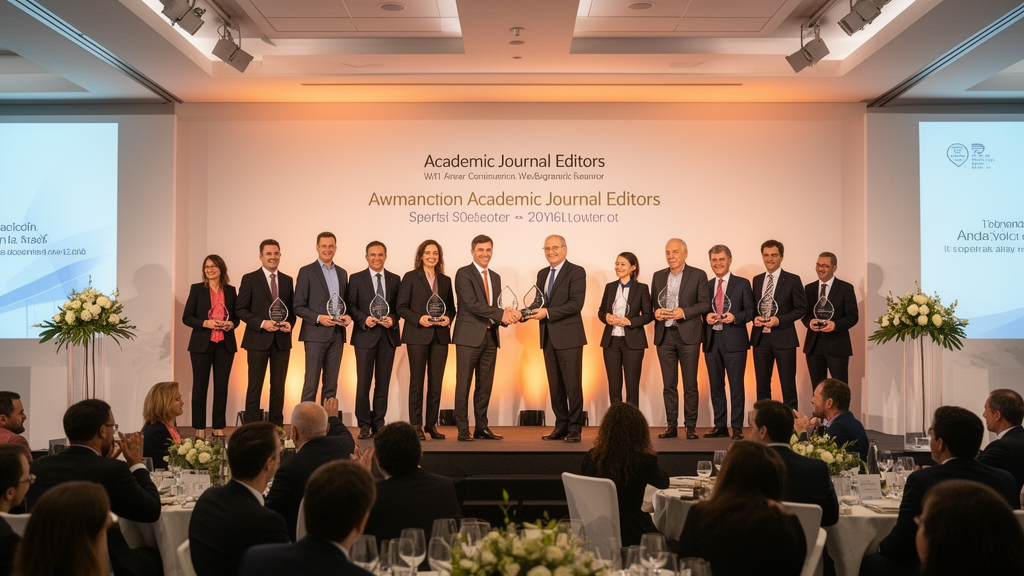
Springer Nature has announced the recipients of its 2026 Editor of Distinction Awards, and the editorial board of the Journal of Pharmaceutical Investigation has emerged as one of the most decorated groups in this year’s program. Ten editors affiliated with the journal received the Springer Nature Editorial Contribution Award, while nine of them were also honored with the Springer Nature Author Service Award, a rare double recognition that underscores the depth of editorial commitment within the pharmaceutical research community. The awards, presented annually, are designed to celebrate the often invisible labor that sustains scientific publishing: the careful reading of manuscripts, the orchestration of peer review, and the cultivation of relationships between journals and the researchers who depend on them.
The Editorial Contribution Award is given for meticulous assessment of submissions and rigorous management of the peer review process, work that directly safeguards the scientific accuracy of the published record. In practical terms, this means that the honored editors are responsible for evaluating whether submitted manuscripts meet the methodological and ethical standards required for publication, selecting qualified reviewers, weighing conflicting referee reports, and making final decisions that determine what enters the scientific literature. At a journal covering drug delivery systems, nanotechnology-based therapeutics, pharmacokinetics, and translational pharmaceutical science, the stakes of that gatekeeping role are considerable, because published findings can influence the design of new formulations, the interpretation of preclinical data, and ultimately the direction of laboratory research worldwide.
The recipients of the Editorial Contribution Award at the Journal of Pharmaceutical Investigation are Chulhun Park, Gayong Shim, Han-Joo Maeng, Hyun-Jong Cho, Jee-Heon Jeong, Jong Oh Kim, Kwangmeyung Kim, Wooram Park, Yoo Kyung Kang, and Yoon-Jee Chae. The list reflects a broad cross-section of expertise spanning pharmaceutics, drug delivery, nanomedicine, and pharmaceutical analysis, areas in which the journal has built its international reputation. Several of the awardees are based at South Korean institutions, consistent with the journal’s editorial leadership and its strong ties to the Asian pharmaceutical science community, though the journal’s authorship and reviewer networks extend across continents.
The second honor, the Springer Nature Author Service Award, recognizes exceptional service in improving the author experience and ensuring that the peer review process is efficient, constructive, and fair. Nine editors from the journal received this distinction: Chulhun Park, Gayong Shim, Han-Joo Maeng, Jee-Heon Jeong, Jong Oh Kim, Kwangmeyung Kim, Wooram Park, Yoo Kyung Kang, and Yoon-Jee Chae. Notably, Hyun-Jong Cho appears on the Editorial Contribution list but not on the Author Service list, making him the sole recipient of only the first award this cycle. The overlap between the two lists is striking, however, and suggests that the same individuals who enforce rigor in manuscript evaluation are also the ones investing time in helping authors revise, clarify, and strengthen their work before and after review.
In an era when peer review is under intensifying scrutiny, the distinction between these two awards captures a real tension in modern scientific publishing. On one side sits the need for rigor: editors must filter out flawed methodology, unsupported claims, and insufficient novelty, and they must do so consistently enough that the journal’s published record remains trustworthy. On the other side sits the need for service: authors, particularly early-career researchers and those publishing in a second language, depend on editors who communicate decisions clearly, provide actionable feedback, and manage reviewer timelines so that manuscripts do not languish for months. Journals that excel at only one of these functions tend to develop reputational problems, either as overly harsh gatekeepers or as venues with lax standards, and the dual recognition of so many editors at a single journal indicates an attempt to balance both demands simultaneously.
The mechanics of editorial work in pharmaceutical sciences are more technically demanding than outsiders often appreciate. A typical submission to the Journal of Pharmaceutical Investigation might involve novel polymeric nanoparticles for anticancer drug delivery, pharmacokinetic modeling of a new formulation, or the evaluation of excipient interactions in a controlled-release tablet. An editor must judge whether the analytical methods are validated, whether the animal or cell-based models are appropriate for the claims being made, whether the statistical treatment of the data supports the conclusions, and whether the work advances the field sufficiently to merit publication. That assessment requires domain expertise across chemistry, biology, pharmacology, and materials science, which is why editorial boards for specialized journals are drawn from active research laboratories rather than from professional editorial staff.
Beyond individual manuscript decisions, Springer Nature’s announcement highlighted the broader contributions that editors make to their research communities, including developing networks for authors and peer reviewers, helping authors improve their papers, and advocating for their journal communities. These activities, though less visible than the accept-or-reject decision, shape the health of a field in measurable ways. Editors who actively recruit reviewers from underrepresented regions expand the pool of expertise available to the journal. Editors who mentor authors through revision cycles effectively train the next generation of scientists in the norms of rigorous reporting. Editors who advocate for their journals at conferences and within institutional networks help ensure that high-quality work from their communities finds an appropriate audience rather than being lost in the flood of global submissions.
The scale of the challenge facing editorial teams has grown dramatically in recent years. Submission volumes across scientific publishing have risen sharply, driven in part by the expansion of research output in Asia, the proliferation of interdisciplinary work that does not fit neatly into traditional journal categories, and the increasing pressure on researchers to publish in indexed international journals. At the same time, the threat of paper mills, image manipulation, and other forms of research misconduct has forced editors to adopt more sophisticated screening tools, including plagiarism detection software, image forensics, and statistical checks, adding layers of diligence to a process that was already labor-intensive. Awards like the Editor of Distinction program serve partly as recognition and partly as retention, acknowledging that the quality of a journal’s published record depends on individuals who could otherwise devote that time to their own laboratories.
For the Journal of Pharmaceutical Investigation, published by Springer Nature under the volume identifier associated with its long-running coverage of pharmaceutical technology and biopharmaceutics, the 2026 awards represent a milestone in the journal’s editorial history. Having ten editors recognized for contribution and nine for author service in a single year is an unusually concentrated honor, and it signals to prospective authors and reviewers that the journal’s editorial operations are both rigorous and responsive. In the competitive landscape of pharmaceutical science publishing, where researchers choose among dozens of specialized venues, such signals carry real weight in submission decisions, reviewer acceptance rates, and the journal’s standing in institutional assessments.
The broader lesson from this year’s Editor of Distinction Awards is that scientific publishing remains, at its core, a human enterprise. Automated systems can screen for formatting errors and flag suspicious images, but the judgment about whether a nanoparticle formulation study is methodologically sound, whether its claims are proportionate to its data, and whether its authors deserve a constructive path to publication still rests with working scientists who volunteer their expertise. Springer Nature’s decision to honor both the evaluative and the service dimensions of that work, and the Journal of Pharmaceutical Investigation’s remarkable sweep of both award categories, offers a snapshot of what sustainable editorial quality looks like in contemporary science: meticulous, fair, and deeply invested in the people who produce and review the research itself.
Subject of Research: Editorial excellence awards recognizing peer review and author service in pharmaceutical science publishing
Article Title: Springer Nature Editor of Distinction Awards 2026
Article References: Springer Nature Editor of Distinction Awards 2026. (n.d.). Original publication
Image Credits: AI Generated
DOI: Not provided
Keywords: Springer Nature, Editor of Distinction Awards, Journal of Pharmaceutical Investigation, peer review, editorial boards, pharmaceutical sciences, scientific publishing, author services, research integrity, drug delivery research, academic publishing, editorial recognition
Cite Scienmag News
Ophelia Keating. (October 16, 2026). Springer Nature Honors Standout Editors of Pharmaceutical Research Journal for 2026. Scienmag. https://scienmag.com/springer-nature-honors-standout-editors-of-pharmaceutical-research-journal-for-2026-4/
Ophelia Keating. "Springer Nature Honors Standout Editors of Pharmaceutical Research Journal for 2026." Scienmag, 16 October 2026, https://scienmag.com/springer-nature-honors-standout-editors-of-pharmaceutical-research-journal-for-2026-4/. Accessed 16 October 2026.
Ophelia Keating. "Springer Nature Honors Standout Editors of Pharmaceutical Research Journal for 2026." Scienmag. October 16, 2026. https://scienmag.com/springer-nature-honors-standout-editors-of-pharmaceutical-research-journal-for-2026-4/


