

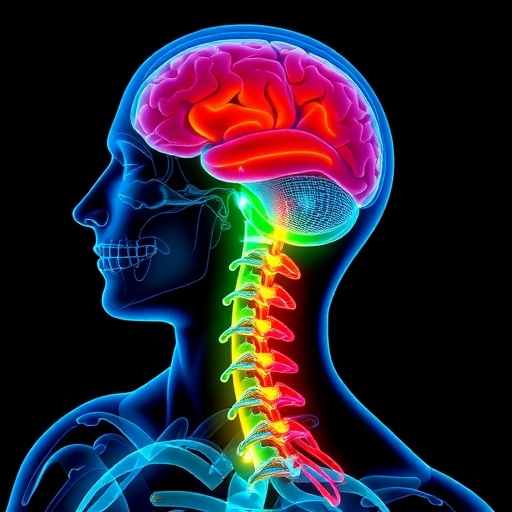
In a groundbreaking study published in BMC Neuroscience, researchers, led by Huang et al., investigated the effects of short-term spinal cord stimulation (SCS) on patients who have suffered brain injuries and are experiencing disorders of consciousness. This clinical trial shines a light on a previously under-explored intervention that could drastically improve the quality of life for these patients, particularly focusing on the critical outcome of tracheal decannulation rates. Tracheal decannulation is an essential step for patients recovering from severe conditions, as it signifies a transition towards independence in respiratory function, reducing dependency on mechanical ventilation.
The significance of the study is underscored by the current limitations in therapeutic options available for patients with disorders of consciousness, such as those arising from traumatic brain injury. With between 40 to 60% of these patients remaining in a comatose state or showing minimal response to stimuli, advancements in treatment methodologies can have profound implications. The innovative application of spinal cord stimulation offers a potential avenue for enhancing neural recovery and re-engagement, thus rekindling hope for families and caregivers of affected individuals.
During the clinical trial, a cohort of participants with varying degrees of consciousness disorders underwent spinal cord stimulation to assess its impact on facilitating respiratory recovery. The researchers employed a state-of-the-art neurostimulator designed specifically to target spinal pathways implicated in respiratory control. By electrically stimulating these areas, the hypothesis was that the central nervous system could be prompted to exert more robust control over respiratory patterns, thereby improving the likelihood of successful tracheal decannulation.
The trial’s design utilized a randomized control framework, ensuring that outcomes could be precisely measured against a control group receiving no stimulation. Initial results exhibited a marked increase in tracheal decannulation rates among patients who received SCS compared to those who did not, indicating the potential effectiveness of this new treatment modality. By the end of the trial, a significant proportion of patients in the stimulator group not only achieved successful decannulation but also demonstrated improved overall neurological status.
Moreover, the study meticulously tracked additional recovery metrics, including spontaneous breathing efforts and physiological responses, to paint a comprehensive picture of how spinal cord stimulation influenced recovery trajectories. These evaluations are crucial for understanding not just the direct effects of SCS on respiratory abilities but also its broader implications on brain health and rehabilitation outcomes.
One of the most promising aspects of the research was the observed engagement in neuroplasticity among participants. Neuroplasticity, the brain’s ability to reorganize itself by forming new neural connections, is vital for recovery following brain injuries. The researchers found, via neuroimaging techniques, that spinal cord stimulation appeared to facilitate activity in regions of the brain associated with respiratory modulation and consciousness recovery. This finding suggests that SCS may not only serve as a supportive therapeutic tool but could actively promote brain healing processes.
The enhancement of respiration control through spinal cord stimulation also carries wider implications for critical care management. Patients typically reliant on tracheostomy are at a higher risk of complications, such as infections and prolonged hospital stays. By improving tracheal decannulation rates, this approach could significantly decrease healthcare costs and improve the overall prognosis for patients, thereby fostering a more efficient treatment paradigm in neurocritical care environments.
As potential treatment options evolve, the ethical considerations surrounding interventions like spinal cord stimulation come to the forefront. The study’s authors emphasize that while SCS shows promise, further exploration must be conducted to evaluate its safety and long-term effects. Continuous monitoring and assessment will be crucial to ensure that the benefits, such as enhanced decannulation rates, do not come at the expense of patient safety or ethical standards of care.
The reception of these findings within the medical community has been overwhelmingly positive, igniting discussions among neurosurgeons, neurologists, and rehabilitation specialists. The excitement surrounding this research is palpable, with many experts advocating for larger, multicenter trials to validate and replicate these promising outcomes across diverse populations. The interest in spinal cord stimulation is a testament to the growing recognition of alternative and adjunct therapies as vital components in the rehabilitation of brain injury patients.
In conclusion, the research conducted by Huang and colleagues represents a significant stride in understanding how spinal cord stimulation can potentially transform the landscape of treatment for patients with disorders of consciousness. The study holds promise for improvements in tracheal decannulation rates, highlights the importance of neuroplasticity in recovery, and underscores the necessity for continued research in this burgeoning field. As more data emerge from forthcoming studies, the hope is that spinal cord stimulation can be integrated into standard care protocols, offering new hope to patients and families alike.
In exploring the future implications of this research, it is essential to consider not just clinical outcomes but also the psychological and emotional dimensions of recovery. For patients who are able to regain respiratory independence, the impact on their quality of life can be immeasurable. Family members and caregivers often bear a significant emotional burden, making advancements that facilitate recovery not merely a medical breakthrough but a significant life-enhancing intervention. The journey ahead in spinal cord stimulation research is filled with potential, and continued innovation will shape a new era in neurorehabilitation and recovery.
In summary, as we move forward in this exciting journey of discovery, it is clear that the development of new treatment modalities like spinal cord stimulation will not only challenge existing paradigms but also offer a beacon of hope for patients grappling with the effects of severe brain injuries and the profound repercussions of disorders of consciousness.
Subject of Research: Brain injury, spinal cord stimulation, tracheal decannulation
Article Title: The short-term spinal cord stimulation improves the rates of tracheal decannulation in patients of brain injury with disorders of consciousness.
Article References: Huang, G., Wang, D., Chen, Q. et al. The short-term spinal cord stimulation improves the rates of tracheal decannulation in patients of brain injury with disorders of consciousness. BMC Neurosci 26, 33 (2025). https://doi.org/10.1186/s12868-025-00951-x
Image Credits: AI Generated
DOI: https://doi.org/10.1186/s12868-025-00951-x
Keywords: spinal cord stimulation, brain injury, tracheal decannulation, disorders of consciousness, neuroplasticity, healthcare costs, rehabilitation.


