


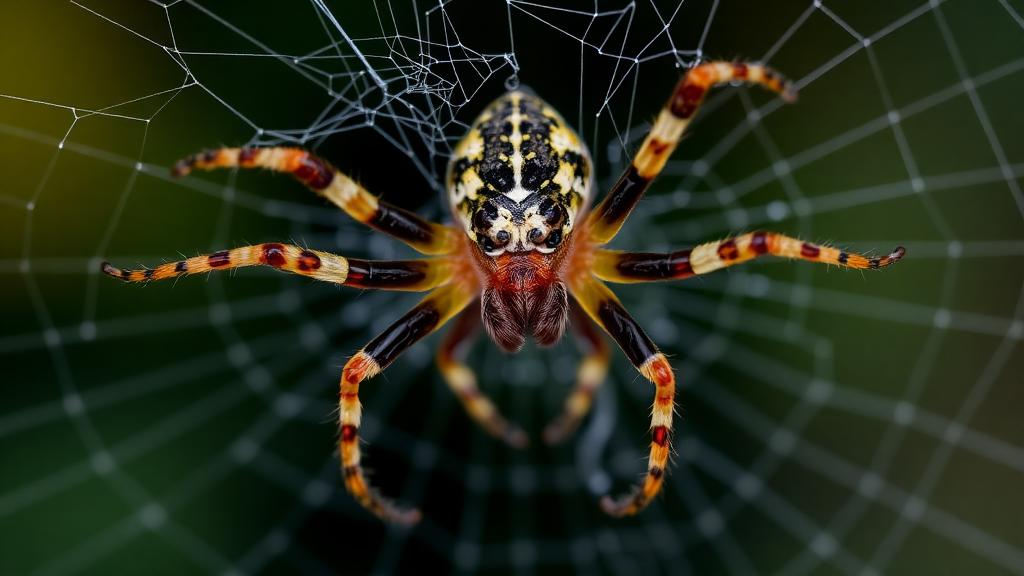
Spiders and their eight-legged relatives have long lived in the scientific shadow of insects, but a sweeping new collection of reviews suggests that arachnids are finally getting the spotlight their biology deserves. The inaugural Horizons in Arachnid Science collection, published in the journal Frontiers in Arachnid Science, gathers invited syntheses from leading specialists on topics ranging from silk-throwing mites and thieving web-invaders to recombinant spider silk and membrane-crossing venom toxins. The collection’s editors, Volker Herzig, Peter Schausberger, Jason E. Bond, Alejandro Cabezas-Cruz and Matjaž Kuntner, describe a field undergoing rapid confluence, in which classical natural history is merging with phylogenomics, behavioral ecology, structural biology and bioengineering. The result, they argue, is a discipline positioned to contribute far beyond its traditional boundaries, with direct implications for environmental change, biotechnology and human health.
The scale of the biological diversity at stake is staggering. Spiders, the order Araneae, are the second most diverse arachnid order, with 53,967 currently described species according to the World Spider Catalog. Yet the editors emphasize that the natural history, ecology and evolutionary relationships of many spider lineages remain poorly understood. Among the Acari, the mites and ticks that constitute the most diverse arachnid order, roughly 60,000 species have been described, and the true number is certainly far higher. Against this backdrop of documented and undocumented diversity, the collection’s contributors were selected by the journal’s Chief Editors in recognition of their scientific contributions and impact, with a mandate to produce reviews that are both high-impact and accessible.
Two of the reviews tackle the gaps from complementary angles. Ingo Agnarsson delivers a comprehensive synthesis of kleptoparasitism in spiders, the phenomenon in which one spider steals resources from another. The review shows that both hosts and kleptoparasites are strongly concentrated taxonomically, and it identifies recurring ecological and evolutionary patterns underlying these associations. Web architecture, host body size and sociality all appear to shape the opportunities for resource exploitation, while the diversity of kleptoparasitic strategies is remarkable, ranging from straightforward prey theft to web invasion and outright araneophagy, the killing and eating of the host spider itself. Perhaps most strikingly, the review highlights the critical role of spiders as superhosts, organisms that support a diverse array of kleptoparasitic and commensal organisms whose fates are woven into the architecture and ecology of their hosts’ webs.
By integrating scattered observations into a comparative evolutionary framework, the kleptoparasitism review establishes foundations for future studies of the evolution of interspecific interactions, behavioral specialization and social evolution. The second review in this ecological pairing turns to fishing spiders of the genus Dolomedes in the family Dolomedidae, a charismatic group of semi-aquatic predators distributed across most continents. Led by Yu and colleagues, the synthesis integrates research on morphology, ecology, behavior, conservation and evolution for a lineage that has become an important model system in behavioral ecology, physiology and evolutionary biology. Crucially, the authors document major geographic and taxonomic gaps, particularly outside Europe and North America, and provide a roadmap for future comparative and interdisciplinary research on these remarkable spiders.
Taxonomy and systematics form the backbone of everything else in the collection, and one review confronts their limitations head-on. Briggs and Hamilton critically examine the systematics and taxonomy of theraphosids, the tarantulas, a group whose morphology-based classifications have sometimes confounded rather than clarified evolutionary relationships. The culprits are familiar to anyone working on species-rich invertebrates: morphological convergence, cryptic diversity and incomplete sampling can mislead even careful classifiers, and the review emphasizes the growing need for integrative taxonomic approaches that incorporate genomic data. The editors frame this as a lesson that extends well beyond tarantulas, illustrating the broader challenges currently facing arachnid systematics and the need for data-rich approaches to biodiversity research at a time when phylogenomic tools are advancing faster than the sampling needed to feed them.
Group living and silk production occupy the collection’s behavioral core. Silk has been observed in several terrestrial and aquatic mite families, but among the Acari it is the plant-inhabiting spider mites of the family Tetranychidae, formidable model animals for ecology, behavior and evolution, that stand out as the most advanced silk-producers. Saito and Sato introduce the fascinating diversity of web-producing spider mites and characterize their basic webbing types. These webs are anything but decorative: they have multi-functional relevance in the joint colonization and exploitation of host plants, in brood care, in hygienic behavior, and in defense against both predators and abiotic hazards. Strikingly, the complexity of webbing and nest construction reflects the varying degrees of sociality among and within spider mite genera and species, making the group an ideal testing ground for theories of cooperation. The review is intended as both a reference and a stimulus for future comparative studies on group-living and cooperation in silk-producing arachnids.
Silk also anchors the collection’s materials science agenda. Maraldo and colleagues examine recent advances in the recombinant production and characterization of spider silks, with emphasis on spidroin synthesis, protein assembly and biomimetic fiber production. Spider silk is one of the most remarkable evolutionary innovations among arachnids, prized for extraordinary material properties that include a rare combination of strength and extensibility that synthetic fibers have struggled to match. The technical challenges are considerable: spidroins are large, repetitive proteins whose assembly into fibers depends on precisely controlled biochemical conditions that are difficult to reproduce in industrial settings. Yet the review highlights major opportunities alongside the obstacles, integrating developments in biochemistry, structural biology, materials science and computational modeling. It demonstrates how advances in arachnid biochemistry are increasingly informing biotechnology and bioengineering, from high-performance biomaterials to entirely new fabrication strategies.
Venom, the other signature arachnid innovation, receives the collection’s translational focus. Because arachnid venoms evolved primarily for injection into prey or predators, many venom compounds face a fundamental delivery problem when repurposed as therapeutics, diagnostics, biopesticides or tools for targeting disease vectors and parasites. Wang and colleagues review arachnid peptide toxins capable of crossing biological membranes, including vertebrate and insect blood-brain barriers and the insect midgut epithelium. Understanding the biochemical properties that underlie this membrane permeability, and designing strategies to enhance the membrane penetration of other toxins, could dramatically expand the translational potential of venom peptides, opening routes to drugs that reach the brain or insecticides that act through the gut.
A complementary review by Dresler and colleagues provides the first systematic overview of known spider venom enzymes, synthesizing current knowledge on their diversity, ecological functions and potential industrial applications. These enzymes, including phospholipases, hyaluronidases and proteases, are involved in a broad range of biological processes: prey digestion, the spreading of toxins through tissue, precursor activation, venom preservation and multifunctional physiological roles. The review highlights a largely unexplored translational potential for applications in biotechnology, waste management, agriculture and pharmaceuticals, arguing that venom enzymes deserve the same attention that peptide toxins have received. Together, the venom contributions position arachnids not merely as objects of study but as a biochemical resource whose enzymatic and peptidic toolkit could inform drug delivery, pest control and industrial catalysis.
Read together, the editors write, the contributions to the inaugural Horizons collection reveal a field in which theory, experimentation, methodology and cutting-edge applications are converging on important scientific challenges. The work on silk and venom places arachnid science squarely at the intersection of organismal biology and translational, bioeconomic research, while the taxonomic and behavioral reviews underscore how much foundational knowledge remains to be gathered, particularly in understudied regions of the world. For a phylum that includes nearly 114,000 described species across spiders and mites alone, the collection makes the case that arachnids are poised for substantial contributions well beyond their traditional disciplinary boundaries, connecting arachnid biology with broader global challenges in environmental change, biotechnology and health research. What was once a specialist pursuit of eight-legged curiosities is emerging as a genuinely interdisciplinary enterprise with something to offer almost every corner of modern biology.
Subject of Research: Interdisciplinary advances in arachnid science, including silk, venom, kleptoparasitism, sociality and taxonomy
Article Title: Editorial: Horizons in arachnid science
Article References: Herzig, V., Schausberger, P., Bond, J. E., Cabezas-Cruz, A., & Kuntner, M. (2026). Editorial: Horizons in arachnid science. Frontiers in Arachnid Science, 5, Article 1890569. https://doi.org/10.3389/frchs.2026.1890569
Image Credits: AI Generated
DOI: 10.3389/frchs.2026.1890569
Keywords: arachnids, spiders, spider silk, venom, kleptoparasitism, mites, taxonomy, Dolomedes, biomaterials, sociality, phylogenomics, toxinology
Cite Scienmag News
Gregory Coleman. (October 15, 2026). Spider Silk, Venom and Thieving Kin Drive a New Era of Arachnid Science. Scienmag. https://scienmag.com/spider-silk-venom-and-thieving-kin-drive-a-new-era-of-arachnid-science/
Gregory Coleman. "Spider Silk, Venom and Thieving Kin Drive a New Era of Arachnid Science." Scienmag, 15 October 2026, https://scienmag.com/spider-silk-venom-and-thieving-kin-drive-a-new-era-of-arachnid-science/. Accessed 15 October 2026.
Gregory Coleman. "Spider Silk, Venom and Thieving Kin Drive a New Era of Arachnid Science." Scienmag. October 15, 2026. https://scienmag.com/spider-silk-venom-and-thieving-kin-drive-a-new-era-of-arachnid-science/


