


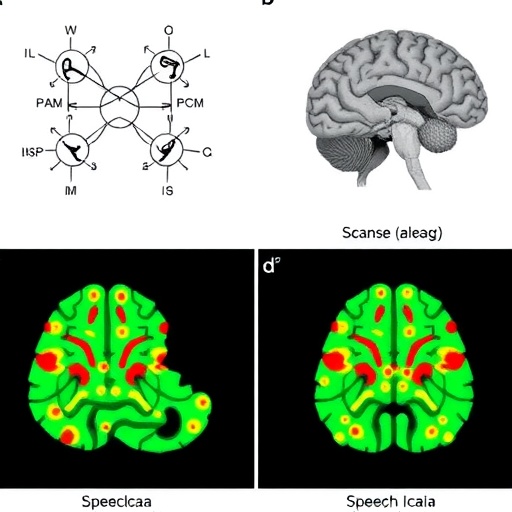
A brief recording of ordinary speech may carry far more neurological information than clinicians can hear by ear alone. In a cross-sectional study of 214 participants, researchers used automated language analysis to identify speech patterns associated with the three major clinical variants of primary progressive aphasia, a group of neurodegenerative disorders in which language declines progressively while other abilities may initially remain relatively preserved. The findings suggest that one to two minutes of connected speech could eventually support faster, more scalable diagnosis and monitoring for people whose symptoms are difficult to classify.
Primary progressive aphasia, or PPA, is not a single disease but a clinical syndrome caused by progressive damage to language networks in the brain. Its principal variants are distinguished by the nature of the language impairment. People with nonfluent PPA often produce slow, effortful, grammatically simplified speech. Those with logopenic PPA commonly struggle to retrieve words and repeat longer phrases, while semantic PPA is characterized by a progressive loss of word meaning and knowledge about objects or concepts. In practice, however, these boundaries can be blurred, especially early in the illness.
The new study tested whether computational analysis could transform short samples of connected speech into interpretable profiles that distinguish these variants. Rather than relying only on a single measure, such as speaking rate or the number of pauses, the researchers evaluated multiple features of speech and language. These may include lexical choices, sentence structure, grammatical complexity, fluency, pauses, repetitions and other characteristics that change as specific language networks deteriorate. The goal was not simply to classify participants with a black-box algorithm, but to create variant-specific scores that could be examined and related to brain biology.
To generate the profiles, the investigators used a statistical technique called Lasso multinomial modeling. This method is designed to select the most informative variables from a large set of potentially correlated features while limiting overfitting. In a multinomial model, the algorithm can distinguish among more than two outcome categories—in this case, nonfluent, logopenic and semantic PPA. The Lasso penalty shrinks weaker or redundant predictors, producing a more compact model that may be easier to interpret and apply to new speech samples.
The resulting speech profiles showed high overall performance in differentiating the PPA variants. Importantly, the patterns were not merely statistical labels detached from neuroscience. The investigators found expected associations between the speech scores and regional brain atrophy, suggesting that specific features of a person’s language may reflect damage in the neural systems that support speech production, word retrieval, sentence construction and semantic knowledge. These links strengthen the possibility that automated speech analysis could serve as a noninvasive window into disease-related changes in the brain.
The study also examined an autopsy-confirmed subset of participants, providing an unusually direct test of whether speech profiles correspond to underlying neuropathology. PPA can arise from different protein-accumulation diseases, including forms associated with frontotemporal lobar degeneration and Alzheimer disease pathology. Although clinical symptoms and pathology do not map perfectly onto one another, the researchers found that the speech profiles discriminated among common neuropathologic classes in the autopsy-confirmed group. This result suggests that speech may contain clues not only about the clinical presentation but also about the biological process driving degeneration.
The approach could be particularly valuable because connected speech is relatively easy to collect. A participant might describe a picture, recount a recent event or discuss a familiar topic while being recorded on a computer or smartphone. Automated systems can then quantify language features consistently across visits, potentially reducing the time required for specialized testing. Repeated recordings could also help investigators track whether a patient’s speech profile is changing, offering a practical measure for clinical monitoring and future therapeutic trials.
The findings do not mean that an algorithm can replace a neurologist, speech-language pathologist, brain imaging or biomarker testing. The study was cross-sectional, meaning that participants were assessed at a particular point rather than followed over time to determine how their profiles evolved. Speech can also be influenced by education, multilingualism, hearing ability, mood, fatigue, technology and differences in conversational style. Before clinical deployment, automated tools will need validation in larger and more diverse populations, as well as testing across microphones, languages, settings and stages of disease.
Even with those limitations, the work points toward a new model of neurological assessment in which everyday language becomes a measurable clinical signal. A short recording could complement imaging and laboratory biomarkers, help flag patients for specialist evaluation and provide an interpretable summary of how language networks are functioning. Because the study connected computational speech measures with both brain atrophy and autopsy-confirmed pathology, it offers evidence that the technology may be biologically grounded rather than merely predictive. Published in JAMA Neurology, the research highlights how artificial intelligence and careful statistical modeling could make the subtle signatures of neurodegeneration easier to detect, explain and follow.
Web References: https://doi.org/10.1001/jamaneurol.2026.2520
References: JAMA Neurology study identified by DOI 10.1001/jamaneurol.2026.2520.
Cite Scienmag News
Cassandra Pierce. (August 3, 2026). Speech Analysis Identifies Clinical, Anatomical, and Pathological Variants of Primary Progressive Aphasia. Scienmag. https://scienmag.com/speech-analysis-identifies-clinical-anatomical-and-pathological-variants-of-primary-progressive-aphasia/
Cassandra Pierce. "Speech Analysis Identifies Clinical, Anatomical, and Pathological Variants of Primary Progressive Aphasia." Scienmag, 3 August 2026, https://scienmag.com/speech-analysis-identifies-clinical-anatomical-and-pathological-variants-of-primary-progressive-aphasia/. Accessed 4 September 2026.
Cassandra Pierce. "Speech Analysis Identifies Clinical, Anatomical, and Pathological Variants of Primary Progressive Aphasia." Scienmag. August 3, 2026. https://scienmag.com/speech-analysis-identifies-clinical-anatomical-and-pathological-variants-of-primary-progressive-aphasia/


