

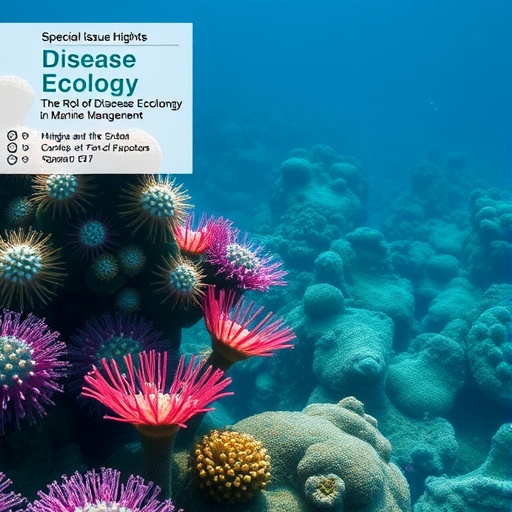
In recent years, the world’s oceans have witnessed devastating declines in marine populations, with diseases playing a pivotal role in numerous mass mortality events. Over the last decade, more than five billion sea stars have disappeared globally, with some species experiencing population drops exceeding 90 percent. This staggering loss dramatically alters the balance of coastal ecosystems, where sea stars act as keystone predators. Similarly, the Bering Sea suffered an unprecedented ecological crisis between 2018 and 2021 when more than 10 billion snow crabs starved, which precipitated the historic closure of one of the United States’ most profitable fisheries. Such collapses not only devastate biodiversity but also jeopardize regional economies reliant on marine resources.
Parallel to these events, southern New England’s lobster fishery, once thriving, encountered a severe downturn due to the onset of a shell degradation disease in the early 2000s. This epidemic weakened the protective exoskeletons of lobsters, making them more vulnerable to predation and environmental stressors. The intricate interplay between disease and environmental changes underscores the multiplicity of stressors causing marine population declines. Adding to these challenges is the avian flu pandemic that swept through marine mammal populations in 2023, wiping out an astonishing 97 percent of elephant seal pups in an Argentine colony, illustrating the broad ecological reach of infectious diseases.
These crises bring to light the urgent need to deepen our understanding of marine diseases—not only those that directly cause mortality but also those that exacerbate the effects of other environmental pressures. Historically, marine disease ecology has lagged behind terrestrial epidemiology, partly due to the formidable logistical and financial barriers associated with oceanic research. Monitoring, predicting, and managing disease outbreaks in vast, complex marine environments has remained a significant challenge, limiting proactive management strategies to curb such collapses.
However, a major shift is now underway with the advent of advanced molecular tools, genomics, artificial intelligence, and sophisticated oceanographic models. These innovations provide remarkable new capabilities to detect pathogens, decipher their modes of transmission, and predict outbreak trajectories. These tools enable researchers to characterize diseases at a molecular level and track their spatiotemporal dynamics, offering insight into how environmental factors such as temperature, salinity, and ocean currents influence disease emergence and spread.
A recently published special issue of the Philosophical Transactions of the Royal Society B assembles a comprehensive collection of peer-reviewed studies explicitly focused on marine disease management. This landmark publication brings together cutting-edge research and reviews that explore emerging pathogens, the impact of climate change, advancements in disease detection methodologies, and ecosystem-based management approaches. Importantly, the issue emphasizes translating scientific discovery into actionable frameworks that can guide resource managers in mitigating and preventing large-scale outbreak events.
One standout theme is the integration of theoretical ecology with pragmatic disease management. Co-editor Maya Groner from Bigelow Laboratory for Ocean Sciences highlights how fundamental understanding of infectious disease ecology can operate in tandem with real-world management challenges. This synergy is essential, particularly as changing ocean conditions amplify the risk factors facilitating disease transmission and pathogen virulence. The capacity to marry empirical data with management models is rapidly evolving, offering promising avenues for preventative and responsive interventions.
Another key focus of the special issue is the role of collaborative frameworks among researchers, resource managers, industries, and local communities. Effective surveillance networks, data sharing platforms, and coordinated monitoring efforts have emerged as vital to understanding dynamic disease landscapes. For example, continuous monitoring programs that engage citizen scientists, combined with automated pathogen detection systems, have proven indispensable in early outbreak detection and timely response.
The research showcased also addresses the implications of diseases on aquaculture, a sector critical to global food security. Certain viral pathogens have severely impacted oyster industries across Europe and North America, causing significant economic losses. Understanding the epidemiology of these pathogens and implementing biosecurity measures tailored to aquatic farming conditions are crucial steps toward sustainable aquaculture management.
Furthermore, studies explore how diseases influence broader ecosystem resilience, particularly in habitats such as coral reefs and kelp forests that provide essential ecological services. Coral diseases driven by warming oceans threaten biodiversity hotspots, while diseases in kelp forest predators like sunflower sea stars have cascading effects on the ecosystem. The issue underscores the necessity of ecosystem-based strategies to buffer these communities against pathogenic disruptions, focusing on preserving ecosystem function and biodiversity.
A remarkable number of species highlighted hold significant socio-economic and cultural importance, including the American lobster and sunflower sea star. The interplay between disease, environmental stress, and human reliance on marine species adds layers of complexity to management strategies. Environmental conditions, such as rising ocean temperatures and fluctuating salinity, often exacerbate disease symptoms and transmission, indicating a clear link between climate change and marine disease dynamics.
To address diseases with unknown etiologies, the collection proposes structured investigative guidelines, utilizing molecular diagnostic tools and epidemiological modeling to identify novel pathogens. Moreover, reintroduction strategies for species post-outbreak are assessed, determining how best to restore populations while minimizing the risk of recurrent disease events. These innovative approaches demonstrate the growing sophistication in managing marine wildlife health.
Across all contributions, there is a consensus on the need for continued investment in research and infrastructure. The development of transparent information-sharing systems and standardized disease monitoring protocols is viewed as essential for timely detection and control. Experts stress that sustaining such systems requires long-term financial commitments and the cultivation of robust partnerships between academic institutions and regulatory bodies.
In light of the escalating threats from ocean warming, pollution, and increased human activities, the burgeoning field of marine disease ecology stands at a critical juncture. The new research collection signals a hopeful trajectory where technology, interdisciplinary collaboration, and ecological insights converge to better safeguard marine life. As co-editor David Paez from the USGS Western Fisheries Research Center notes, building resilient infrastructure for disease response is challenging but achievable, marking an important milestone in marine conservation and management efforts.
Scientists are increasingly demonstrating that while marine diseases pose complex risks, informed management rooted in innovative research can mitigate their impacts. Through persistent efforts, a new era of proactive disease ecology is emerging — one that not only reveals the hidden mechanisms driving marine health crises but also empowers stakeholders to take decisive action, securing the future of ocean ecosystems amid rapid global change.
Subject of Research: Not applicable
Article Title: Not provided
News Publication Date: 5-Mar-2026
Web References: http://dx.doi.org/10.1098/rstb/381/1945
References: Philosophical Transactions of the Royal Society B Biological Sciences, Special Issue on Marine Disease Management
Image Credits: Alicia L. Bruzos
Keywords: Natural resources management, Ecological degradation, Disease outbreaks, Marine ecology, Marine conservation, Disease control, Parasitology, Wildlife management, Ecosystem services


