


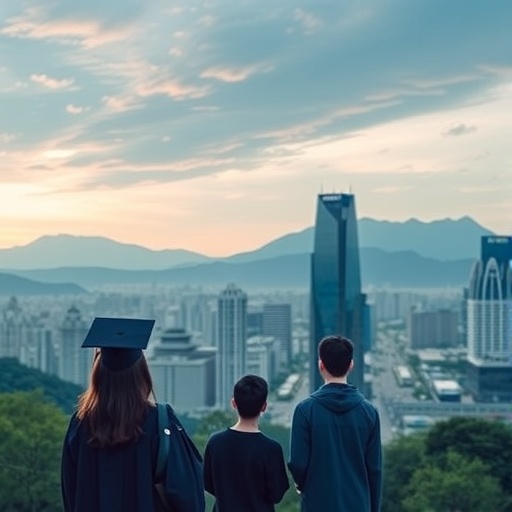
In recent years, South Korea has witnessed a dramatic expansion of its higher education system, transforming the landscape of educational opportunities across the nation. As universities sprout like mushrooms after rain, the implications of this exponential growth are nothing short of profound. The question at the heart of this transformation revolves around educational aspirations and the complex web of inequality that accompanies them. The forthcoming study by Yong, Schoon, and Shure delves deep into these pertinent issues, exploring how the dynamics of an expanding educational framework shape aspirations, access, and ultimately, social mobility.
In its essence, the research analyzes how students from different socio-economic backgrounds perceive their educational paths amidst the plethora of options available to them. The proliferation of institutions has created an environment filled with possibilities. Still, it has also entrenched existing disparities, leading to a segmented landscape where aspirations are often dictated not just by individual ambition but also by socioeconomic status. This juxtaposition of unlimited potential and entrenched inequality presents a paradox that is ripe for exploration.
The Korean higher education system is characterized by its rigorous entrance examinations and highly competitive nature. This competitive atmosphere can both elevate aspirations and exacerbate inequalities. Those from wealthier backgrounds are invariably afforded greater access to resources such as private tutoring, which enhances their chances of succeeding in these daunting entrance exams. Conversely, students from lower-income families may find themselves at a distinct disadvantage, trapped in a cycle where aspirations remain unfulfilled due to systemic barriers.
One striking facet of the study is the research team’s focus on the role of family background in shaping educational aspirations. Family socioeconomic status emerges as a significant predictor of not only the likelihood of attending higher education but also the caliber of institutions that students aspire to attend. While the expansion of the education sector has opened up additional opportunities, these opportunities are not uniformly accessible. The preferences and expectations instilled in students from an early age create an invisible ceiling that can limit their aspirations and future success.
Additionally, the study examines the impact of cultural narratives surrounding education in South Korea, where there exists a societal emphasis on educational attainment as a hallmark of success. This cultural backdrop serves as a double-edged sword. On one side, it motivates students to strive for academic excellence; on the other, it can foster an environment where failure to pursue higher education leads to societal stigmatization. The relentless pursuit of academic achievement often leads to immense pressure, which can have detrimental effects on the mental health of students.
The implications of these findings extend beyond individual aspirations to inform broader social policies. As the higher education system evolves, understanding the intricate relationships among students’ aspirations, socio-economic status, and the educational landscape is vital for policymakers. A focus on equity becomes paramount in this context, requiring initiatives that aim to level the playing field for all students, regardless of their background. Enhanced access to resources, mentorship programs, and equitable funding for lower-income students can serve as crucial starting points in dismantling existing barriers.
Moreover, the authors draw attention to the importance of longitudinal studies that track students over time. These studies can provide invaluable insights into how educational aspirations shape life trajectories and inform ongoing discussions about inequality in education. Analyzing trends over the years helps to discern whether the recent expansions in the higher education sector lead to a genuinely more equitable system or if they merely perpetuate existing inequalities.
As South Korea navigates this pivotal moment in its educational evolution, the need for systemic change becomes increasingly clear. The evidence gathered by Yong, Schoon, and Shure underscores the necessity of creating an inclusive framework that addresses both access to education and the myriad factors that influence aspirations. Stakeholders in the educational sector must collaborate to reimagine the current model and prioritize an approach that keenly focuses on the needs of disadvantaged students while fostering a culture of aspiration for all.
In summation, the forthcoming research highlights the intricate dynamics at play in South Korea’s higher education landscape, emphasizing the discord between expanding opportunities and persistent inequalities. As educational aspirations continue to evolve, the reflections of this study serve as a call to action for educators, policymakers, and communities alike. Ensuring that the growth of higher education translates into equitable outcomes requires a concerted effort that addresses both systemic inequities and the aspirations of the diverse student populace.
This narrative of expansion and inequality is not unique to South Korea; rather, it resonates globally as nations grapple with similar challenges in their educational systems. The lessons learned from this research hold significance beyond borders, offering insights that can inform global educational policies aimed at fostering equity and access for all.
As we look to the future, the hope is that educational aspirations, fueled by genuine opportunity, become a reality for every student, regardless of their background. In this vision of an equitable educational landscape, the dreams of countless students will not only be realized but will also contribute to the ongoing narrative of social mobility and progress.
Cite Scienmag News
Courtney Benton. (October 21, 2025). South Korea’s Higher Education: Aspirations vs. Inequality. Scienmag. https://scienmag.com/south-koreas-higher-education-aspirations-vs-inequality/
Courtney Benton. "South Korea’s Higher Education: Aspirations vs. Inequality." Scienmag, 21 October 2025, https://scienmag.com/south-koreas-higher-education-aspirations-vs-inequality/. Accessed 4 September 2026.
Courtney Benton. "South Korea’s Higher Education: Aspirations vs. Inequality." Scienmag. October 21, 2025. https://scienmag.com/south-koreas-higher-education-aspirations-vs-inequality/


