South Africa earned global praise for detecting and sequencing SARS-CoV-2, yet a new Perspective argues that the country’s most consequential viral threat may not be a novel pathogen arriving at a border. Instead, it may be the delayed recognition of viruses already circulating within endemic and re-emerging zoonotic and arboviral systems, hidden beneath low clinical suspicion and fragmented surveillance.
Distributed sampling, rapid bioinformatics and transparent reporting allowed SARS-CoV-2 genomic and wastewater-based monitoring to detect lineage turnover and variant introductions before routine clinical pathways would have done so. But that sophistication, they stress, is unevenly distributed. For many non-respiratory zoonotic and arthropod-borne viruses, surveillance remains sporadic or reactive, diagnostic suspicion is low outside specialist settings, and ecological intelligence is only weakly linked to frontline clinical decision-making.
Confirmatory testing compounds the problem. In the public healthcare sector, laboratory confirmation for high-consequence zoonotic infections and several arboviral infections is frequently referral-based and centralised, with the National Institute for Communicable Diseases providing reference functions for viral haemorrhagic fevers and related threats.
The 2024 mpox outbreak illustrates the stakes. World Health Organization reporting described locally acquired clade IIb transmission, substantial clinical severity with frequent hospitalisation, and a high proportion of cases among men, many living with unmanaged or newly diagnosed HIV and advanced HIV disease. NICD situation updates subsequently reported 25 laboratory-confirmed cases and three deaths between May and October 2024, consistent with local transmission in most cases. By January 2026, NICD updates also described clade Ib infections, including introductions linked to travel, showing that South Africa must manage importation risk and local amplification simultaneously. A South African clinical report of severe mpox in an immunocompromised patient reinforced the point: in a setting with substantial HIV burden, viral emergence cannot be disentangled from immune compromise, care access, diagnostic delay, psychosocial factors and stigma.
Crimean-Congo haemorrhagic fever virus presents a different paradox: a virus that is unquestionably endemic yet still clinically under-recognised. South African public health guidance describes it as endemic with sporadic human cases, with more than 180 laboratory-confirmed human cases reported since 1981. Recent primary research has demonstrated extensive cattle seropositivity, measurable occupational exposure among farm and wildlife workers, and molecular detection of the virus in Hyalomma ticks. Yet a separate seroepidemiologic survey in selected high-risk groups reported very low seroprevalence, underscoring that exposure patterns may be spatially heterogeneous, occupation-specific and sensitive to sampling frames. The practical implication, the authors argue, is that South Africa still lacks a stable denominator for identifying where spillover risk concentrates and which clinical pathways most often miss mild-to-moderate infection.
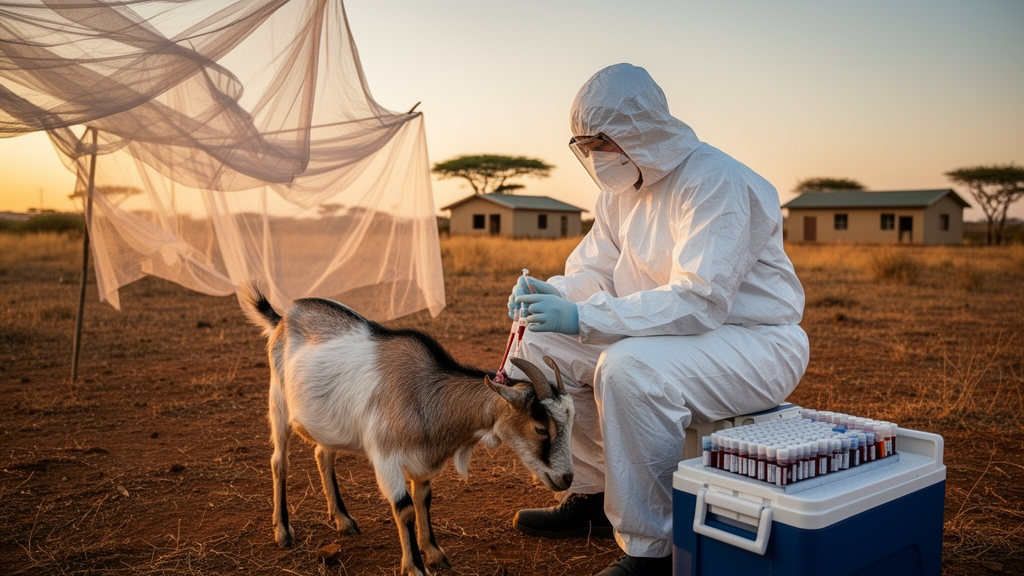
Rift Valley fever virus offers an arguably more operationally tractable signal. Human serosurveillance in northern KwaZulu-Natal found evidence of recent exposure and probable endemic circulation despite the absence of recognised outbreaks in that district during the sampling period. Parallel livestock data from central South Africa documented substantial interepidemic seropositivity after the last major epidemic, consistent with ongoing low-level circulation between recognised epidemics. Vector and eco-epidemiologic data reinforce that risk is patterned rather than random: viral detection in the mosquito Aedes (Aedimorphus) durbanensis, together with evidence that anomalous rainfall and soil saturation can serve as outbreak risk indicators, supports operational early warning linked to animal vaccination and vector control. The authors note that the mechanisms of persistence during interepidemic periods remain debated, with vertical transmission in Aedes eggs a plausible mechanism described in international guidance, while alternative models emphasise cryptic cycling among vectors and vertebrate hosts without requiring prolonged egg-associated persistence.
The strongest evidence for diagnostic misalignment may come from neglected neurotropic arboviruses. West Nile virus, long treated as a background flavivirus in the region, was identified in 8 of 219 cerebrospinal fluid specimens from patients with unsolved neurological infection in Gauteng, and in 40 of 441 hospitalised patients with acute febrile or neurological disease in Gauteng and Mpumalanga. In parallel, mosquito surveillance across multiple provinces detected the virus in conservation and peri-urban sites, supporting the inference that ecological opportunity and clinical under-recognition coexist. These findings position West Nile virus in South Africa as more than an equine or veterinary concern; it is a measurable contributor to febrile and neurologic hospitalisation in at least some settings.
Other arboviruses add to the picture. Sindbis virus-neutralising antibodies indicated substantial incidence in some cohorts of hospitalised patients with acute fevers of unknown cause, and other data suggest relevance to arthritis presentations in the Free State. Shuni virus RNA has been detected in cerebrospinal fluid specimens collected during arbovirus season from public-sector hospitals, suggesting it may be an under-recognised cause of neurologic infection in humans. Entomological surveillance detected Shuni virus in multiple mosquito genera, and orthobunyavirus reassortants have been identified in South African animals and Culicoides midges, raising the possibility that genomic diversification occurs within poorly monitored systems. Middelburg virus has been detected and genomically characterised from cerebrospinal fluid and blood samples of humans presenting with neurological manifestations. The authors are careful to note that these findings do not prove every detected arbovirus is a looming national crisis; many data derive from sentinel cohorts, archived specimens or specialised programmes rather than nationally representative surveillance. Their inference is narrower but more consequential for policy: if targeted studies repeatedly identify overlooked viral causes of febrile and neurologic disease, routine care pathways are insufficiently tuned to detect them, and diagnostic menus are misaligned with local ecology.
What should change? The authors advocate moving away from pathogen-specific exceptionalism toward syndrome-based, seasonally informed surveillance coupled to an integrated One Health “signal-to-action” framework. A practicable model is a formalised zoonoses signalling and risk structure linking clinical syndromic sentinel surveillance, veterinary and livestock events including equine neurologic disease and ruminant abortions, wildlife rehabilitation and zoo signals, and vector and environmental monitoring, with a shared analytic hub and predefined triggers for targeted testing and sequencing when indicated. Comparable institutional mechanisms exist internationally: the Netherlands’ Zoonoses Structure includes a monthly multi-sector Signalling Forum for Zoonoses that assesses signals and escalates them through defined steps when a potential public health threat is identified; the United Kingdom’s Human Animal Infections and Risk Surveillance group provides cross-government horizon scanning and structured zoonotic risk assessment; and Australia strengthened national One Health coordination through an Australian Government One Health Network established in December 2024. Importantly, the authors caution that a syndrome-based approach should not be misconstrued as advocating indiscriminate multiplex testing of all influenza-like illness presentations. Broad multiplex panels and sequencing are most rational when embedded within diagnostic stewardship, targeted to high-risk syndromes such as meningoencephalitis, severe febrile illness with neurologic signs, and severe immunocompromise, with reflex confirmatory testing and paired serology where biologically appropriate. Evidence from meningoencephalitis multiplex panel implementation indicates that clinical and economic outcomes depend strongly on local baseline diagnostics and on how panels are deployed, so selective use with clear algorithms is more likely to be sustainable than universal application.
Pragmatic mitigations, the authors argue, need not wait for a fully resourced national overhaul. These include establishing a standing national zoonoses signalling forum with monthly meetings and defined escalation pathways; adopting a minimal interoperable dataset for febrile, neurologic and rash syndromes that includes exposure geography, animal contact, season and immunocompromise; implementing diagnostic stewardship policies that define when multiplex testing is permitted and when confirmatory testing is mandatory; and creating joint field investigation “rapid teams” that include clinicians, microbiologists, virologists, veterinarians, entomologists and laboratory scientists so that ecological intelligence is translated into clinical alerts and vice versa. South Africa should also repurpose the infrastructural lessons of COVID-19, extending the logic of sentinel sampling, real-time analytics and geographically resolved public reporting to syndrome-based and One Health surveillance streams, not by assuming wastewater is the answer for every pathogen. The authors conclude that South Africa’s future vulnerability to emerging viruses is unlikely to be explained solely by the next imported pathogen crossing a border; a more plausible and underappreciated risk is that consequential viral re-emergence is already occurring within endemic zoonotic and arboviral systems but remains below the threshold of routine recognition. An integrated, diagnostically guided One Health architecture, they argue, is a feasible pathway to seeing what is already there, and acting before signals culminate into outbreaks.
Subject of Research: Surveillance gaps in endemic zoonotic and arboviral viral transmission in South Africa
Article Title: South Africa’s next viral emergence may already be here: under-recognized zoonotic and arboviral transmission as a surveillance blind spot
Article References: Mahomed, S., Khan, A., & Archary, D. (2026). South Africa’s next viral emergence may already be here: under-recognized zoonotic and arboviral transmission as a surveillance blind spot. Discover Viruses, 3(1), Article 16. https://doi.org/10.1007/s44370-026-00051-2
Image Credits: AI Generated
DOI: 10.1007/s44370-026-00051-2
Keywords: South Africa, viral surveillance, zoonotic viruses, arboviruses, mpox, Crimean-Congo haemorrhagic fever, Rift Valley fever, West Nile virus, One Health, diagnostic stewardship, public health, South
Cite Scienmag News
Kristina Jarvis. (October 28, 2026). South Africa’s viral blind spot: endemic zoonoses and arboviruses slipping past surveillance. Scienmag. https://scienmag.com/south-africas-viral-blind-spot-endemic-zoonoses-and-arboviruses-slipping-past-surveillance/
Kristina Jarvis. "South Africa’s viral blind spot: endemic zoonoses and arboviruses slipping past surveillance." Scienmag, 28 October 2026, https://scienmag.com/south-africas-viral-blind-spot-endemic-zoonoses-and-arboviruses-slipping-past-surveillance/. Accessed 28 October 2026.
Kristina Jarvis. "South Africa’s viral blind spot: endemic zoonoses and arboviruses slipping past surveillance." Scienmag. October 28, 2026. https://scienmag.com/south-africas-viral-blind-spot-endemic-zoonoses-and-arboviruses-slipping-past-surveillance/