


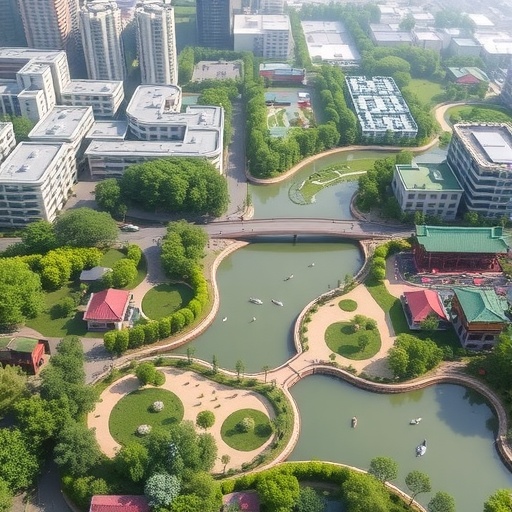
In the complex urban tapestry of Song Dynasty China, a unique ecological and sociopolitical innovation quietly flourished: the establishment and maintenance of official animal-release ponds. These carefully constructed aquatic sanctuaries were more than mere ornamental water bodies; they embodied an intricate convergence of environmental stewardship, ritualistic politics, and urban public welfare. Through the lens of historical documentation and legal codices, we uncover the multifaceted nature of these ponds, which simultaneously served spiritual, ecological, recreational, and political functions in some of the empire’s most densely populated cities.
The management of animal-release ponds was no trivial matter. Strategic site selection and deliberate construction practices underpinned their foundational integrity. Equally crucial was ongoing governance to ensure protection against illegal fishing, encroachment, and infrastructure degradation. Imperial edicts dating back to the 12th century explicitly forbade fishing activities within these ponds, with transgressors subject to prosecution under theft laws. Such stringent legal frameworks underscore the importance vested by the Song dynasty’s central government in preserving the sanctity and intended functions of these urban water bodies.
Legal records from the Southern Song period reveal not only the state’s firm stance but also the challenges of enforcement on the ground. A recorded case details how a figure named Zhao Shisheng orchestrated an armed plundering of an animal-release pond, including the deliberate destruction of its sacred pavilion and the stone stele inscribed with imperial blessings. The judiciary’s response was unequivocal: severe corporal punishment and imprisonment irrespective of Zhao’s imperial lineage. This incident illuminates the tensions between official protocol and local power struggles that often erupted in the urban landscape.
Beyond illegal fishing, the physical integrity of animal-release ponds was threatened by encroachment from surrounding urbanites. To mitigate these risks, which included contamination and drowning hazards, cities erected perimeter fences or walls around the ponds. Notable examples from urban centers such as Jiankang, Ninghai, and Jinan demonstrate intentional spatial controls designed to balance urban expansion with ecological preservation. These defensive constructions not only regulated access but also reinforced the symbolic separation of these ponds as protected civic spaces.
Yet, beneath the veneer of rigid governmental control lay an enduring management dilemma. Despite their ecological and spiritual significance, animal-release ponds embodied economic costs that sparked conflict among stakeholders. The sacrifice of fishing income, for instance, disproportionately affected impoverished communities who relied heavily on aquatic resources for subsistence. In the Southern Song dynasty’s water-abundant southern regions, where land consolidation forced many peasants into tenant farming or total landlessness, fishing functioned as a critical economic lifeline. Thus, bans on fishing were perceived less as environmental edicts and more as existential threats to livelihood.
The emperor’s initial enthusiasm for animal-release ponds was soon tempered by pragmatic concerns. Historical records show that Emperor Gaozong first mandated the nationwide establishment of these ponds in 1143 but subsequently revised the decree to apply only to cities with existing ponds after grappling with the policy’s socioeconomic fallout. Similarly, a petition by the Prefect of Nankang to convert fish ponds and cancel fishing leases was rejected by Emperor Xiaozong, who explicitly acknowledged the dependence of local populations on fishing. These high-level policy reversals reflect a nuanced negotiation between ecological ideals and economic realities.
Municipal authorities faced their own contradictions. While tasked with enforcing bans, some local governments exploited the pretext of animal-release pond management to maintain revenue streams. In Jingmen’s Dushi Pond, confiscation of fishing rights did not reduce the tax burden on fishing communities; instead, taxes were redistributed and levied upon local residents, exacerbating economic strains under the guise of regulatory compliance. This dynamic highlights the often coercive interplay between governance and populace in Song urban environments.
Tensions extended beyond the grassroots to the rift between central and local administrations. The central government emphasized political stability and moral governance, advocating for animal-release ponds as public goods embodying imperial virtue. Conversely, local officials grappled with economic exigencies, including the imperative to generate tax revenue. The case of Junzhou vividly illustrates this conflict: despite official fishing prohibitions, dense arrays of fish weirs and unsustainable pond draining persisted as practical measures to meet fiscal demands, underscoring the limits of central policy enforcement under local duress.
This complex governance matrix precipitated a cycle of establishment, neglect, and abandonment in animal-release ponds. West Lake in Hangzhou exemplifies this pattern. Initially converted into an animal-release site as early as 1021, West Lake hosted formal release ceremonies well into the Northern Song period, celebrated by famed literati such as Su Shi, who articulated its multipurpose functions. However, warfare, political upheaval, and shifting demographics disrupted the pond’s operation. With Hangzhou’s elevation to imperial capital and its population boom during the Southern Song era, official enforcement became increasingly challenging, leading to repeated reinstatement and lapses of fishing bans every few decades.
Despite imperial enthusiasm manifest in multiple edicts and restoration efforts—including the construction of commemorative structures like Desheng Hall—animal-release ponds remained embroiled in persistent administrative and societal friction. The central government’s inability to fully subordinate local interests and enforce prohibitions rendered these ponds fragile institutions, highly dependent on the priorities and personal interests of contemporary governors and officials. When political will waned, the ponds deteriorated, symbolizing the ephemeral nature of such state-directed ecological interventions.
By the time of the Yuan dynasty, animal-release ponds diminished in frequency and prominence, with isolated revivals such as Kublai Khan’s reestablishment of West Lake as an animal-release site. The Ming dynasty witnessed the complete disappearance of this practice, driven in part by the rise of Neo-Confucian thought, which often rejected Buddhist-derived rituals like animal release. This ideological shift, combined with the practical challenges of balancing ecological, social, and economic interests, sealed the fate of these ponds as historical curiosities rather than living elements of urban ecology.
Some contemporaneous scholars in the Ming period articulated critical perspectives on the legacy of animal-release ponds. They questioned the efficacy and virtue of releasing animals for imperial prayers, arguing pragmatically that establishing order and proper social hierarchies held far greater moral and political value than ritual acts perceived as symbolic or superstitious. Such critiques reflect an evolving intellectual climate that prioritized administrative rationalism and Confucian orthodoxy over syncretic religious practices.
Today, traces of Song Dynasty animal-release ponds linger mainly as historical landmarks or aesthetic urban green spaces, their original ritual and ecological roles largely forgotten. These vestiges not only offer insights into ancient Chinese urban planning but also raise enduring questions about the interplay between environmental conservation, social equity, and governance. The rise and fall of animal-release ponds underscore the challenges of sustaining ecological initiatives amid competing economic imperatives and political complexities—a dilemma resonant even in contemporary urban environmental management.
The story of animal-release ponds from Song Dynasty China is thus a profound narrative weaving together environmental foresight, ritual politics, socioeconomic struggle, and administrative pragmatism. Their existence offers a remarkable window into how ancient societies sought to harmonize human activity with natural systems and imperial cosmology, navigating often fraught trade-offs that ultimately determined their survival or demise. As modern cities confront ecological and social sustainability challenges, lessons from these historical experiments in urban aquatic spaces remain profoundly relevant.
Cite Scienmag News
Courtney Benton. (August 26, 2025). Song Dynasty Animal-Release Ponds Shaped Urban Green Spaces. Scienmag. https://scienmag.com/song-dynasty-animal-release-ponds-shaped-urban-green-spaces/
Courtney Benton. "Song Dynasty Animal-Release Ponds Shaped Urban Green Spaces." Scienmag, 26 August 2025, https://scienmag.com/song-dynasty-animal-release-ponds-shaped-urban-green-spaces/. Accessed 3 September 2026.
Courtney Benton. "Song Dynasty Animal-Release Ponds Shaped Urban Green Spaces." Scienmag. August 26, 2025. https://scienmag.com/song-dynasty-animal-release-ponds-shaped-urban-green-spaces/


