

Sunday, October 25, 2026
Science
No Result
View All Result
  • Login
  • HOME
  • SCIENCE NEWS
  • CONTACT US
  • HOME
  • SCIENCE NEWS
  • CONTACT US
No Result
View All Result
Scienmag
No Result
View All Result
Home Science News Medicine

Solar-Powered Watch Tracks Children’s Outdoor Light Exposure in Pilot Study

October 25, 2026
in Medicine
Ophelia Keating
By Ophelia Keating Scienmag Editorial Profile - Health Services Research
Reading Time: 3 mins read
0
Solar-Powered Watch Tracks Children’s Outdoor Light Exposure in Pilot Study

Solar-Powered Watch Tracks Children's Outdoor Light Exposure in Pilot Study

65
SHARES
587
VIEWS
Share on FacebookShare on Twitter
ADVERTISEMENT

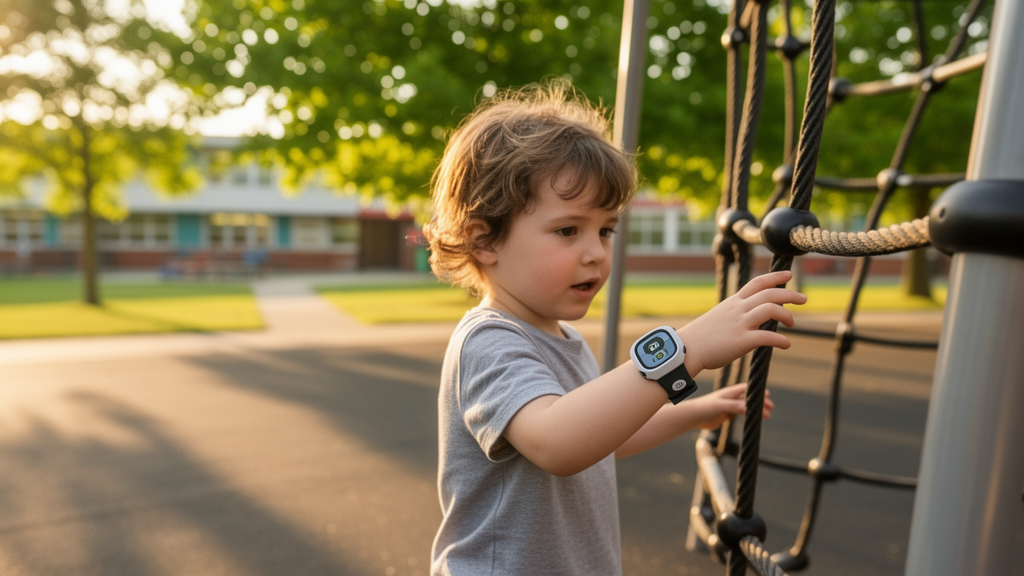
Time spent outdoors is one of the few modifiable factors known to lower the risk of myopia onset in children, but measuring how much bright light a child actually receives each day has long been a logistical headache for researchers. A pilot field study conducted in Kaohsiung, Taiwan, and published in BMC Public Health, tested whether a solar-powered wristwatch could stand in for the chest-mounted light loggers that are considered more accurate but are cumbersome to deploy at scale. The answer, according to the data, is a qualified yes: the watch performed well when describing average exposure across a group, yet it fell short when the goal was tracking a single child's daily bright-light time.

Two children failed to complete the monitoring, leaving 43 child-days of paired measurements from eight children. The two devices produced remarkably similar averages. The mean difference between the HOBO logger and the watch was just −6.3 minutes per day, with a 95% confidence interval spanning −28.6 to 16.1 minutes, meaning the watch neither systematically overestimated nor underestimated bright-light time at the group level.

Spearman's correlation coefficient reached 0.82 and the intraclass correlation coefficient 0.74, both indicating strong agreement between the instruments when daily values were pooled across participants. Agreement on any individual day, however, was far less convincing. The 95% limits of agreement, adjusted for repeated measurements per subject, stretched from −153.3 to 140.8 minutes per day, meaning that on a given day the watch could plausibly differ from the chest logger by roughly two and a half hours in either direction.

Within-child correlation was correspondingly weak, at r = 0.30. When the investigators removed the single child showing the largest measurement discrepancy, the limits of agreement tightened dramatically to between −46.5 and 51.8 minutes per day, suggesting that a substantial share of the observed scatter was driven by one outlier participant rather than by the technology itself. The automated program misread the hour hand in 3 of 54 photographs, a small but nontrivial failure rate for a workflow intended to support large-scale cohorts without trained personnel.

The study's authors conclude that the wrist-worn TT120 correlated strongly with the chest-mounted HOBO and showed a minimal mean difference, making it a plausible tool for describing average bright-light exposure in groups of children. They are equally clear that it cannot substitute for the HOBO in daily individual tracking, given the wide limits of agreement for single days. Time outdoors is an established protective factor against myopia onset, and objective quantification across large cohorts remains challenging, which is precisely the gap this pilot was designed to probe.

Several caveats frame the findings. The sample was small, involving only eight children with complete data over a single week in one city, and the study lacked a calibrated co-located reference standard that could adjudicate which device was closer to the truth when the two disagreed. Even so, the pilot offers an early signal for myopia prevention research.

The results establish a concrete performance profile for the TT120: strong group-level agreement with the chest-mounted logger, weak day-to-day agreement for individual children, and a dial-reading workflow that misread a small share of photographs.

Subject of Research: Agreement between a solar-powered wristwatch and a chest-mounted light logger in quantifying children's daily bright-light exposure

Article Title: Agreement between a wrist-worn solar-powered watch and a chest-mounted light logger in quantifying daily time above 1500 lx in children: a pilot field comparison study

Article References: Huang, T.-J., & Wu, P.-C. (2026). Agreement between a wrist-worn solar-powered watch and a chest-mounted light logger in quantifying daily time above 1500 lx in children: a pilot field comparison study. BMC Public Health. https://doi.org/10.1186/s12889-026-30036-1

Image Credits: AI Generated

DOI: 10.1186/s12889-026-30036-1

Keywords: myopia, light exposure, pediatrics, wearable devices, public health, lux, outdoor time, pilot study, Agreement, between, wrist-worn, solar-powered

Cite Scienmag News

Ophelia Keating. (October 25, 2026). Solar-Powered Watch Tracks Children’s Outdoor Light Exposure in Pilot Study. Scienmag. https://scienmag.com/solar-powered-watch-tracks-childrens-outdoor-light-exposure-in-pilot-study/

Ophelia Keating. "Solar-Powered Watch Tracks Children’s Outdoor Light Exposure in Pilot Study." Scienmag, 25 October 2026, https://scienmag.com/solar-powered-watch-tracks-childrens-outdoor-light-exposure-in-pilot-study/. Accessed 25 October 2026.

Ophelia Keating. "Solar-Powered Watch Tracks Children’s Outdoor Light Exposure in Pilot Study." Scienmag. October 25, 2026. https://scienmag.com/solar-powered-watch-tracks-childrens-outdoor-light-exposure-in-pilot-study/


Tags: accuracy of wrist-based light measurementAgreementbetweenChild outdoor light exposure monitoringcomparative analysis of light loggers and wristwatcheslight exposurelight exposure and myopia risk factorslight exposure assessment in childrenlightweight light logging devicesluxmyopiamyopia prevention in childrenoutdoor activity tracking in pediatric healthoutdoor timepediatricspilot studypilot study on wearable light sensorsPublic healthpublic health implications of outdoor activityscalable light monitoring solutionsSolar-poweredsolar-powered wristwatch for light measurementwearable devicesWrist-worn
Share26Tweet16
Previous Post

Study maps three paths for localising foreign architecture in Jiangnan

Next Post

Integrated Electrification Cuts Simulated Last-Mile Delivery Emissions Most

Related Posts

Children in social care show sharply higher healthcare use across Welsh groups
Medicine

Children in social care show sharply higher healthcare use across Welsh groups

October 25, 2026
TRPC5 staining marks heterogeneous FSGS biopsy phenotype in clinical cohort
Medicine

TRPC5 staining marks heterogeneous FSGS biopsy phenotype in clinical cohort

October 25, 2026
St. John’s Wort Alters Microglia-Neuron Signals in Cell Culture
Medicine

St. John’s Wort Alters Microglia-Neuron Signals in Cell Culture

October 25, 2026
AI diagnostic system outperforms physicians while cutting testing costs
Medicine

AI diagnostic system outperforms physicians while cutting testing costs

October 25, 2026
Personalized Drug Regimen Helps High-Risk Patient Clear Resistant Tuberculosis
Medicine

Personalized Drug Regimen Helps High-Risk Patient Clear Resistant Tuberculosis

October 25, 2026
Holographic ultrasound opens the blood-brain barrier to deliver stroke therapies
Medicine

Holographic ultrasound opens the blood-brain barrier to deliver stroke therapies

October 25, 2026
Next Post
Integrated Electrification Cuts Simulated Last-Mile Delivery Emissions Most

Integrated Electrification Cuts Simulated Last-Mile Delivery Emissions Most

  • Mothers who receive childcare support from maternal grandparents show more optimized

    Mothers who receive childcare support from maternal grandparents show more parental warmth, finds NTU Singapore study

    27656 shares
    Share 11059 Tweet 6912
  • University of Seville Breaks 120-Year-Old Mystery, Revises a Key Einstein Concept

    1061 shares
    Share 424 Tweet 265
  • Bee body mass, pathogens and local climate influence heat tolerance

    682 shares
    Share 273 Tweet 171
  • Researchers record first-ever images and data of a shark experiencing a boat strike

    546 shares
    Share 218 Tweet 137
  • Groundbreaking Clinical Trial Reveals Lubiprostone Enhances Kidney Function

    531 shares
    Share 212 Tweet 133
Science

Embark on a thrilling journey of discovery with Scienmag.com—your ultimate source for cutting-edge breakthroughs. Immerse yourself in a world where curiosity knows no limits and tomorrow’s possibilities become today’s reality!

RECENT NEWS

  • Integrated Electrification Cuts Simulated Last-Mile Delivery Emissions Most
  • Solar-Powered Watch Tracks Children’s Outdoor Light Exposure in Pilot Study
  • Study maps three paths for localising foreign architecture in Jiangnan
  • Refugee Peer Helpers Turn Lived Experience Into Support for Fellow Refugees

Categories

  • Agriculture
  • Anthropology
  • Archaeology
  • Athmospheric
  • Biology
  • Biotechnology
  • Blog
  • Bussines
  • Cancer
  • Chemistry
  • Climate
  • Earth Science
  • Editorial Policy
  • Marine
  • Mathematics
  • Medicine
  • Pediatry
  • Policy
  • Psychology & Psychiatry
  • Science Education
  • Science News
  • Social Science
  • Space
  • Technology and Engineering

Subscribe to Blog via Email

Enter your email address to subscribe to this blog and receive notifications of new posts by email.

Join 5,151 other subscribers

© 2025 Scienmag - Science Magazine

Welcome Back!

Login to your account below

Forgotten Password?

Retrieve your password

Please enter your username or email address to reset your password.

Log In
No Result
View All Result
  • HOME
  • SCIENCE NEWS
  • CONTACT US

© 2025 Scienmag - Science Magazine

Discover more from Science

Subscribe now to keep reading and get access to the full archive.

Continue reading