


Global digital soil mapping systems are increasingly becoming central to how nations monitor environmental health and report on climate change impacts. Among these tools, SoilGrids stands out as a comprehensive platform that synthesizes vast amounts of global soil data to predict key physico-chemical properties across the planet. However, the reliability of such broad-scale models when applied to specific, ecologically diverse regions remains a subject of rigorous scientific scrutiny. A recent study published in the journal One Ecosystem provides a critical comparative assessment of the SoilGrids system against independent regional soil data from the Rila Mountains in Bulgaria. This research aims to determine whether global predictions can effectively support ecosystem reporting and greenhouse gas inventories in a mountainous terrain characterized by complex ecological gradients.
The Rila Mountains, the highest range in Southeast Europe, present a challenging environment for soil modeling due to their significant altitudinal variation and diverse climatic conditions. The study area covers approximately 263,000 hectares, with elevations ranging from below 1,000 meters to the peak of Musala at 2,925 meters. This vertical gradient creates distinct vegetation zones, from oak woodlands in the foothills to alpine meadows at the summit, each influencing soil formation processes differently. The researchers utilized this natural laboratory to test the suitability of SoilGrids for ecosystem accounting, a framework that integrates environmental data with economic analysis to inform sustainable policy decisions. By focusing on a region with limited local soil data, the study highlights the potential of global models to fill critical information gaps in national monitoring programs.
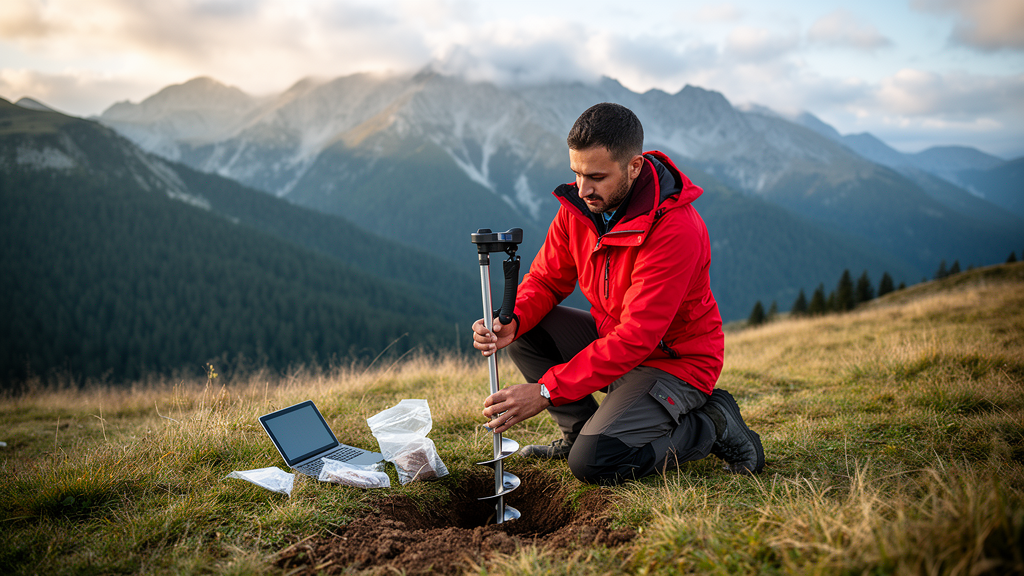
The methodological approach involved comparing SoilGrids predictions with a robust set of independent point observations collected from three distinct sources. These sources included field data from the International Co-operative Programme on Monitoring and Assessment of Air Pollution Effects on Forests, known as ICP-Forest, published scientific data, and new observations conducted specifically for this study. The team analyzed 39 sample plots distributed across different altitudes and soil types, primarily Cambisols, Umbrisols, and Luvisols. To ensure a fair comparison, the researchers focused on the top 30 centimeters of soil, a standard depth for many ecosystem assessments. They evaluated six key parameters: pH, bulk density, coarse fraction, soil organic carbon content, nitrogen content, and soil organic carbon stock. This multi-source validation strategy helps mitigate the biases that might arise from relying on a single dataset.
The results indicate that SoilGrids performs well in capturing the general dynamics of soil parameters across the altitudinal range. There was a strong agreement between the observed and predicted average values for bulk density, coarse fraction, and soil organic carbon content. Specifically, the average measured soil organic carbon stock in the top 30 centimeters was 58.54 tonnes per hectare, while the average predicted value was 55.38 tonnes per hectare. Statistical tests, including paired t-tests and Wilcoxon signed-rank tests, confirmed that there were no significant differences between the field data and model predictions for these parameters. This suggests that SoilGrids can reliably estimate the carbon stored in soils, a crucial metric for understanding the global carbon cycle and assessing the capacity of ecosystems to sequester carbon.
However, the study also revealed notable discrepancies in the prediction of nitrogen content and soil pH. The model predicted nitrogen levels that were almost twice as high as those observed in the field. Similarly, the SoilGrids data indicated soils that were less acidic than those measured in the field, with predicted pH values mostly between 5.7 and 6.6, whereas field observations reported values between 4.5 and 5.8. These differences are statistically significant and suggest that the global model may not fully capture the specific biogeochemical processes occurring in mountainous forest soils. The researchers noted that the SoilGrids model is trained on a dataset dominated by agricultural land and older sampling dates, which may not accurately represent the unique conditions of high-altitude coniferous forests where organic matter decomposition and nutrient cycling differ significantly from agricultural systems.
The discrepancies in pH and nitrogen are likely attributable to the input data used to train the SoilGrids models. The global database contains approximately 240,000 soil profiles, but more than 60% of these were collected between 1960 and 2000. In regions like the Rila Mountains, where soil acidity is driven by the weathering of carbonate-free silicate rocks and the influence of coniferous vegetation, these historical biases can lead to underestimations of acidity. The study highlights that while the model captures broad spatial trends, such as the increase in soil organic carbon with altitude, it may lack the precision required for detailed local assessments of specific chemical properties. This finding underscores the importance of validating global models with local data before using them for high-stakes policy decisions, such as reporting on greenhouse gas emissions under the United Nations Framework Convention on Climate Change.
Despite these limitations, the study concludes that SoilGrids remains a valuable tool for ecosystem reporting, particularly when local data is scarce. The model provides a spatially explicit representation of soil properties that can be integrated into ecosystem accounting frameworks, such as the System of Environmental-Economic Accounting for Ecosystems. By combining SoilGrids data with local knowledge of climate, vegetation, and soil types, researchers can improve the accuracy of their assessments. The study recommends using stratification methods to group soil measurements by climate region and soil type, ensuring that each stratum has sufficient data to minimize sampling error. This approach allows for a more nuanced understanding of soil variability and helps in deriving region-specific emission factors that are essential for accurate national greenhouse gas inventories.
The implications of this research extend beyond Bulgaria, offering insights for other regions with similar ecological characteristics. As countries strive to meet their climate commitments and monitor biodiversity loss, the need for reliable soil data becomes increasingly urgent. SoilGrids offers a cost-effective and accessible solution for generating this data, but its application must be accompanied by careful validation and contextualization. The study demonstrates that while global models can provide a solid foundation for ecosystem assessments, they are not a substitute for local field measurements. By understanding the strengths and weaknesses of these tools, scientists and policymakers can make more informed decisions about land management, conservation, and climate mitigation strategies. The Rila Mountains study serves as a case study for the broader challenge of integrating global data with local realities to achieve a comprehensive understanding of our planet’s soil resources.
Subject of Research: Comparative assessment of SoilGrids system with regional soil data for advancing ecosystem reporting in Bulgaria
Article Title: Comparative assessment of SoilGrids system with regional soil data for advancing ecosystem reporting in Bulgaria
Article References: Stoeva, L., & Zhiyanski, M. (2024). Comparative assessment of SoilGrids system with regional soil data for advancing ecosystem reporting in Bulgaria. One Ecosystem, 9, Article e133091. https://doi.org/10.3897/oneeco.9.e133091
Image Credits: AI Generated
Keywords: Comparative, assessment, SoilGrids, system, regional, soil, data, advancing, ecosystem, reporting, Bulgaria, scientific research
Cite Scienmag News
Sloane Callahan. (October 18, 2026). SoilGrids Accuracy Tested in Bulgaria’s Rila Mountains. Scienmag. https://scienmag.com/soilgrids-accuracy-tested-in-bulgarias-rila-mountains/
Sloane Callahan. "SoilGrids Accuracy Tested in Bulgaria’s Rila Mountains." Scienmag, 18 October 2026, https://scienmag.com/soilgrids-accuracy-tested-in-bulgarias-rila-mountains/. Accessed 18 October 2026.
Sloane Callahan. "SoilGrids Accuracy Tested in Bulgaria’s Rila Mountains." Scienmag. October 18, 2026. https://scienmag.com/soilgrids-accuracy-tested-in-bulgarias-rila-mountains/


