

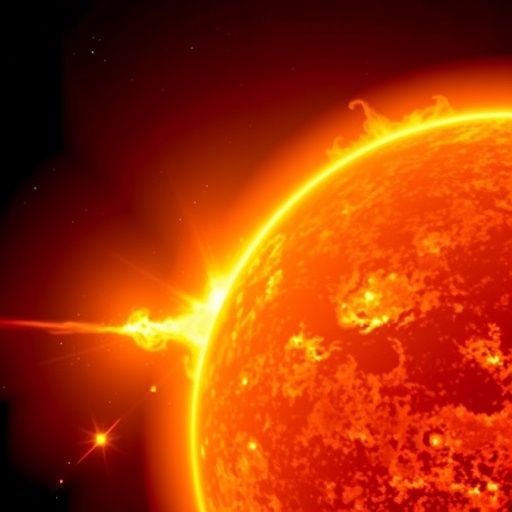
For more than three decades, the Solar and Heliospheric Observatory (SOHO) has been a cornerstone of solar physics, continuously transforming our understanding of the Sun and its expansive influence across the heliosphere. Launched on December 2, 1995, as a pioneering collaboration between the European Space Agency (ESA) and the National Aeronautics and Space Administration (NASA), SOHO was designed to probe the Sun’s internal structure, dynamic surface, and the solar wind that shapes space weather throughout the solar system. Now, 30 years on, the mission’s unprecedented longevity and comprehensive data have delivered profound insights into the solar cycle, magnetic phenomena, and particle dynamics, fundamentally revolutionizing astrophysical theories and operational space weather forecasting.
The ambitious design of SOHO enabled scientists to explore the Sun from its deep core to its outer corona and into the solar wind with unparalleled precision. Equipped with twelve complementary instruments operating in multiple wavelengths, SOHO’s capabilities cover helioseismology, coronal imaging, solar wind composition, and ultraviolet spectroscopy. This holistic suite of tools has allowed researchers to transcend historical observational limits, revealing the Sun’s inner workings and magnetic activity in exquisite detail. Notably, SOHO has provided near-continuous coverage throughout more than two full 11-year solar magnetic cycles, a feat that is crucial for understanding the long-term variabilities and dynamics of solar behavior.
One of SOHO’s landmark achievements lies in helioseismology—the study of solar oscillations—to map internal solar structures and dynamics. By meticulously measuring sound waves propagating through the Sun, SOHO unveiled detailed solar interior rotation profiles and convection patterns, dispelling previous ambiguities about the tachocline’s role in solar magnetism. This approach also resolved the long-standing “solar neutrino problem,” confirming that discrepancies between predicted and detected neutrino fluxes were due to neutrino oscillations rather than flaws in solar models. Such a fundamental breakthrough not only advanced solar physics but also contributed to particle physics and our understanding of fundamental particle properties.
Beyond the solar interior, SOHO’s imaging of the Sun’s surface activity has been transformative. The mission’s instruments revealed the intricate structures of solar active regions, sunspots, and eruptive events such as solar flares and coronal mass ejections. SOHO’s coronagraph, which blocks the intense solar disk light to observe the faint corona, has been instrumental in capturing the birth and propagation of coronal mass ejections (CMEs), essential drivers of space weather. By analyzing these ejecta in real time, SOHO laid the groundwork for predictive models capable of forecasting geomagnetic storms that can affect Earth’s technological infrastructure.
One of the most extraordinary aspects of SOHO is its ability to observe activity on the far side of the Sun, invisible from Earth’s vantage point. Using helioseismic farside imaging, SOHO has provided early warnings of active regions rotating into Earth’s view, significantly enhancing the lead time for space weather predictions. This capability has made an invaluable contribution to safeguarding satellites, power grids, and communication networks, which are increasingly vulnerable to solar storm impacts in our technology-dependent world.
The mission has also elucidated the processes governing the solar wind, the continuous outflow of charged particles streaming from the Sun that creates and shapes the heliosphere. SOHO identified discrete coronal holes—the source regions of the fast solar wind—and detailed how magnetic energy is transferred from the Sun’s surface into the corona, where it powers the acceleration of solar wind particles. These insights advanced our understanding of the Sun-Earth connection and the fundamental physics underlying plasma flows in astrophysical contexts.
SOHO’s groundbreaking observations have not been purely academic; they have directly contributed to the evolution of modern space weather forecasting. By continuously monitoring solar eruptions and the solar wind, SOHO has provided essential near-real-time data that feeds operational forecasting centers around the globe. This ongoing stream of data has allowed more accurate and timely predictions of space weather events with practical implications for satellite operations, astronaut safety, and terrestrial technologies susceptible to geomagnetic disturbances.
A remarkable testament to SOHO’s engineering and operational excellence is its uninterrupted data stream over three solar cycles, outliving its intended lifespan by decades. Advances in mission management and instrument maintenance—including overcoming temporary spacecraft anomalies—have kept the observatory fully functional. This longevity has ensured a continuous record of solar activity unparalleled in detail and duration, making SOHO a reference archive for solar and heliospheric research worldwide.
SOHO’s legacy has extended beyond its own discoveries; it has paved the way for numerous successor missions that build upon its foundational insights. The mission’s success inspired ESA’s Solar Orbiter and NASA’s Parker Solar Probe, which probe the Sun even closer and at different scales, complementing SOHO’s observations. These missions continue to refine models of solar magnetic fields, energetic particle acceleration, and plasma dynamics, confirming SOHO’s enduring influence on the trajectory of solar physics.
Research enabled by SOHO has increasingly illuminated the interconnectedness of solar phenomena with Earth’s space environment, emphasizing the importance of heliophysics as a multidisciplinary field. The observatory’s data underscored how processes originating deep within the Sun ripple outward to influence planetary atmospheres, climate variability, and even technological systems. This systems-level perspective is now central to addressing the challenges posed by solar activity in the era of space exploration and expanding satellite constellations.
SOHO has also been pivotal in training a generation of scientists who continue to push the boundaries of solar research. Its extensive datasets serve as a rich resource for graduate students, postdoctoral researchers, and established scientists alike. The mission’s open data policies and collaborative framework fostered an international community of researchers whose work spans observational analysis, numerical simulations, and theoretical modeling.
Scientific breakthroughs from SOHO have, indeed, revolutionized our fundamental understanding of how the Sun operates as a dynamic star. SOHO revealed intricacies in magnetic field generation and dissipation, energy transport mechanisms in the outer solar atmosphere, and particle acceleration processes that underpin space weather phenomena. These discoveries resonate far beyond our solar system, offering insights applicable to stellar astrophysics and plasma physics in diverse cosmic environments.
As SOHO continues to relay vital data from its vantage point at the L1 Lagrange point, it remains a linchpin of solar and heliospheric science. The mission’s enduring success reinforces the value of long-duration space observatories dedicated to systematic and continuous monitoring. Looking ahead, the wealth of knowledge accumulated by SOHO will guide the design of future instruments and missions devoted to unveiling the mysteries of the Sun and its influence across the solar system.
In summary, the Solar and Heliospheric Observatory stands as one of humanity’s greatest scientific achievements in understanding our star. Over 30 years, it has transcended initial expectations, delivering breakthroughs that reshaped solar physics, space weather forecasting, and astrophysics at large. SOHO’s legacy will continue to inspire and propel solar research for many years to come, illuminating the path toward a deeper comprehension of the star that sustains life on Earth.
Subject of Research: Solar and Heliospheric phenomena, including solar interior structure, solar magnetic activity, solar wind origins, and space weather forecasting.
Article Title: SOHO’s 30-year legacy of observing the Sun.
Article References:
Müller, D., Ireland, J., De Groof, A. et al. SOHO’s 30-year legacy of observing the Sun. Nat Astron (2025). https://doi.org/10.1038/s41550-025-02687-4
Image Credits: AI Generated


