

Tuesday, July 14, 2026
Science
No Result
View All Result
  • Login
  • HOME
  • SCIENCE NEWS
  • CONTACT US
  • HOME
  • SCIENCE NEWS
  • CONTACT US
No Result
View All Result
Scienmag
No Result
View All Result
Home Science News Chemistry

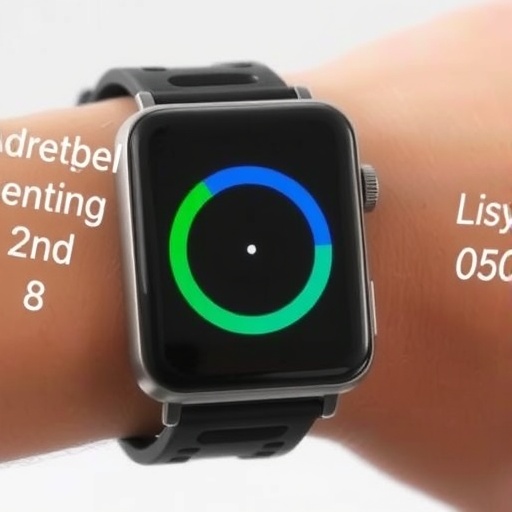
Soft adhesive hydrogel enhances durability of wearable health monitors

July 14, 2026
in Chemistry
Reading Time: 2 mins read
0
Soft adhesive hydrogel enhances durability of wearable health monitors

Soft adhesive hydrogel enhances durability of wearable health monitors

65
SHARES
587
VIEWS
Share on FacebookShare on Twitter
ADVERTISEMENT

In the quest for more reliable wearable health monitoring, a team of researchers has unveiled a groundbreaking hydrogel interface that promises to transform chronic electrophysiological recordings. Traditional electrodes face persistent challenges in maintaining stable contact with the skin due to its soft, uneven texture and constant motion. Many existing materials are either too rigid, prone to drying out, or lose signal fidelity during everyday activities such as movement or sweating.

Published in the journal Wearable Electronics, the new hydrogel—dubbed PPGA-Al—addresses these issues by creating a self-compliant and adhesive bridge between wearable electrodes and skin. This innovative material is engineered from a composite polymer network integrated with gelatin, silver nanowires, and ions, leveraging multiple reversible molecular interactions to combine softness with mechanical robustness.

“The core difficulty lies not in producing a soft electrode, but in ensuring comfort, adhesion, and electrical stability over extended periods, especially as skin conditions fluctuate with movement and perspiration,” explains Ting Zhang, senior author of the study.

Mechanical testing revealed the hydrogel’s Young’s modulus of approximately 30 kPa, nearly matching that of soft human skin tissue, allowing it to conform naturally without causing discomfort or detachment. The hydrogel also exhibits a low mechanical energy loss coefficient of 5.06%, indicating excellent fatigue resistance under repeated stress.

Electrically, the PPGA-Al hydrogel forms efficient conduction pathways through a hybrid mechanism that couples ionic and electronic transport. This ensures low impedance signal transfer, a critical factor for capturing high-fidelity biological signals. When integrated with wearable electrodes, the hydrogel enabled robust electrocardiogram (ECG), electromyogram (EMG), and electroencephalogram (EEG) measurements.

Notably, the device sustained a signal-to-noise ratio of around 28 dB and supported continuous EEG monitoring for six hours without degradation in signal quality. These performance metrics held steady even during exercise, sweating, and exposure to oily skin conditions—common hurdles for many conventional electrode materials.

“This molecular coupling approach tackles softness, adhesion, fatigue resistance, and signal integrity simultaneously, offering a promising platform for the next generation of epidermal electronics,” co-author Lianhui Li remarked. The researchers anticipate that this hydrogel interface could significantly enhance personalized healthcare by enabling more consistent and comfortable long-term bioelectrical monitoring.

By marrying advanced polymer chemistry with nanomaterial science, this innovation represents a pivotal step toward wearable devices that move seamlessly with the wearer, reliably capturing vital health data in real-world environments.


Article Title: A self-compliant and adhesive hydrogel interface for chronic electrophysiological monitoring

Web References: http://dx.doi.org/10.1016/j.wees.2026.02.001

Keywords

Wearable health devices, hydrogel interface, electrophysiological monitoring, soft electronics, polymer chemistry, silver nanowires, bioelectrical signals, long-term monitoring

Tags: biocompatible hydrogels for electrophysiologydurable wearable biosensorsflexible and conformal skin contact materialshydrogel composite materials with gelatin and silver nanowireshydrogel mechanical properties for wearable deviceshydrogel stability during movement and sweatinglong-lasting skin-electrode interfacesself-adhesive hydrogel interfaceskin-compatible hydrogel electrodessoft adhesive hydrogel for electrophysiological recordingswearable health monitor hydrogelwearable health monitoring technology advancements
Share26Tweet16
Previous Post

Improving Climate Change Education in Egyptian Universities: Challenges and Awareness

Next Post

New Catalytic Method Converts Polystyrene Waste into Pure Toluene Efficiently

Related Posts

Acidic Cross-Linking Boosts One-Bath Dyeing of Polyester-Cotton Blends
Chemistry

Acidic Cross-Linking Boosts One-Bath Dyeing of Polyester-Cotton Blends

July 14, 2026
New Catalytic Method Converts Polystyrene Waste into Pure Toluene
Chemistry

New Catalytic Method Converts Polystyrene Waste into Pure Toluene

July 14, 2026
New Catalytic Method Converts Polystyrene Waste into Pure Toluene Efficiently
Chemistry

New Catalytic Method Converts Polystyrene Waste into Pure Toluene Efficiently

July 14, 2026
New Method Enables Modular Synthesis of β-Amino Boronic Esters
Chemistry

New Method Enables Modular Synthesis of β-Amino Boronic Esters

July 14, 2026
Segmented Thermoelectric Module Reaches 12.7% Efficiency in Energy Harvesting
Chemistry

Segmented Thermoelectric Module Reaches 12.7% Efficiency in Energy Harvesting

July 14, 2026
Advances and Challenges of Triboelectric Nanogenerators in Military Applications
Chemistry

Advances and Challenges of Triboelectric Nanogenerators in Military Applications

July 14, 2026
Next Post
New Catalytic Method Converts Polystyrene Waste into Pure Toluene Efficiently

New Catalytic Method Converts Polystyrene Waste into Pure Toluene Efficiently

  • Mothers who receive childcare support from maternal grandparents show more

    Mothers who receive childcare support from maternal grandparents show more parental warmth, finds NTU Singapore study

    27656 shares
    Share 11059 Tweet 6912
  • University of Seville Breaks 120-Year-Old Mystery, Revises a Key Einstein Concept

    1061 shares
    Share 424 Tweet 265
  • Bee body mass, pathogens and local climate influence heat tolerance

    682 shares
    Share 273 Tweet 171
  • Researchers record first-ever images and data of a shark experiencing a boat strike

    546 shares
    Share 218 Tweet 137
  • Groundbreaking Clinical Trial Reveals Lubiprostone Enhances Kidney Function

    531 shares
    Share 212 Tweet 133
Science

Embark on a thrilling journey of discovery with Scienmag.com—your ultimate source for cutting-edge breakthroughs. Immerse yourself in a world where curiosity knows no limits and tomorrow’s possibilities become today’s reality!

RECENT NEWS

  • Food Intake Levels Influence Swallowing Sound Acoustics in Older Adults
  • Acidic Cross-Linking Boosts One-Bath Dyeing of Polyester-Cotton Blends
  • New Catalytic Method Converts Polystyrene Waste into Pure Toluene
  • New Catalytic Method Converts Polystyrene Waste into Pure Toluene Efficiently

Categories

  • Agriculture
  • Anthropology
  • Archaeology
  • Athmospheric
  • Biology
  • Biotechnology
  • Blog
  • Bussines
  • Cancer
  • Chemistry
  • Climate
  • Earth Science
  • Editorial Policy
  • Marine
  • Mathematics
  • Medicine
  • Pediatry
  • Policy
  • Psychology & Psychiatry
  • Science Education
  • Social Science
  • Space
  • Technology and Engineering

Subscribe to Blog via Email

Enter your email address to subscribe to this blog and receive notifications of new posts by email.

Join 5,146 other subscribers

© 2025 Scienmag - Science Magazine

Welcome Back!

Login to your account below

Forgotten Password?

Retrieve your password

Please enter your username or email address to reset your password.

Log In
No Result
View All Result
  • HOME
  • SCIENCE NEWS
  • CONTACT US

© 2025 Scienmag - Science Magazine

Discover more from Science

Subscribe now to keep reading and get access to the full archive.

Continue reading
