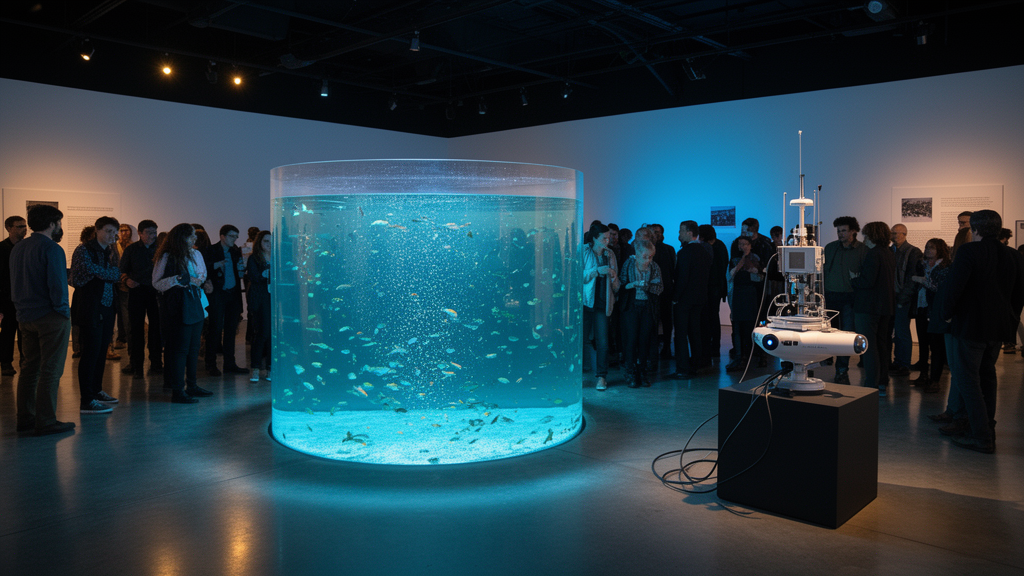
On September 25, 2026, the National Museum of Natural History at the Bulgarian Academy of Sciences in Sofia opened a temporary exhibition titled ‘The Marine World Through the Lens of Science: The Hidden Ecosystems of Europe’s Coasts,’ presenting the work of the European research project ANERIS. The opening was aligned with European Researchers’ Night, and the event was organised by the museum in partnership with Pensoft Publishers and the ANERIS project, which carries the grant agreement number GA 101094924.
The exhibition focuses on a central problem in marine science: although the ocean supports an extraordinary variety of life, much of it remains poorly understood and may disappear before it can even be documented. According to the exhibition’s framing, climate change, pollution and increasing human pressure make the development of faster and more reliable monitoring approaches increasingly urgent. Across fourteen bilingual panels in English and Bulgarian, the displays explain why monitoring marine biodiversity remains a major scientific challenge and how ANERIS is working to address it.
At the heart of the exhibition is the concept of ANERIS Operational Marine Biology, described as a new approach to observing marine biodiversity. The approach is designed to facilitate systematic, long-term monitoring of ocean and coastal ecosystems and to enable the rapid delivery of biodiversity information for science, policy and environmental management. Rather than presenting abstract theory, the panels translate this concept into visual explanations that visitors can follow without specialist background.
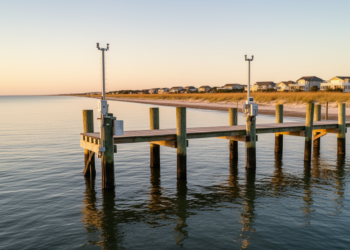
To make the idea of Operational Marine Biology tangible, the exhibition introduces four case studies that were co-designed for the validation of the imaging, participatory and genomic technologies being created and further developed by the ANERIS consortium. These case studies serve as the practical testing ground where the project’s tools are evaluated, and they anchor the technological story of the exhibition in concrete research settings.
One section of the exhibition explores the project’s imaging technologies. Underwater cameras installed in observatories in Ireland and Spain, combined with advanced image analysis and artificial intelligence, are presented as a way to observe marine organisms in real time.
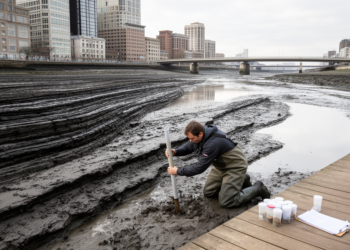
A second technological strand on display involves genomic tools. These methods detect the genetic traces that species leave behind in seawater and sediments, enabling researchers to identify marine life that may be difficult to observe directly.
Citizen science forms another central part of both the ANERIS effort and the exhibition itself. Through the MINKA platform and BioMARathon campaigns, researchers, divers, nature enthusiasts and local communities can record and share observations of marine and coastal species.
The exhibition also situates itself within the mission of its host institution. As part of the Bulgarian Academy of Sciences, the National Museum of Natural History in Sofia combines fundamental and applied research, the management and preservation of collections, the promotion of natural-scientific knowledge through its exposition and popular literature, the training of doctoral candidates and young experts, and expert advisory activities. Hosting the ANERIS display places the project’s monitoring technologies directly in front of the museum’s public during European Researchers’ Night.
The temporary display runs from September 25, 2025 to February 1, 2026 at the National Museum of Natural History on Tsar Osvoboditel Boulevard 1 in Sofia. Its closing message invites visitors to look deeper into Europe’s waters and to discover how technology, research and public participation can together contribute to a better understanding and protection of marine life, presenting the ANERIS project as a working example of that combination.
Subject of Research: New technologies and citizen-science approaches for monitoring marine biodiversity, presented through the ANERIS project exhibition in Sofia
Article Title: New exhibition in Sofia showcases how ANERIS is transforming marine biodiversity monitoring
Article References: New exhibition in Sofia showcases how ANERIS is transforming marine biodiversity monitoring. Original publication (Bibliographic details unavailable.)
Image Credits: AI Generated
DOI: Not provided
Keywords: marine biodiversity, ANERIS, Operational Marine Biology, citizen science, MINKA platform, BioMARathon, environmental DNA, underwater imaging, National Museum of Natural History Sofia, European Researchers' Night, Pensoft Publishers, ocean monitoring
Cite Scienmag News
Violet Maxwell. (October 28, 2026). Sofia exhibition reveals how ANERIS builds new tools to watch ocean life in real time. Scienmag. https://scienmag.com/sofia-exhibition-reveals-how-aneris-builds-new-tools-to-watch-ocean-life-in-real-time/
Violet Maxwell. "Sofia exhibition reveals how ANERIS builds new tools to watch ocean life in real time." Scienmag, 28 October 2026, https://scienmag.com/sofia-exhibition-reveals-how-aneris-builds-new-tools-to-watch-ocean-life-in-real-time/. Accessed 29 October 2026.
Violet Maxwell. "Sofia exhibition reveals how ANERIS builds new tools to watch ocean life in real time." Scienmag. October 28, 2026. https://scienmag.com/sofia-exhibition-reveals-how-aneris-builds-new-tools-to-watch-ocean-life-in-real-time/