


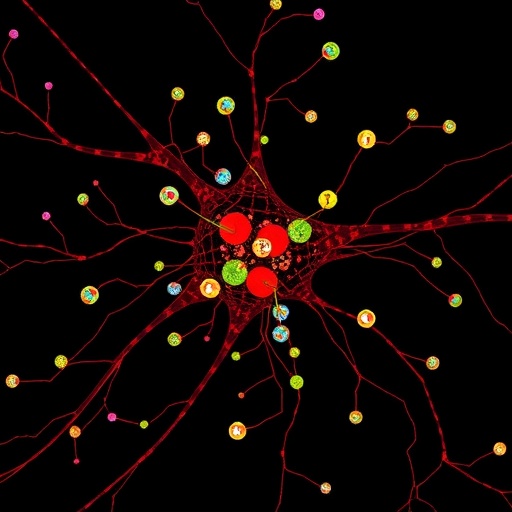
In a groundbreaking study published in Cell Research, scientists have unveiled a compelling connection between social status and the immune system, advancing our understanding of how psychological and social factors translate into biological consequences. The research sheds light on the intricate mechanisms by which social hierarchy can modulate T-cell functionality, revealing that synaptic strength in the prefrontal cortex—a critical brain region for decision-making and social behavior—is a key mediator of these effects.
For decades, the scientific community has recognized that social determinants fundamentally influence health outcomes, yet the precise pathways linking social environment and immune response remained elusive. This latest investigation meticulously delineates how differential social status impacts immune cells by altering neural communication at synapses in the prefrontal cortex. The study highlights a remarkable neuroimmune interface where psychosocial experiences can tune immune responsiveness through synaptic modulation.
Researchers employed a combination of behavioral assays, electrophysiological measurements, and immunological profiling across animal models stratified by social rank. Lower status animals exhibited diminished synaptic strength in prefrontal cortical circuits, which corresponded to reduced activation and responsiveness of peripheral T-cells. Conversely, higher status animals showed enhanced synaptic efficacy coupled with heightened T-cell activity. This bidirectional relationship underscores the brain’s capacity to control immunity via synaptic plasticity dependent on social context.
At the cellular level, the prefrontal cortex appears to regulate the peripheral immune landscape by modulating the communication between neurons and immune cells. Synaptic strength influences neurochemical signals, which in turn affect hypothalamic-pituitary-adrenal (HPA) axis activity and downstream systemic immune parameters. Specifically, modifications in glutamatergic neurotransmission within the prefrontal cortex altered cytokine profiles, impacting T-cell proliferation, differentiation, and effector functions.
In this integrative framework, social subordination stress weakens synaptic transmission and reduces neuroimmune signaling efficiency, thereby dampening T-cell efficacy. This impairment compromises the immune system’s ability to mount effective responses to pathogens, possibly explaining epidemiological correlations between low socioeconomic status and increased susceptibility to infectious diseases and inflammatory disorders.
The study also employed optogenetic and chemogenetic manipulation of synaptic strength in prefrontal neurons, directly demonstrating causality. Enhancing synaptic activity rescued T-cell function in subordinate animals, suggesting potential therapeutic strategies to mitigate the adverse immunological effects of social stress. These innovations open promising avenues for neuroimmune interventions targeting synaptic mechanisms to improve health outcomes.
Molecular investigations revealed that alterations in synapse strength are mediated by changes in receptor expression and synaptic scaffold proteins. Social status influences the balance between excitatory and inhibitory synapses, adjusting the excitability of prefrontal networks. These modifications ultimately recalibrate the neuroendocrine axes controlling immune cell trafficking and activation states, providing a mechanistic basis for the observed effects.
The implications of this research extend beyond the laboratory, challenging traditional biomedical models and emphasizing the role of social factors in disease susceptibility and progression. Understanding how hierarchical social structures embed themselves into neuroimmune circuits informs public health approaches aimed at reducing health disparities rooted in socioeconomic inequalities.
Furthermore, this work bridges disciplines including neuroscience, immunology, psychology, and social science, illustrating the complexity of mind-body interactions. The novel concept that synaptic strength in prefrontal circuits serves as a conduit for translating social experiences into immune modulation could revolutionize efforts to develop integrative treatments for stress-related disorders.
Notably, this investigation utilized advanced imaging and electrophysiological techniques to quantify synaptic properties in vivo, alongside flow cytometry and single-cell RNA sequencing to characterize T-cell phenotypes in fine detail. The robust multidimensional datasets generated provide a comprehensive map of neuroimmune crosstalk shaped by social environmental pressures.
Future research inspired by these findings may explore whether similar mechanisms operate in humans, employing noninvasive neuroimaging coupled with peripheral immune analyses. Such translational studies could validate synaptic markers as biomarkers of social stress impact and identify new intervention targets to bolster immune resilience among disadvantaged populations.
In conclusion, the revelation that social hierarchy can sculpt immune competence through synapse-specific plasticity in the prefrontal cortex represents a paradigm shift. This work illuminates a novel neurobiological pathway where social reality indelibly marks immune function, offering exciting prospects for enhancing human health through tailored psychosocial and neuroimmune therapies.
Cite Scienmag News
Cassandra Pierce. (March 23, 2026). Social Status Influences T-Cell Synapse Strength. Scienmag. https://scienmag.com/social-status-influences-t-cell-synapse-strength/
Cassandra Pierce. "Social Status Influences T-Cell Synapse Strength." Scienmag, 23 March 2026, https://scienmag.com/social-status-influences-t-cell-synapse-strength/. Accessed 4 September 2026.
Cassandra Pierce. "Social Status Influences T-Cell Synapse Strength." Scienmag. March 23, 2026. https://scienmag.com/social-status-influences-t-cell-synapse-strength/


