


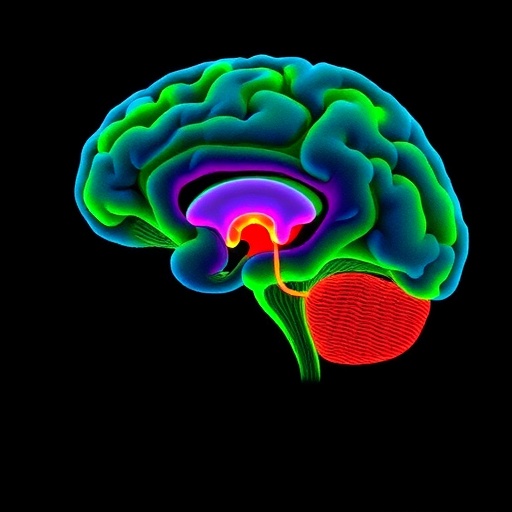
Social isolation has long been linked to mental health problems, but the new study by Yuan and colleagues probes what it does to the brain at the circuit level—specifically in adult male mice. Reported in Translational Psychiatry, the work asks how being cut off socially reshapes prefrontal processing and whether that change interferes with a key form of learning: remembering social novelty.
Using behavioral testing designed to track recognition of new versus familiar social partners, the researchers found that isolated mice showed impaired social novelty memory. In other words, after a period of social deprivation, the animals were less able to preferentially respond to a previously unfamiliar conspecific, suggesting a functional deficit in how the prefrontal cortex encodes social information.
To move beyond behavior alone, the team examined neural activity patterns in the prefrontal cortex and focused on the balance between excitation and inhibition. This “E/I balance” is a cornerstone of how cortical networks compute and stabilize information. When excitation and inhibition are properly tuned, circuits can support flexible representations; when the balance shifts, memory formation and retrieval can suffer.
The study indicates that social isolation disrupts this prefrontal excitatory–inhibitory equilibrium. Rather than a simple increase or decrease in firing, the results point to a circuit-level reweighting that likely affects how ensembles coordinate during social exposure. Such imbalance may reduce the precision with which prefrontal circuits select relevant inputs, weakening the encoding of novelty signals.
Importantly, the implications are not limited to a single snapshot of brain activity. The observed disruption maps onto the behavioral outcome: compromised novelty memory. The findings therefore suggest a mechanistic pathway—social isolation → prefrontal E/I imbalance → failure to efficiently store or retrieve social novelty.
Because the prefrontal cortex is central to higher-order cognition, the work resonates with how human conditions involving loneliness or social withdrawal can be associated with cognitive dysfunction. While the current data are in mice, the circuit logic—how inhibition and excitation gate information flow—offers a translational framework for understanding isolation-related cognitive symptoms.
Overall, the study presents viral-science-level evidence that loneliness-like experiences can leave measurable fingerprints on prefrontal circuitry. By tying a specific behavioral deficit to a definable excitation–inhibition shift, it adds weight to the idea that social environments sculpt brain computations, not just mood.
The DOI for the paper is https://doi.org/10.1038/s41398-026-04201-4, and the research emphasizes how maintaining proper neural balance may be key to preserving the brain’s ability to learn from who is new—and who isn’t.
Cite Scienmag News
Glenn Wilkins. (July 16, 2026). Social Isolation Disrupts Prefrontal Excitatory–Inhibitory Balance, Impairs Novel Social Memory in Male Mice. Scienmag. https://scienmag.com/social-isolation-disrupts-prefrontal-excitatory-inhibitory-balance-impairs-novel-social-memory-in-male-mice/
Glenn Wilkins. "Social Isolation Disrupts Prefrontal Excitatory–Inhibitory Balance, Impairs Novel Social Memory in Male Mice." Scienmag, 16 July 2026, https://scienmag.com/social-isolation-disrupts-prefrontal-excitatory-inhibitory-balance-impairs-novel-social-memory-in-male-mice/. Accessed 4 September 2026.
Glenn Wilkins. "Social Isolation Disrupts Prefrontal Excitatory–Inhibitory Balance, Impairs Novel Social Memory in Male Mice." Scienmag. July 16, 2026. https://scienmag.com/social-isolation-disrupts-prefrontal-excitatory-inhibitory-balance-impairs-novel-social-memory-in-male-mice/


