


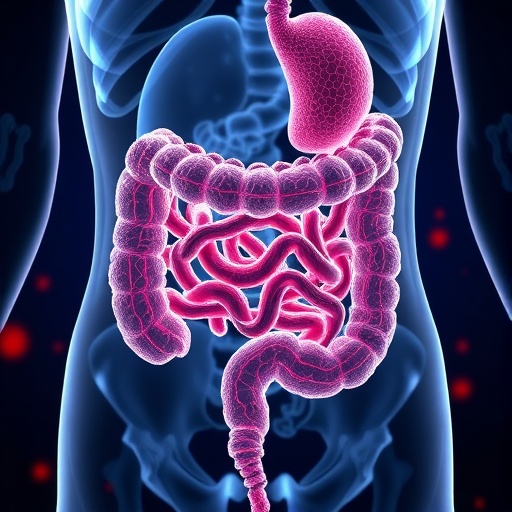
Memorial Sloan Kettering Cancer Center researchers have identified a protein that appears to control one of the gut’s most important survival programs—and colorectal cancer may exploit the same mechanism to spread. The protein, ZFP36L2, helps damaged intestinal cells shut down a prolonged stress response and return to a stem-cell-like state, allowing the gut lining to rebuild itself. In metastatic cancer, however, that regenerative pathway can provide tumor cells with the flexibility they need to establish new colonies in distant organs.
The intestinal lining is exposed to constant mechanical and chemical stress. Cells are regularly shed and must be replaced by intestinal stem cells, which generate both new stem cells and the specialized epithelial cells responsible for absorbing nutrients, producing mucus, and maintaining the gut barrier. When injury destroys too many stem cells, mature intestinal cells can reverse their specialized identities through a process known as cellular plasticity. They temporarily enter a stress-associated state before reverting to a regenerative, stem-cell-like condition.
The new study, published in Nature, identifies ZFP36L2 as a key molecular regulator of this transition. The protein belongs to a family of RNA-binding proteins that control the stability and fate of messenger RNA molecules. As intestinal cells mature, ZFP36L2 activity declines, helping stabilize their specialized identities. When tissue damage occurs, the protein becomes essential for ending the emergency response that initially prevents cells from changing identity.
At the molecular level, ZFP36L2 binds messenger RNAs carrying stress-response signals and directs them toward cellular compartments where they can be degraded. This process reduces the amount of stress-related RNA available for translation into proteins, effectively turning down the alarm. According to the researchers, this timing is critical: the stress response must be activated rapidly after injury, but it must also be shut off before a cell can complete its transition into a regenerative state.
Experiments in genetically engineered mice demonstrated the importance of this mechanism. Animals lacking ZFP36L2 were unable to recover efficiently from experimentally induced intestinal injury. Their cells remained trapped in a prolonged stress state and failed to replenish the stem-cell population needed to restore the damaged tissue. The findings suggest that ZFP36L2 functions less like a simple on-off switch and more like a molecular timing system, coordinating the shift from damage detection to tissue repair.
The same cellular flexibility appears to be important when colorectal cancer spreads. To form a metastasis, tumor cells must survive separation from the primary tumor, travel through the bloodstream, adapt to a foreign tissue environment, and begin producing new cancer cells. This journey exposes them to conditions resembling injury, including oxidative stress, nutrient deprivation, and immune attack. The MSK team found that metastatic colorectal cancer cells rely on ZFP36L2 to suppress this stress state and regain a stem-cell-like identity after reaching organs such as the liver or lungs.
Researchers tested the process using organoids derived from patient colorectal cancer liver metastases. These three-dimensional laboratory models preserve many of the biological features of the original tumors. When ZFP36L2 was depleted, the cancer cells showed a sharply reduced ability to establish metastases in mice. This effect was not simply the result of smaller primary tumors: tumors lacking the protein often failed to seed distant organs even when the original tumors were comparable in size or larger than control tumors. The result points to a specific defect in metastatic colonization rather than a general failure of tumor growth.
ZFP36L2 appears to have a more complicated role in primary colorectal tumors. Removing the protein slowed tumor growth, indicating that some cancer cells depend on it to maintain their usual stem-cell identity and produce additional tumor cells. Yet tumors with naturally occurring ZFP36L2 mutations or deletions—alterations reported in approximately 5% to 10% of colorectal cancer patients—can become more adaptable in another way. Instead of remaining in a conventional colorectal cancer state, they may shift toward abnormal neuroendocrine-like or squamous-like identities.
These alternate cell states are associated with treatment resistance and poorer clinical outcomes. The researchers propose that when cancer cells cannot use ZFP36L2 to complete the transition back to a stem-cell program, they remain under persistent stress. That pressure may favor rare cells capable of changing identity and surviving therapy. The finding illustrates why targeting a cancer dependency can be biologically complex: eliminating ZFP36L2 might interfere with metastasis, but gradual loss of the protein in an established tumor could also encourage the emergence of more aggressive, therapy-resistant cell types.
The researchers are now exploring whether ZFP36L2 can be targeted therapeutically in a controlled way. A rapid, precisely timed disruption could potentially overwhelm metastatic cells before they adapt, causing them to collapse under their own stress burden. At the same time, the protein’s role in healthy tissue repair means that any treatment would need to avoid damaging the intestine’s normal regenerative capacity. Because ZFP36L2 mutations can be detected through tumor sequencing, the discovery may also help identify patients whose cancers are more likely to develop unusual, treatment-resistant characteristics. More broadly, related proteins are altered in a significant fraction of solid tumors, raising the possibility that the stress-adaptation mechanism could extend beyond colorectal cancer.
News Publication Date: 5 August 2026
Web References:
https://www.nature.com/articles/s41586-026-10890-0
https://www.mskcc.org/research-areas/labs/karuna-ganesh
https://www.mskcc.org/research-areas/labs/members/qingwen-jiang
References:
Jiang, Q. et al. “ZFP36L2 orchestrates stress-adaptive plasticity in regeneration and cancer.” Nature. DOI: 10.1038/s41586-026-10890-0.
Cite Scienmag News
Nathaniel Bowman. (August 6, 2026). MSK scientists uncover gut-healing molecular switch hijacked by colorectal cancer to spread. Scienmag. https://scienmag.com/msk-scientists-uncover-gut-healing-molecular-switch-hijacked-by-colorectal-cancer-to-spread/
Nathaniel Bowman. "MSK scientists uncover gut-healing molecular switch hijacked by colorectal cancer to spread." Scienmag, 6 August 2026, https://scienmag.com/msk-scientists-uncover-gut-healing-molecular-switch-hijacked-by-colorectal-cancer-to-spread/. Accessed 5 September 2026.
Nathaniel Bowman. "MSK scientists uncover gut-healing molecular switch hijacked by colorectal cancer to spread." Scienmag. August 6, 2026. https://scienmag.com/msk-scientists-uncover-gut-healing-molecular-switch-hijacked-by-colorectal-cancer-to-spread/


