


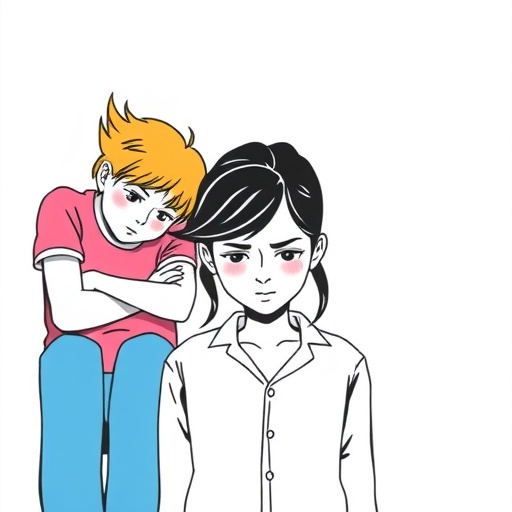
In the evolving landscape of adolescent psychology, a groundbreaking study has emerged, illuminating the profound effects of social exclusion and interpersonal trust on aggressive behavior among a vulnerable population: left-behind middle school students. Conducted by Yu, Fan, Liu, and colleagues, this research meticulously explores how emotional and social dynamics interplay to influence aggression, revealing complexities previously uncharted in psychological literature.
The phenomenon of left-behind children—minors who remain in rural areas while their parents migrate for work—is a growing social issue in many parts of the world. These children often face an array of psychosocial challenges, including diminished parental support, feelings of loneliness, and vulnerability to peer rejection. Yu et al.’s study zeroes in on this demographic, their approach underscored by the need to understand how social exclusion specifically elevates the risk of aggressive behaviors during critical developmental stages.
At the heart of the research lies a detailed analysis of social exclusion, defined as the experience of being deliberately ignored or ostracized by peers. This condition, particularly acute among adolescents striving for social acceptance, generates intense negative emotions that can catalyze defensive or retaliatory aggression. The researchers employed a robust methodological framework to quantify this impact, analyzing emotional responses and subsequent behavioral outcomes in a controlled environment.
Interpersonal trust emerges as a pivotal variable in this complex equation. Trust, the fundamental glue underpinning social relationships, acts as a moderating force that can either exacerbate or mitigate the effects of exclusion. The study’s nuanced approach illustrates that students with higher levels of interpersonal trust are better equipped to resist aggressive impulses despite experiences of social exclusion, highlighting trust as a potential target for intervention programs aimed at reducing youth aggression.
One of the study’s most intriguing revelations concerns the mediating role of interpersonal trust between social exclusion and aggressive behavior. Through sophisticated statistical modeling, the authors demonstrate that social exclusion undermines trust, which in turn escalates aggression. This cascading effect underscores the necessity of fostering healthy social bonds to buffer against the detrimental psychosocial impacts of exclusion.
Yu and colleagues’ inclusion of a comprehensive behavioral assessment adds depth to their findings. By observing and recording real-time responses to social stimuli, the research encapsulates the immediacy and authenticity of aggressive reactions often sanitized in self-reported data. This methodological rigor lends credibility and practical applicability to the outcomes, stressing the real-world implications for educators and policymakers.
The sociocultural context framing the study—predominantly rural, economically disadvantaged regions—introduces critical interpretative layers. In environments where social networks and community cohesion are disrupted by parental absence, left-behind students face unique pressures. The research contextualizes their experiences within broader structural inequalities, offering a poignant reminder that aggression is not merely an individual failing but often a symptom of systemic neglect.
From a neuropsychological perspective, the study touches upon developmental vulnerabilities. Adolescence is a period marked by heightened neural plasticity and emotional sensitivity. Social exclusion during this window can trigger dysregulation in brain systems responsible for emotion regulation and social cognition, potentially entrenching aggressive tendencies. While the study does not measure neurobiological markers directly, it elegantly situates behavioral phenomena within these established neuroscientific frameworks.
Interventions derived from such findings could revolutionize approaches to adolescent mental health. Programs focused on bolstering interpersonal trust, through mentorship, group activities, and peer support mechanisms, could serve as buffers against the harmful effects of exclusion. The study advocates for targeted strategies that extend beyond punitive measures, embracing restorative and relational models to mitigate aggression effectively.
Moreover, the research sheds light on the subtle interplay of trust and aggression in digital and physical social realms. Left-behind students often turn to online platforms for social engagement; understanding how digital exclusion mirrors physical experiences could widen the scope of interventions, especially as virtual interactions become ubiquitous.
Policy implications are profound. Governments and educational institutions facing the challenge of nurturing emotionally resilient youth can draw on these insights to create inclusive environments that prioritize emotional well-being. Integrating social-emotional learning curricula that explicitly address exclusion and trust-building may prove critical in long-term aggression reduction.
In sum, Yu, Fan, Liu, and their team deliver a compelling portrait of the social and psychological undercurrents shaping aggressive behavior in left-behind middle school students. Their findings resonate far beyond the initial cohort, offering universally relevant lessons on the importance of nurturance, trust, and social acceptance in adolescent development.
As researchers continue to unpack the multifactorial nature of aggression among youth, this study stands as a clarion call for inclusive, evidence-based approaches. By prioritizing interpersonal trust and addressing the consequences of social exclusion, communities can foster healthier developmental trajectories for vulnerable populations worldwide.
Looking ahead, the integration of longitudinal data and neurobiological assessments could further elucidate causal pathways, paving the way for personalized interventions. The innovation in Yu et al.’s methodological approach sets a new precedent for psychological research, bridging empirical rigor with urgent social relevance.
Ultimately, this investigation not only enriches academic discourse but also humanizes a demographic often marginalized in policy debates. It champions the transformative power of connection, trust, and empathy—elements essential for breaking cycles of aggression and cultivating resilience in the face of adversity.
Cite Scienmag News
Glenn Wilkins. (December 12, 2025). Social Exclusion, Trust Influence Aggression in Left-Behind Teens. Scienmag. https://scienmag.com/social-exclusion-trust-influence-aggression-in-left-behind-teens/
Glenn Wilkins. "Social Exclusion, Trust Influence Aggression in Left-Behind Teens." Scienmag, 12 December 2025, https://scienmag.com/social-exclusion-trust-influence-aggression-in-left-behind-teens/. Accessed 4 September 2026.
Glenn Wilkins. "Social Exclusion, Trust Influence Aggression in Left-Behind Teens." Scienmag. December 12, 2025. https://scienmag.com/social-exclusion-trust-influence-aggression-in-left-behind-teens/


