

Sunday, May 3, 2026
Science
No Result
View All Result
  • Login
  • HOME
  • SCIENCE NEWS
  • CONTACT US
  • HOME
  • SCIENCE NEWS
  • CONTACT US
No Result
View All Result
Scienmag
No Result
View All Result
Home Science News Social Science

Social change may explain decline in genetic diversity of the Y chromosome at the end of the Neolithic period

April 24, 2024
in Social Science
Reading Time: 2 mins read
0
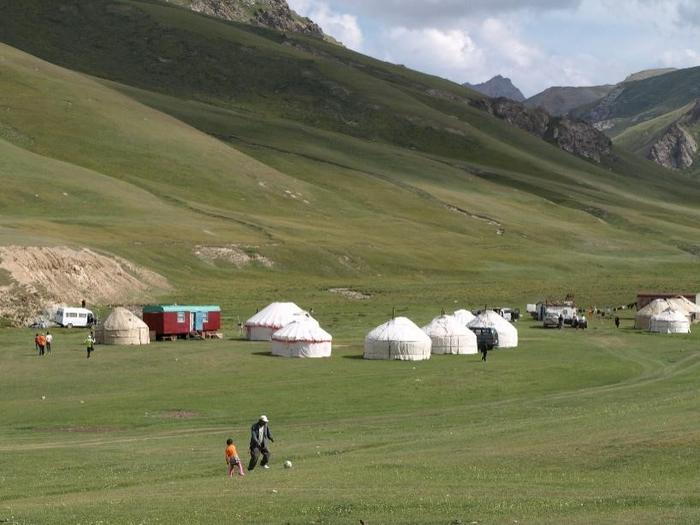
The scientists studied contemporary patrilineal populations.
67
SHARES
609
VIEWS
Share on FacebookShare on Twitter
ADVERTISEMENT

The emergence in the Neolithic of patrilineal1 social systems, in which children are affiliated with their father’s lineage, may explain a spectacular decline in the genetic diversity of the Y chromosome2 observed worldwide between 3,000 and 5,000 years ago. In a study to be published on 24 April in Nature Communications, a team of scientists from the CNRS, MNHN and Université Paris Cité3 suggest that these patrilineal organisations had a greater impact on the Y chromosome than mortality during conflict.

The scientists studied contemporary patrilineal populations.

Credit: © Heyer Evelyne, Segurel Laure

The emergence in the Neolithic of patrilineal1 social systems, in which children are affiliated with their father’s lineage, may explain a spectacular decline in the genetic diversity of the Y chromosome2 observed worldwide between 3,000 and 5,000 years ago. In a study to be published on 24 April in Nature Communications, a team of scientists from the CNRS, MNHN and Université Paris Cité3 suggest that these patrilineal organisations had a greater impact on the Y chromosome than mortality during conflict.

This conclusion was reached after analysing twenty years of anthropological field data – from contemporary non-warlike patrilineal groups, particularly from the scientists’ own fieldwork carried out in Asia – and modelling various socio-demographic scenarios. The team compared warrior and non-warrior scenarios and showed that two processes play a major role in genetic diversity: the splitting of clans into several sub-clans and differences in social status that lead to the expansion of certain lineages to the detriment of others.

This study calls into question the previously proposed theory that violent clashes, supposedly due to competition between different clans, in which many men died, were at the origin of the loss of genetic diversity of the Y chromosome. The results of this study also provide new hypotheses on human social organisation in the Neolithic and Bronze Age.

notes : 

  1. In these systems, children are affiliated with their father’s lineage. Women marry men from different groups andmove to live with their husbands.
  2. The chromosome responsible for male sexual characteristics.
  3. From the laboratoire d’Eco-anthropologie (CNRS/Muséum national d’Histoire naturelle/Université Paris Cité).


Journal

Nature Communications

Article Title

Patrilineal segmentary systems provide a peaceful explanation for the post-Neolithic Y-chromosome bottleneck

Article Publication Date

24-Apr-2024

Share27Tweet17
Previous Post

A vaccine to fight antibiotic resistance

Next Post

Ready and vigilant: immune cells on standby

Related Posts

Trade Secret Protection Policies Could Restrict Wages for Late-Career Scientists — Social Science
Social Science

Trade Secret Protection Policies Could Restrict Wages for Late-Career Scientists

May 1, 2026
New study reveals limited social support for traumatized children within their own circles — Social Science
Social Science

New study reveals limited social support for traumatized children within their own circles

May 1, 2026
New Legislation Reduces Cannabis Arrests, Yet Racial Disparities Remain — Social Science
Social Science

New Legislation Reduces Cannabis Arrests, Yet Racial Disparities Remain

May 1, 2026
Global Access and Pricing of Ultra-Expensive Drugs in Medicare Part D — Social Science
Social Science

Global Access and Pricing of Ultra-Expensive Drugs in Medicare Part D

May 1, 2026
Housing Insecurity Linked to Increased Geriatric Conditions and Mortality Risk Among Community-Dwelling Older Adults — Social Science
Social Science

Housing Insecurity Linked to Increased Geriatric Conditions and Mortality Risk Among Community-Dwelling Older Adults

May 1, 2026
Study Finds Wealthier Groups More Likely to Use AI, Raising Concerns Over Growing Social Inequality — Social Science
Social Science

Study Finds Wealthier Groups More Likely to Use AI, Raising Concerns Over Growing Social Inequality

May 1, 2026
Next Post
The study authors Nikolaus Fortelny & Christoph Bock

Ready and vigilant: immune cells on standby

  • Mothers who receive childcare support from maternal grandparents show more parental warmth, finds NTU Singapore study

    Mothers who receive childcare support from maternal grandparents show more parental warmth, finds NTU Singapore study

    27639 shares
    Share 11052 Tweet 6908
  • University of Seville Breaks 120-Year-Old Mystery, Revises a Key Einstein Concept

    1042 shares
    Share 417 Tweet 261
  • Bee body mass, pathogens and local climate influence heat tolerance

    677 shares
    Share 271 Tweet 169
  • Researchers record first-ever images and data of a shark experiencing a boat strike

    540 shares
    Share 216 Tweet 135
  • Groundbreaking Clinical Trial Reveals Lubiprostone Enhances Kidney Function

    527 shares
    Share 211 Tweet 132
Science

Embark on a thrilling journey of discovery with Scienmag.com—your ultimate source for cutting-edge breakthroughs. Immerse yourself in a world where curiosity knows no limits and tomorrow’s possibilities become today’s reality!

RECENT NEWS

  • Family Health Needs of Disabled Elders Explored
  • Mcu Controls Bone Growth Through Mitochondrial Calcium
  • Physical Disorders, ADLs, Cognition, Depression in Nursing Homes
  • Precise Spatiotemporal Cardiac Repair and Regeneration

Categories

  • Agriculture
  • Anthropology
  • Archaeology
  • Athmospheric
  • Biology
  • Biotechnology
  • Blog
  • Bussines
  • Cancer
  • Chemistry
  • Climate
  • Earth Science
  • Editorial Policy
  • Marine
  • Mathematics
  • Medicine
  • Pediatry
  • Policy
  • Psychology & Psychiatry
  • Science Education
  • Social Science
  • Space
  • Technology and Engineering

Subscribe to Blog via Email

Success! An email was just sent to confirm your subscription. Please find the email now and click 'Confirm Follow' to start subscribing.

Join 5,146 other subscribers

© 2025 Scienmag - Science Magazine

Welcome Back!

Login to your account below

Forgotten Password?

Retrieve your password

Please enter your username or email address to reset your password.

Log In
No Result
View All Result
  • HOME
  • SCIENCE NEWS
  • CONTACT US

© 2025 Scienmag - Science Magazine
