


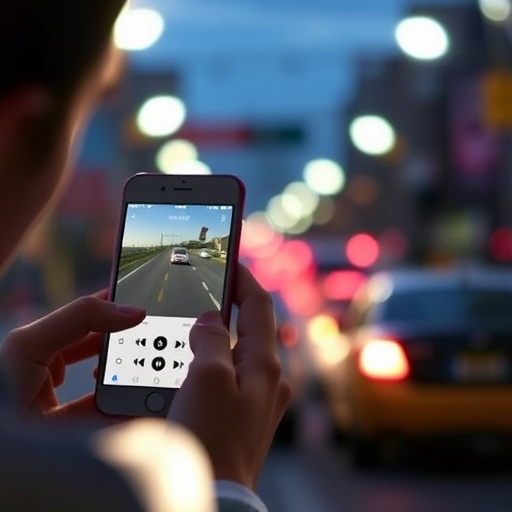
A new cross-sectional study of traffic fatalities in the United States has identified a striking association between major music album releases and a short-term rise in fatal crashes. The research, published in JAMA Network Open, suggests that periods when highly anticipated albums become available—and when online music streaming increases—may coincide with more deaths on the road. The findings raise fresh concerns about how smartphone-based listening habits could influence driver attention, particularly when people search for new releases, select songs, adjust playlists, or interact with streaming applications while driving.
The study focuses on a modern form of distracted driving that is less visible than texting but may involve many of the same cognitive and manual demands. Streaming music through a smartphone can require drivers to unlock a device, navigate an app, browse recommendations, search for an artist, choose an album, skip tracks, or change playback settings. Even when a driver is not typing a message, these actions can divert visual attention from the road, occupy one or both hands, and disrupt the mental processing needed to monitor traffic conditions. Researchers examined whether major album releases, which can produce sudden increases in listening activity, were associated with measurable changes in traffic fatalities across the United States.
The analysis used a cross-sectional design, meaning that it compared patterns in traffic deaths with patterns in album-release timing and music-streaming activity rather than following individual drivers over time. This type of study can identify population-level associations, especially when an exposure affects large numbers of people at roughly the same time. A major release provides a naturally occurring event that may cause a sharp increase in the number of people opening a streaming service or interacting with music apps. By examining traffic outcomes around these events, investigators sought to determine whether fatal crashes increased during periods of intensified online music consumption.
The results indicate that major album releases were associated with a significant increase in traffic fatalities. The association was accompanied by increased online streaming, supporting the possibility that smartphone-based music activity may be one pathway connecting new releases with crash risk. The study does not establish that streaming caused every additional death, nor does it demonstrate that all listeners were using their phones while driving. Instead, it points to a population-level signal: when music consumption rises rapidly after a prominent release, fatal traffic outcomes appear to rise as well. That signal is important because even a modest increase in risk can translate into a substantial number of deaths when millions of drivers are exposed.
Driving requires the continuous integration of visual, motor, and cognitive information. A driver must detect changes in speed, position, and direction; predict the behavior of other road users; and respond quickly to unexpected hazards. Smartphone interaction can interfere with these processes through several mechanisms. Visual distraction occurs when a driver looks away from the roadway, manual distraction occurs when the driver handles a device, and cognitive distraction occurs when attention is absorbed by a task unrelated to driving. Music streaming can involve all three. A person who spends only a few seconds searching for an album may miss a braking vehicle, a pedestrian, a cyclist, or a changing traffic signal. At highway speeds, a brief glance away can cover a considerable distance before the driver looks back.
The findings also illustrate why distracted driving may be underestimated when public attention focuses primarily on texting. Music applications are often perceived as benign because listening itself does not require active interaction. However, the process of choosing what to hear can be highly interactive, especially when a new album has just been released and users are motivated to find it immediately. Streaming platforms are designed for rapid browsing and personalization, with interfaces that encourage users to scroll through recommendations, open artist pages, compare tracks, and respond to notifications. The convenience of these systems may unintentionally make it easier for drivers to engage with their phones during trips.
Because the study examined aggregate data, several explanations must be considered. Major releases may occur on particular days of the week, during holidays, or in seasons when travel patterns differ. New albums may also be promoted alongside concerts, festivals, nightlife, or other events that could alter the number of people on the road. Weather, road construction, fuel prices, sporting events, alcohol consumption, traffic volume, and changes in enforcement could all influence crash fatalities. A cross-sectional association cannot fully distinguish the effect of music streaming from these other factors. The researchers’ finding that the increase in streaming accompanied the increase in fatalities strengthens the plausibility of the proposed mechanism, but it does not remove the possibility of residual confounding.
The study nevertheless carries practical implications for drivers, technology companies, policymakers, and public-health officials. Drivers can reduce risk by selecting music before starting a journey, using voice controls when appropriate, enabling driving modes that limit notifications, and placing smartphones out of reach. Streaming services could design interfaces that restrict browsing while a device is moving, automatically activate safer playback settings, or make it easier to begin listening without prolonged interaction. Vehicle manufacturers and regulators could also consider how smartphone integration systems manage music selection and whether their interfaces promote safe use. Public-health campaigns may benefit from expanding the definition of distracted driving to include music discovery and playlist management, not only messaging and phone calls.
The research comes from Anupam B. Jena, MD, PhD, of the Department of Health Care Policy at Harvard Medical School, and colleagues. Its broader message is that emerging digital behaviors can create safety risks before society fully recognizes them. Music streaming is now deeply integrated into daily transportation, and the same devices used for navigation, communication, and entertainment are often used behind the wheel. As streaming platforms continue to personalize recommendations and release music simultaneously to global audiences, sudden bursts of user engagement may become increasingly common. The study does not suggest that listening to music while driving is inherently dangerous. Rather, it indicates that interacting with a smartphone to access music may carry consequences that extend beyond the individual user—and that preventing those interactions could be an overlooked opportunity to reduce traffic deaths.
Web References: https://doi.org/10.1001/jamanetworkopen.2026.29282
References: JAMA Network Open article identified by DOI: 10.1001/jamanetworkopen.2026.29282
Keywords
Distracted driving, smartphone use, music streaming, album releases, traffic fatalities, fatal crashes, road safety, driver attention, traffic injury, United States, JAMA Network Open.
Cite Scienmag News
Denise Maddox. (August 18, 2026). Smartphones, Online Music Streaming, and Traffic Fatalities Linked in New Study. Scienmag. https://scienmag.com/smartphones-online-music-streaming-and-traffic-fatalities-linked-in-new-study/
Denise Maddox. "Smartphones, Online Music Streaming, and Traffic Fatalities Linked in New Study." Scienmag, 18 August 2026, https://scienmag.com/smartphones-online-music-streaming-and-traffic-fatalities-linked-in-new-study/. Accessed 4 September 2026.
Denise Maddox. "Smartphones, Online Music Streaming, and Traffic Fatalities Linked in New Study." Scienmag. August 18, 2026. https://scienmag.com/smartphones-online-music-streaming-and-traffic-fatalities-linked-in-new-study/


