


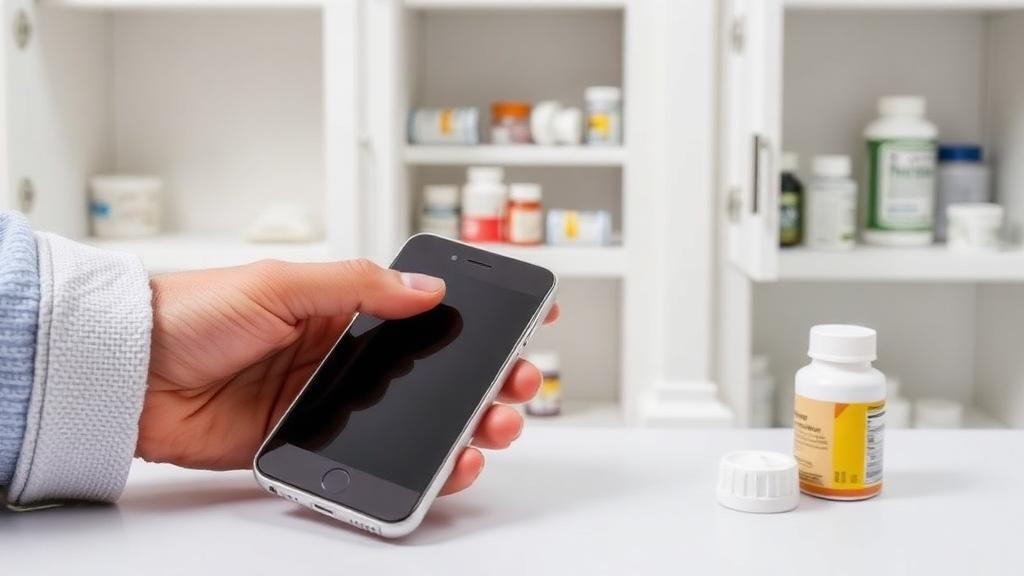
Every medicine cabinet tells a quiet story of good intentions gone stale: half-finished antibiotic courses, painkillers that expired two summers ago, ointments crusted shut in a humid bathroom drawer. Around the world, more than half of households store unused medications, and global estimates suggest that roughly 63.8 percent of medicines purchased for home use end up unused. That stockpile is not merely clutter. Leftover, damaged, and expired drugs pose real health risks when they are taken by mistake, lose potency, or leak into the environment through household waste and drains. Now a quasi-experimental study from Central Java, Indonesia, published in the journal Pharmacia, offers a glimpse of how a simple smartphone application might begin to change that picture.
The research team evaluated a mobile application called Kelola Obatku, which translates roughly as Manage My Medicines, over a three-month period between August and November 2025. The study recruited 60 adults who managed medicines at home, owned an Android smartphone, and were not healthcare workers or trained in the health sciences. Participants were allocated into two groups of 30 each: an intervention group that used the application for three months, and a control group that received no digital intervention. The setting was Margahusada Pharmacy, a facility owned by the Central Java Provincial Government with ISO-standardized service procedures, and adherence to app use was monitored through door-to-door follow-up every two weeks.
What sets Kelola Obatku apart from a simple health information site is its breadth of functionality. The application bundles eight core features: a drug search tool, stock management for the home medicine supply, documentation of medication use, family member profiles, medication reminders, a locator for the nearest pharmacy, educational content, and direct consultation with a pharmacist. Together, these features cover the full lifecycle of a household medicine, from selection and purchase through use, storage, and eventual disposal. The design reflects a growing consensus in digital health that behavior change requires more than a one-off pamphlet; it needs tools that embed themselves into daily routines.
Before the intervention could be judged on its health outcomes, the researchers tested whether users actually found the app usable. They employed the validated Usefulness, Satisfaction, and Ease of Use questionnaire, which scored an overall eligibility rating of 80.33 percent, comfortably above the 70 percent threshold considered acceptable. The instrument itself showed strong psychometric properties, with an average content validity index of 0.97 across its five domains and a Cronbach’s alpha of 0.973, indicating excellent internal consistency. Users rated the app highly on usefulness, ease of learning, and satisfaction, and most said they would download and continue using it. The weakest signal, tellingly, appeared in a negatively worded item about inconsistencies in the interface, which half of respondents agreed with, suggesting room for polish in future versions.
The core outcome was measured with a validated knowledge, attitude, and practice questionnaire covering 29 knowledge items, 25 attitude items, and 27 practice items related to medication selection, purchasing, use, storage, and disposal. When the researchers compared the change scores between the two groups, the results were striking for two of the three domains. Knowledge improved significantly more in the intervention group, with a between-group difference yielding a p-value of 0.001, and attitudes followed with a p-value of 0.017. Within the intervention group alone, knowledge scores rose from an average of 20.70 to 25.83, and the proportion of respondents classified as having good knowledge climbed from 70 percent to 100 percent. Attitude improvements were similarly pronounced, with the share of good attitudes rising from about a third to nearly two-thirds.
Practice, however, told a more sobering story. Although practice scores trended upward in the intervention group, the between-group difference did not reach statistical significance, with a p-value of 0.688 and a delta score of only 0.9 points. This pattern echoes a well-established finding in health behavior research: knowledge and attitudes are comparatively easy to shift with education, but entrenched habits, such as regularly checking expiration dates, storing medicines away from heat and humidity, and returning unused drugs to pharmacies, take far longer to reform. The authors note that medication management practices are routines woven into everyday life, and that three months may simply be too short an exposure to break and rebuild them. Prior studies of mobile health interventions suggest stronger behavioral effects emerge when tools are sustained over longer periods.
The economic dimension of the study is where the stakes become tangible in rupiah. The researchers calculated the monetary value of leftover, damaged, and expired medicines in each household using the maximum retail price printed on packaging, multiplying remaining quantities by unit price. Within the intervention group, the value of damaged medicines fell significantly, from an average of about 12,293 IDR to 1,300 IDR per household, and the value of expired medicines dropped from roughly 10,330 IDR to 2,667 IDR, with p-values of 0.023 and 0.047 respectively. The control group showed a significant reduction only in damaged medicine value. Intriguingly, the intervention group also showed an increasing trend in the value of remaining medicines, which the authors interpret as a possible sense of confidence and safety in storing and managing a home supply.
Yet when the magnitude of change was compared directly between groups, none of the economic differences reached significance. The between-group p-values for remaining, damaged, and expired medicine values were 0.258, 0.781, and 0.330 respectively. The authors caution that household drug damage often stems from improper storage conditions, such as heat and humidity, and that much of the medicine accumulating in homes has not even expired, pointing instead to problems in purchasing and use patterns. The within-group improvements remain noteworthy as preliminary evidence, but the study’s small sample of 30 participants per group, justified by the Central Limit Theorem, limits statistical power, and the quasi-experimental design restricts causal claims.
One of the more interesting secondary findings concerned who benefited. When the researchers dichotomized demographic variables at their medians and tested associations with outcome changes, almost nothing predicted improvement. Age, gender, education, marital status, employment, and income showed no significant relationship with knowledge, attitude, or practice gains, nor with economic value reductions. The single exception was family size, which was significantly associated with attitude change at a p-value of 0.017. Larger households face more diverse medication needs and more complex decision-making dynamics, a pattern the authors connect to the PRECEDE-PROCEED model of health behavior, in which family characteristics act as predisposing factors shaping health attitudes. The broader implication is encouraging: the app’s benefits did not appear confined to any particular demographic slice.
The study arrives at a moment when Indonesia is grappling with the limits of offline approaches. A national program launched in 2019, Let’s Dispose of Medication Waste Properly, enlisted roughly 1,000 pharmacies to accept returned unused and expired medicines, but its long-term influence on public behavior has remained uncertain, and clear household-level disposal regulations are still lacking. Against that backdrop, the Central Java findings suggest that digital tools can lay the cognitive and attitudinal groundwork that policy alone has struggled to build. The authors are careful about scope: three months is short, the sample is modest, and practice change may demand longer exposure and repeated reinforcement. Still, the combination of strong usability scores, significant knowledge and attitude gains, and meaningful within-group reductions in the value of damaged and expired medicines positions apps like Kelola Obatku as a promising, low-cost complement to pharmacist-led education. Future studies with larger samples, longer follow-up, and more rigorous designs will determine whether a medicine cabinet cleaned up by an algorithm can stay that way.
Subject of Research: A mobile health intervention for improving household medication management, knowledge, attitudes, practices, and economic losses
Article Title: Digital intervention for household drug management: Impacts on knowledge, attitudes, practices, and economic losses
Article References: Fathnin, F. H., Satibi, S., Endarti, D., & Lazuardi, L. (2026). Digital intervention for household drug management: Impacts on knowledge, attitudes, practices, and economic losses. Pharmacia, 73, Article e200091. https://doi.org/10.3897/pharmacia.73.e200091
Image Credits: AI Generated
DOI: 10.3897/pharmacia.73.e200091
Keywords: mHealth, household medication management, Kelola Obatku, digital health intervention, KAP study, Indonesia, medicine disposal, expired medicines, quasi-experimental study, pharmacists, rational drug use, economic losses
Cite Scienmag News
Ophelia Keating. (October 19, 2026). Smartphone App Helps Households Tame Their Medicine Cabinets, Study Finds. Scienmag. https://scienmag.com/smartphone-app-helps-households-tame-their-medicine-cabinets-study-finds/
Ophelia Keating. "Smartphone App Helps Households Tame Their Medicine Cabinets, Study Finds." Scienmag, 19 October 2026, https://scienmag.com/smartphone-app-helps-households-tame-their-medicine-cabinets-study-finds/. Accessed 19 October 2026.
Ophelia Keating. "Smartphone App Helps Households Tame Their Medicine Cabinets, Study Finds." Scienmag. October 19, 2026. https://scienmag.com/smartphone-app-helps-households-tame-their-medicine-cabinets-study-finds/


