


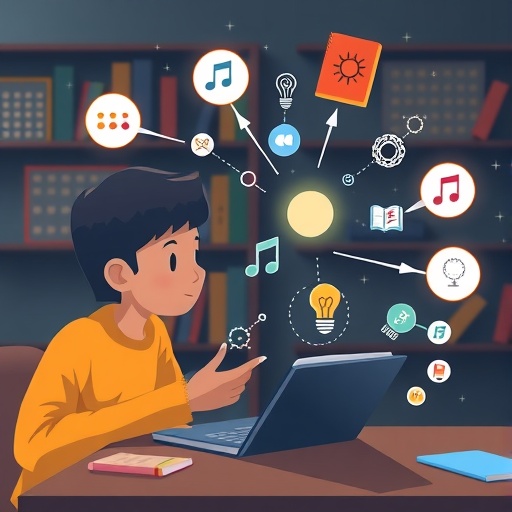
In the rapidly evolving landscape of educational technology, the integration of artificial intelligence (AI) is becoming increasingly pivotal. As the demand for personalized learning experiences grows, researchers and developers are turning their focus toward the creation of intelligent systems that can adapt content and delivery methods to cater to individual needs. A groundbreaking study conducted by F. Gong sheds light on this frontier, offering a comprehensive exploration of an innovative educational interaction system that utilizes multimodal emotion recognition technologies.
At the core of Gong’s research lies an intelligent educational interaction system designed specifically for real-time emotional engagement during learning processes. This dynamic approach seeks to enhance the effectiveness of educational content by interpreting the emotional responses of learners. By employing integrated multimodal emotion recognition, the system taps into different sensing technologies to assess the emotional states of students, which allows for more adaptive teaching strategies to be employed in real-time.
The significance of this research cannot be overstated, as traditional educational models often fail to address the multifaceted emotional landscape learners navigate during their studies. Traditional approaches tend to adopt a one-size-fits-all methodology, which often overlooks the critical role that emotions play in the learning process. By contrast, Gong’s system champions a more nuanced understanding of learners as individuals with distinct emotional profiles, thereby promoting a more personalized and effective educational experience.
One of the key features of Gong’s intelligent educational interaction system is its ability to utilize data from various modalities, including linguistic cues, facial expressions, and physiological signals. This extensive data collection allows the system to gauge emotional responses with greater accuracy, thus informing adjustments in the instructional delivery. For instance, if a student displays signs of frustration, the system can modify the content or approach, such as breaking down complex information into smaller, more digestible segments or incorporating interactive elements that re-engage the learner.
The adaptive content delivery mechanism established in the system not only enhances emotional engagement but also promotes a more resilient learning environment. By responding to students’ emotional states, educators can foster an atmosphere that encourages exploration and curiosity, reducing anxiety and facilitating deeper cognitive processing. This dynamic adaptability is borne from sophisticated algorithms that analyze emotional data, allowing for continuous improvements in instructional techniques and materials over time.
In practical terms, this system has the potential to transform classrooms across the globe. Educators equipped with this technology can track the emotional dynamics of their classrooms in real-time, enabling them to intervene quickly when needed. For example, if a cluster of students is exhibiting boredom or disinterest, the system can suggest alternative approaches, thus keeping learners engaged and motivated. The implications for educational equity are profound, as this technology can support diverse learning styles and emotional needs.
Moreover, the implementation of Gong’s intelligent system extends beyond traditional classroom settings, making it applicable in remote or hybrid learning environments. In today’s increasingly digital landscape, where virtual learning is becoming the norm, the integration of multimodal emotion recognition offers a lifeline that links educators and students in meaningful ways. As many learners face challenges with online engagement, incorporating emotion-aware systems can lead to improved academic outcomes by bridging the gap between physical presence and psychological immersion.
Another captivating aspect of Gong’s research is the ethical considerations surrounding the collection and interpretation of emotional data. As the system operates on sensitive personal information, it is paramount to address privacy concerns and ensure that data is handled with the utmost respect and security. The research calls for the establishment of stringent ethical guidelines to protect learners while still harnessing the transformative potential of AI-driven educational interaction systems.
Through extensive testing and iterative design phases, Gong’s system exemplifies the iterative nature of modern research and development in education technology. Each iteration is informed by feedback from both educators and learners, ensuring that the system evolves to meet the needs of its users dynamically. This continual refining process is vital not just for technological development, but also for fostering a culture of innovation within educational institutions.
As the educational landscape becomes increasingly competitive, there is a growing push for institutions to adopt new technologies to enhance their teaching methodologies. Gong’s study presents an opportunity for educational leaders to differentiate their programs by investing in intelligent systems that prioritize student engagement and emotional well-being. Schools and universities that embrace these advancements will invariably position themselves as leaders in educational innovation.
Looking forward, the future of educational technology may very well hinge on the widespread adoption of systems like the one developed by Gong. As researchers continue to explore the possibilities of AI and emotion recognition in learning environments, the potential to reshape educational paradigms becomes ever more tangible. The emphasis on emotional intelligence in educational contexts aligns with broader societal shifts toward holistic education, further underscoring the relevance and timeliness of Gong’s work.
In conclusion, Gong’s design and implementation of an intelligent educational interaction system marks a significant milestone in the intersection of technology and education. By integrating multimodal emotion recognition with adaptive content delivery, this system carries the promise of transforming learning experiences and outcomes. As guardians of education strive to nurture the next generation of learners, harnessing the power of intelligent systems will undoubtedly play an essential role in crafting responsive, inclusive, and effective classrooms. The implications of this research span far beyond theoretical exploration and hint at a revolutionary shift in how learning is perceived, experienced, and facilitated.
Gong, F. Design and implementation of an intelligent educational interaction system with integrated multimodal emotion recognition and adaptive content delivery. Discov Artif Intell (2025). https://doi.org/10.1007/s44163-025-00671-5
Cite Scienmag News
Denise Maddox. (December 18, 2025). Smart Learning System with Emotion-Aware Content Delivery. Scienmag. https://scienmag.com/smart-learning-system-with-emotion-aware-content-delivery/
Denise Maddox. "Smart Learning System with Emotion-Aware Content Delivery." Scienmag, 18 December 2025, https://scienmag.com/smart-learning-system-with-emotion-aware-content-delivery/. Accessed 3 September 2026.
Denise Maddox. "Smart Learning System with Emotion-Aware Content Delivery." Scienmag. December 18, 2025. https://scienmag.com/smart-learning-system-with-emotion-aware-content-delivery/


