

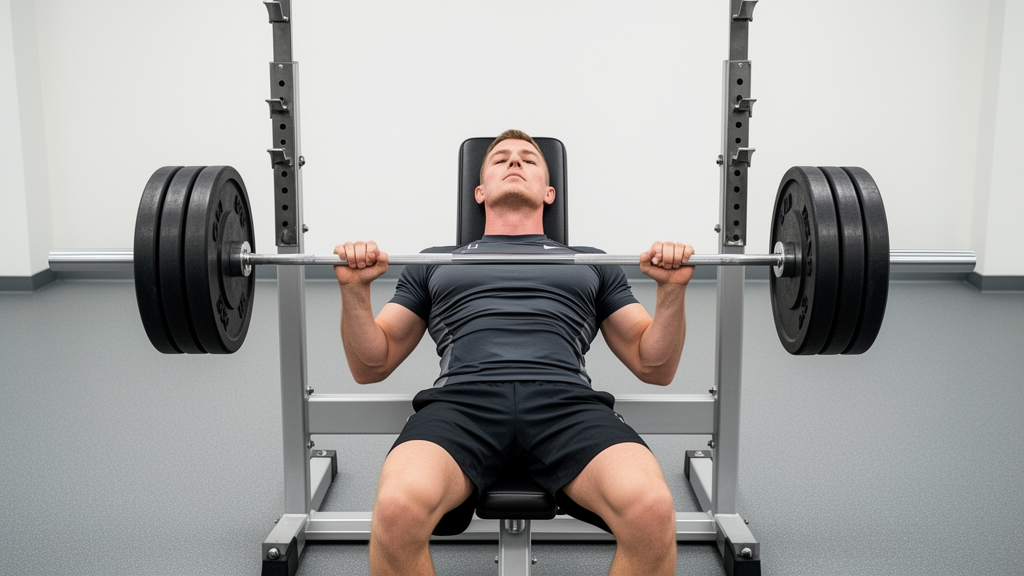
Research published in Frontiers in Sports and Active Living reveals that the speed at which Paralympic powerlifters lower the barbell during the bench press significantly impacts their ability to push it back up. A study involving thirteen competitive Para Powerlifting athletes demonstrated that extending the eccentric phase, or the lowering portion of the lift, to four seconds or more resulted in substantially lower concentric bar velocity and power output. This finding provides critical biomechanical insights for athletes competing under strict Paralympic rules, which mandate a specific pause at the bottom of the movement, thereby altering the mechanical dynamics typically observed in conventional strength training contexts.
The investigation was designed to address a gap in the literature regarding how eccentric tempo affects performance in a competition-specific setting. Previous studies on eccentric tempo have predominantly utilized conventional touch-and-go bench press protocols, which do not replicate the technical requirements of competitive Para Powerlifting. In Para Powerlifting, athletes must lower the bar to the chest, perform a mandatory pause, and then extend the elbows fully to complete the lift. These execution requirements can substantially affect barbell kinematics and may influence acute performance outcomes in ways that differ from standard gym-based strength exercises.
The study employed a repeated-measures crossover design, with all participants completing the bench press under six distinct cadence conditions in a single testing session. The conditions included a purely concentric lift from a dead stop, a volitional eccentric without a pause, a volitional eccentric with a competition-valid pause, and three controlled eccentric phases of two, four, and six seconds, each followed by a competition-valid pause. All trials were performed at 80 percent of the athlete’s one-repetition maximum, a high-load condition chosen to allow for the assessment of distinct concentric movement phases while ensuring participant safety and data reliability.
Statistical analysis revealed that the experimental condition significantly affected peak velocity, mean velocity, peak power output, and mean power output, with large effect sizes observed across all variables. The volitional eccentric condition without a pause produced the highest velocity and power values, while the six-second controlled eccentric condition produced the lowest. Specifically, the two fastest eccentric strategies, performed with no pause and under competition constraints, produced significantly higher peak and mean velocity and power than the two most prolonged tempos of four and six seconds. This pattern was consistent across all four outcome variables, with Cohen’s d effect sizes ranging from 1.45 to 3.50, indicating large and highly consistent differences.
The two-second eccentric condition occupied an intermediate and statistically ambiguous position in the results. While it was significantly higher than the six-second condition for peak velocity, mean velocity, and mean power, it did not differ significantly from the four-second condition for any variable. Furthermore, the two-second condition did not differ significantly from the faster volitional tempos, except for specific comparisons in mean velocity and mean power where the volitional condition was higher. This suggests that a short prolongation beyond the athlete’s self-selected pace may not necessarily result in a clear performance reduction when the mandatory competition pause is also present, highlighting a graded pattern in performance costs rather than a single durational threshold.
The role of the mandatory pause in Para Powerlifting was also examined, as it is a defining feature of the sport that distinguishes it from other bench press variations. Pause duration did not differ significantly among the eccentric conditions in which it was performed, indicating that the pause was applied consistently regardless of eccentric tempo. The most direct comparison for exploring a potential pause effect was between the volitional eccentric without a pause and the volitional eccentric with a pause. Although the unpaused condition showed numerically higher velocity and power output, with differences of approximately six to nine percent across the four outcome variables, none of these differences reached statistical significance. This suggests that while the pause may have a practical relevance in high-performance contexts, the present data do not provide clear statistical support for a specific, isolated effect of the mandatory pause on performance.
The findings are compatible with mechanisms involving the stretch-shortening cycle, where rapid eccentric actions may allow for greater utilization of elastic energy during the subsequent concentric phase. However, the study did not include measures that could directly assess stretch-shortening cycle behavior or elastic energy utilization. Therefore, the observed differences in bar velocity and power cannot be attributed specifically to elastic energy storage and reutilization. Other mechanisms, such as neuromuscular potentiation, changes in movement coordination, or greater perceived effort associated with prolonged eccentric actions, may also contribute to the observed performance differences. These mechanisms should be considered possible explanations consistent with previous literature rather than effects directly demonstrated by the present study.
Practical applications of these findings suggest that athletes should avoid deliberately prolonging the eccentric phase to four seconds or beyond during maximal competition attempts, as durations in this range were associated with clear and statistically robust reductions in concentric performance. Deliberately prolonged eccentric tempos may be more appropriate for training contexts aimed at increasing time under tension or perceived effort rather than for maximal competition attempts. The study also highlights the importance of considering the specific rules of the sport when designing training protocols, as the mandatory pause in Para Powerlifting may alter the mechanical and neuromuscular conditions under which eccentric tempo influences concentric performance.
Limitations of the study include the small sample size of thirteen athletes, which may have reduced statistical power and generalizability, particularly for comparisons that did not reach statistical significance. The mixed-sex and impairment-heterogeneous sample also prevented separate analyses by sex or impairment type, although the repeated-measures design allowed for within-individual comparisons. Findings were obtained at 80 percent of one-repetition maximum and may not fully represent maximal competition loads. Future research should use larger, impairment-stratified samples, higher competition-relevant loads, and combined kinematic and neuromuscular measures to confirm and extend these findings, providing a more comprehensive understanding of the biomechanical factors influencing performance in Para Powerlifting.
The study provides evidence on the influence of eccentric tempo on concentric output under competition-specific conditions. The results indicate that the tempo of the eccentric phase is a significant factor in competitive performance, with slower tempos associated with reduced velocity and power. Understanding these biomechanical implications allows athletes and coaches to tailor their strategies to the specific constraints of Para Powerlifting, ensuring that training and competition approaches align with the mechanical demands of the sport.
Subject of Research: Biomechanical effects of eccentric tempo on concentric performance in competitive Paralympic bench press
Article Title: Influence of eccentric tempo on concentric performance in competitive Paralympic bench press
Article References: Luz dos Santos, A., Silva, B. G., Santos, S. S., Fidale, T. M., Lizardo, F. B., Santos, W., Aidar, F. J., Wilk, M., & Pereira, A. A. (2026). Influence of eccentric tempo on concentric performance in competitive Paralympic bench press. Frontiers in Sports and Active Living, 8, 1963961. https://doi.org/10.3389/fspor.2026.1963961
Image Credits: AI Generated
DOI: 10.3389/fspor.2026.1963961
Keywords: Para Powerlifting, Bench Press, Eccentric Tempo, Concentric Performance, Biomechanics, Stretch-Shortening Cycle, Paralympic Sports, Bar Velocity, Power Output, Influence, eccentric, tempo
Cite Scienmag News
Scienmag. (October 26, 2026). Slow Eccentric Tempo Reduces Paralympic Bench Press Power. https://scienmag.com/slow-eccentric-tempo-reduces-paralympic-bench-press-power/
Scienmag. "Slow Eccentric Tempo Reduces Paralympic Bench Press Power." Scienmag, 26 October 2026, https://scienmag.com/slow-eccentric-tempo-reduces-paralympic-bench-press-power/. Accessed 26 October 2026.
Scienmag. "Slow Eccentric Tempo Reduces Paralympic Bench Press Power." Scienmag. October 26, 2026. https://scienmag.com/slow-eccentric-tempo-reduces-paralympic-bench-press-power/


