


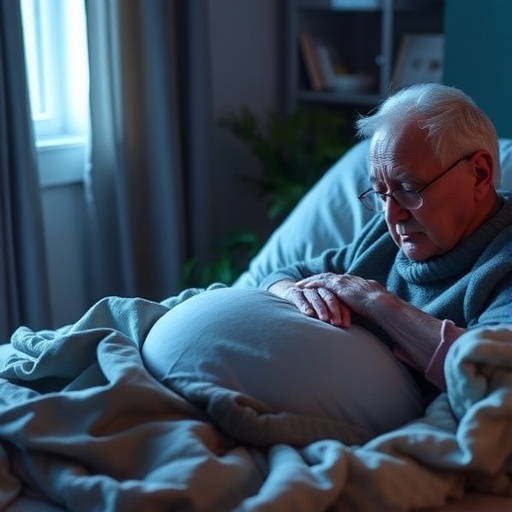
In a groundbreaking study poised to reshape our understanding of aging and its intricate relationship with lifestyle factors, researchers have unveiled compelling evidence linking sleep duration and physical activity to frailty in older adults. Published in BMC Geriatrics, this pioneering work is the first to analyze the combined effects of these two critical variables on frailty using data from the China Health and Retirement Longitudinal Study (CHARLS), thereby offering crucial insights into geriatric health management.
Frailty, a complex geriatric syndrome characterized by decreased physiological reserves and heightened vulnerability to adverse health outcomes, remains a critical concern within aging populations. Traditionally, studies have examined lifestyle factors like physical activity or sleep patterns in isolation. However, this research emphasizes the necessity of exploring their interactive impact, revealing that the synergy between sleep duration and physical activity levels profoundly influences frailty risks.
The study utilized a robust dataset comprising older adults from CHARLS, a nationally representative longitudinal survey providing rich, multidimensional data on health, social, and economic circumstances in China. By focusing on this well-characterized cohort, the researchers could perform intricate statistical modeling to disentangle the nuanced relationships between sleep, activity, and frailty while accounting for confounding variables such as age, sex, comorbidities, and socioeconomic factors.
One of the standout findings highlights the identification of optimal sleep duration thresholds in the context of physical activity levels. Short or excessively long sleep durations alone have been shown to correlate with increased frailty, but the study reveals that when coupled with low physical activity, these associations become markedly exacerbated. Conversely, moderate sleep duration combined with habitual physical activity presents a protective effect, significantly mitigating frailty progression.
From a mechanistic perspective, the interplay between sleep and exercise modulates several biological pathways implicated in frailty. Adequate sleep supports hormonal regulation, including growth hormone and cortisol rhythms, both essential for tissue repair and immune function. Physical activity, on the other hand, enhances mitochondrial function, reduces systemic inflammation, and promotes neuroplasticity. Disruptions in either domain can independently impair these processes, but the confluence of poor sleep habits and inactivity accelerates physiological decline.
Importantly, the researchers delve into the bidirectional nature of sleep and physical activity. Poor sleep quality can reduce motivation for engagement in physical exercise, while inactivity may worsen sleep patterns through alterations in circadian rhythms and reduced energy expenditure. This vicious cycle can precipitate a downward spiral leading to frailty, underscoring the critical need for integrated interventions targeting both domains simultaneously.
The study also evaluates frailty through a multidimensional lens, incorporating physical performance metrics such as gait speed, grip strength, and self-reported exhaustion, rather than relying solely on clinical diagnosis or singular biomarkers. This comprehensive approach enhances the validity and relevance of findings, offering actionable targets for both clinical practice and public health policy.
While previous literature has established independent associations of sleep and activity with health outcomes in older populations, this research pioneers the exploration of their joint effects specifically on frailty, a syndrome with significant implications for morbidity, mortality, and healthcare utilization. The longitudinal design of CHARLS additionally allows for temporally sensitive analyses, highlighting potential causal relationships rather than mere correlations.
Furthermore, the demographic characteristics of the CHARLS cohort provide a unique perspective, reflecting rapid social, economic, and lifestyle transitions occurring in China’s aging population. These findings may have broader applicability given global aging trends and the increasing burden of frailty worldwide. They also call attention to the cultural and environmental contexts shaping sleep and activity behaviors, which must be considered in the design of tailored interventions.
The public health implications are profound, suggesting that simple lifestyle modifications could profoundly affect healthy aging trajectories. Encouraging adequate sleep hygiene and promoting regular physical activity hold promise as low-cost, scalable strategies to reduce frailty incidence, improve quality of life, and decrease healthcare expenditures among older adults. Such insights are timely amid mounting pressure on health systems due to expanding elderly demographics.
Clinicians are urged to integrate routine screening for sleep disorders and physical inactivity into geriatric assessments. Multidisciplinary approaches combining gerontology, sleep medicine, and exercise physiology may pave the way for innovative therapeutic regimens, including personalized sleep interventions and community-based physical activity programs. Tailoring these interventions to individual needs and cultural preferences will likely maximize adherence and benefits.
The research also pioneers advanced analytical frameworks that can be employed in future aging studies. By harnessing latent variable modeling and interaction effect analyses, the study exemplifies how complex, multidimensional data can unravel intricate associations within population health settings. This methodological sophistication enhances the study’s credibility and utility as a scientific reference.
As the scientific community continues to unravel the biological underpinnings of aging, such integrative research highlights the necessity of viewing health through a lifestyle and behavioral matrix rather than isolated physiological parameters. The convergence of sleep science and physical activity research holds transformative potential for mitigating frailty, promoting resilience, and fostering longevity.
Future investigations might extend these findings by exploring the molecular mediators linking sleep and exercise to frailty, leveraging omics technologies and experimental models. Additionally, intervention trials testing combined sleep and physical activity regimens could validate these observational results and inform evidence-based guidelines.
In conclusion, this landmark study from Yuan, Wang, Zheng, and colleagues constitutes a critical advance in our understanding of aging-related frailty. Their rigorous analysis of CHARLS data demonstrates that sleep duration and physical activity do not operate in isolation but rather interact synergistically, shaping frailty outcomes among older adults. Their work provides a foundation for novel preventive strategies that integrate behavioral health domains, ultimately aiming to enhance aging quality on a global scale.
Cite Scienmag News
Beatrice Stafford. (June 30, 2026). Sleep, Exercise, and Frailty: New CHARLS Findings. Scienmag. https://scienmag.com/sleep-exercise-and-frailty-new-charls-findings/
Beatrice Stafford. "Sleep, Exercise, and Frailty: New CHARLS Findings." Scienmag, 30 June 2026, https://scienmag.com/sleep-exercise-and-frailty-new-charls-findings/. Accessed 4 September 2026.
Beatrice Stafford. "Sleep, Exercise, and Frailty: New CHARLS Findings." Scienmag. June 30, 2026. https://scienmag.com/sleep-exercise-and-frailty-new-charls-findings/


