


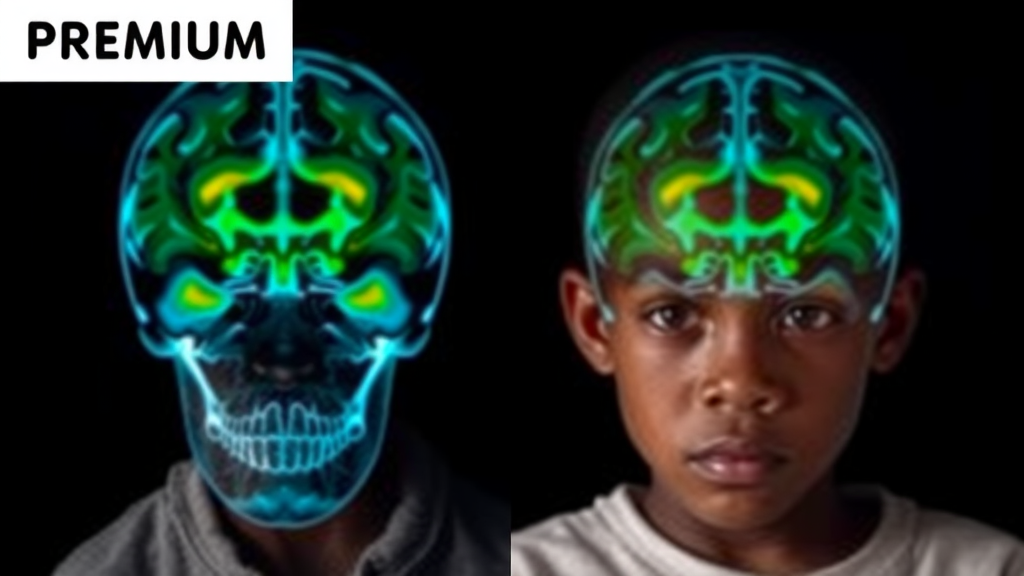
Forensic scientists in South Africa have shown for the first time that the skulls of children carry measurable, population-specific signals that can be used to help identify unknown remains, challenging the long-standing assumption that childhood growth erases ancestry clues. A team led by Miksha Harripershad of the University of Pretoria, working with colleagues at the University of Nevada, Reno, Rhodes University and the French research centre PALEVOPRIM, analysed cone beam computed tomography (CBCT) scans of 181 South African children and adolescents aged between zero and sixteen years. Their study, published in the International Journal of Legal Medicine, demonstrates that measurements taken from the midface and cranial base can classify young individuals into the country’s four major population groups with an accuracy approaching eighty percent. For a nation where unidentified subadult remains are recovered with disturbing frequency in contexts of violent crime, the findings open a door that forensic anthropologists have long considered effectively closed.
The cranium has always been the workhorse of ancestry estimation in forensic anthropology. In adults, standard craniometrics, the measurement of linear distances between anatomical landmarks on the skull, remains one of the most widely used, repeatable and cost-effective methods for estimating population affinity, with South African adult studies achieving classification accuracies of roughly seventy to eighty-four percent. The midface and cranial base are particularly informative because they exhibit population-specific variation while also surviving intact in many forensic cases. Yet translating these adult tools to children has proven remarkably difficult. Documented subadult skeletal collections are scarce, and the cranium undergoes dramatic growth and remodelling throughout childhood, with the neurocranium, midface and cranial base each maturing on distinct developmental timetables. Growth, many researchers assumed, simply swamps the population signal before it can be measured.
The new study tested that assumption directly. The researchers obtained anonymised CBCT scans from four South African hospitals: Groote Schuur Hospital in Cape Town, Cintocare private hospital in Pretoria, Victoria Mxenge Hospital in Durban and Charlotte Maxeke Johannesburg Academic Hospital. The sample comprised ninety-four black South Africans, fifty-one coloured South Africans, twenty-six white South Africans and ten Indian South Africans, all imaged at resolutions between 0.25 and 0.40 millimetres. Children with facial deformities from reconstructive surgery, pathology or trauma were excluded. Using the Avizo software platform, the team aligned each scan to the Frankfurt horizontal plane and segmented the three-dimensional models to isolate bone from soft tissue, then placed up to thirty-two cranial landmarks on each cranium, from which twenty-two standard linear measurements, called interlandmark distances, were automatically calculated.
Reliability came first. The researchers calculated technical error of measurement for both repeated measurements by the same observer and independent measurements by a second observer. Intra-observer error averaged just 0.38 millimetres, well within accepted anthropological thresholds, while inter-observer error averaged 0.68 millimetres. These results confirm that cranial dimensions can be collected accurately and repeatably from three-dimensional virtual models of children, echoing earlier work by Corron and colleagues on virtual subadult crania. With the measurement framework validated, the team turned to the central question: do these numbers actually differ between population groups, and can a statistical model exploit those differences?
The answer, cautiously, is yes. Non-parametric Kruskal-Wallis tests revealed statistically significant population differences in ten of the twenty-two measurements, concentrated in the orbital, nasal and basicranial regions. Black South Africans generally showed the largest orbital and midfacial dimensions, white South Africans the greatest upper facial and nasal height measurements, coloured South Africans greater midface and cranial base dimensions, and Indian South Africans smaller overall cranial size but larger nasal projection and malar height. Black and white South Africans overlapped the least, while Indian and coloured South Africans showed substantial morphological overlap, a pattern consistent with the country’s complex history of admixture, colonial-era migration, slavery and apartheid-era population classification, which shaped both gene flow and the demographic structure of modern South African groups.
For classification, the team employed linear discriminant analysis, a statistical method long used in biological anthropology, refined with backward-stepwise variable selection and ten-fold cross-validation to guard against overfitting. The best-performing model, which combined facial and cranial base measurements, achieved an overall classification accuracy of 79.17 percent with a kappa statistic of 0.67, and a closely related combined model reached 81.94 percent in testing. Black South Africans were classified most accurately, exceeding eighty-seven percent in the combined model, followed by white South Africans at nearly eighty-one percent and coloured South Africans at roughly seventy percent. Indian South Africans fared worst, correctly classified only half the time, a shortfall the authors attribute to the very small sample of ten individuals and to genuine biological heterogeneity within a population descended largely from indentured labourers brought to KwaZulu-Natal under British rule.
Perhaps the most intriguing result concerns age. When the models were stratified by developmental stage, classification accuracy dropped: juveniles aged seven to twelve were classified at 62.50 percent and adolescents aged thirteen to sixteen at 64.52 percent, both below the performance of the age-pooled model. Counterintuitively, pooling the full developmental sample produced better results than splitting it, with the pooled model achieving 88.89 percent accuracy in the three-to-six-year cohort, 84.09 percent at seven to twelve and 75.82 percent at thirteen to sixteen. The authors suggest that early childhood represents a period of morphological convergence in which growth trajectories across populations align and obscure population-specific distinctions, while the pooled model benefits from capturing the broader spectrum of cranial variation across development. In practical terms, this means forensic practitioners may not even need to know a child’s age before attempting an ancestry estimate from cranial measurements.
The comparison with adults adds an evolutionary twist. The subadult model actually outperformed a comparable adult South African classification model, which managed only 62.20 percent accuracy. The researchers propose that in children, where sexual dimorphism is minimal and adult shape remodelling has not yet occurred, overall cranial size carries a cleaner population signal. As individuals mature, divergent male and female growth trajectories, vault expansion and facial projection progressively mask these size-driven differences, shifting the population signature from size to shape. This may explain why orbital measurements showed significant population differences in the subadult sample but not in adult data, and why earlier work by the same team found that macromorphoscopic traits, which capture more complex shape information, performed poorly in South African subadults.
The study is careful to emphasise its limitations. Sample sizes were unequal across population groups and age cohorts, and small samples, particularly for Indian South Africans, raise the risk of overfitting and optimistic accuracy estimates. Substantial cranial overlap persisted across all groups, and the authors stress that population affinity estimates must always be framed probabilistically rather than as definitive attributions, especially in a country whose population history makes morphology a nuanced and sometimes ambiguous witness. Nonetheless, the work delivers three concrete contributions: it demonstrates that population-specific variation is detectable in the craniofacial size of South African children, particularly in the midface and cranial base; it provides the first baseline classification models for South African subadults, identifying size-based craniometrics as the most promising avenue for refinement; and it underscores that knowledge of population history and genetics is indispensable when building identification tools for the youngest and most vulnerable victims. As virtual anthropology, hospital imaging archives and machine learning continue to expand the forensic toolkit, this study signals that the skulls of children, far from being silent, have been carrying identifiable stories all along, and that science is finally learning to read them.
Subject of Research: Craniometric estimation of population affinity from CBCT-derived three-dimensional cranial models of South African subadults
Article Title: Craniometric evaluation of population affinity among South African subadults
Article References: Harripershad, M., Stull, K. E., Ridel, A. F., Theye, C. E. G., & Liebenberg, L. (2026). Craniometric evaluation of population affinity among South African subadults. International Journal of Legal Medicine. https://doi.org/10.1007/s00414-026-04018-2
Image Credits: AI Generated
DOI: 10.1007/s00414-026-04018-2
Keywords: forensic anthropology, population affinity, craniometrics, CBCT, subadults, interlandmark distance, linear discriminant analysis, cranial base, midface, South Africa, Craniometric, evaluation
Cite Scienmag News
Ophelia Keating. (September 22, 2026). Skull Scans Reveal Hidden Ancestry Clues in South African Children. Scienmag. https://scienmag.com/skull-scans-reveal-hidden-ancestry-clues-in-south-african-children/
Ophelia Keating. "Skull Scans Reveal Hidden Ancestry Clues in South African Children." Scienmag, 22 September 2026, https://scienmag.com/skull-scans-reveal-hidden-ancestry-clues-in-south-african-children/. Accessed 5 October 2026.
Ophelia Keating. "Skull Scans Reveal Hidden Ancestry Clues in South African Children." Scienmag. September 22, 2026. https://scienmag.com/skull-scans-reveal-hidden-ancestry-clues-in-south-african-children/


