


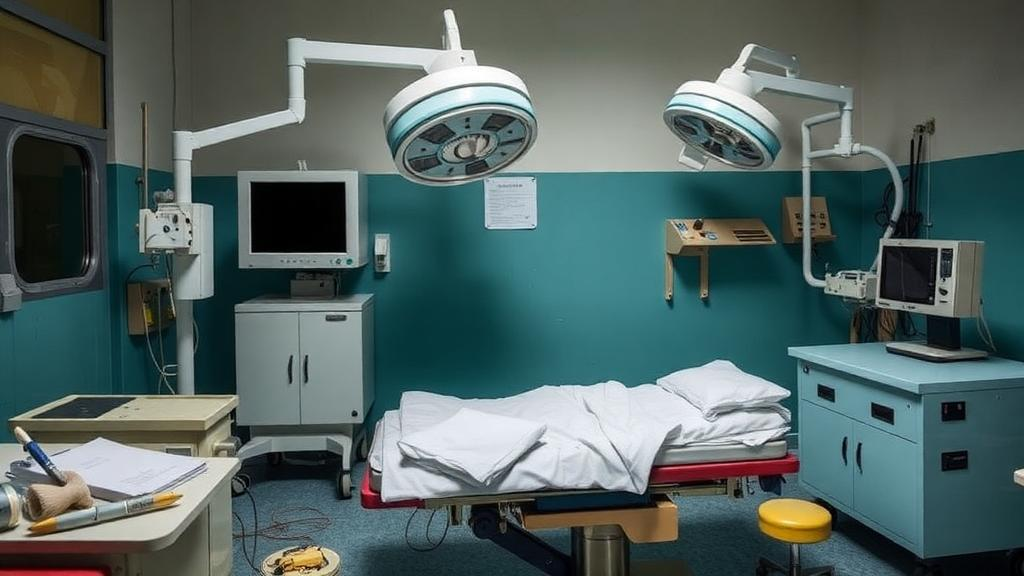
Inside the university hospitals that train Ethiopia’s future doctors, the machines that should be saving lives are too often out of service. A new cross-sectional study, published in BMC Health Services Research, has systematically documented why medical equipment in seven Ethiopian teaching hospitals breaks down so frequently and stays broken for so long. The findings paint a picture not of isolated technical mishaps but of a system under strain, where delayed spare-part procurement, chronic budget shortages, and deep skill gaps combine to keep critical devices idle while patients wait.
The research team, led by biomedical engineers and health policy specialists from Jimma University and collaborating institutions, surveyed facilities across the country between September and December 2024. Their facility-based cross-sectional design captured a snapshot of healthcare technology management as it actually operates in these hospitals, using structured data collection tools with double-entry verification to reduce recording errors. Rather than modeling equipment failure statistically with independent and dependent variables, the researchers treated their findings as descriptive indicators, a choice that reflects the exploratory nature of the work and the scarcity of prior systematic data on this problem in low-resource settings.
The headline result is striking in its uniformity. Delayed spare-part procurement was reported in every single one of the seven hospitals studied, a perfect 7 out of 7, making it the factor most consistently associated with equipment malfunction. Close behind were budget shortages, lack of spare parts, and skill gaps among staff, each reported by six of the seven facilities, or 85.71 percent. In other words, the problem is not that a handful of hospitals are mismanaging their technology; it is that nearly every institution faces the same interlocking barriers at nearly the same intensity.
Below the top tier of causes, the study identified a second layer of operational stressors. Power fluctuations were reported by five of the seven hospitals, as was a shortage of capacity-building training for the technicians expected to keep equipment running. Equipment mishandling and inadequate maintenance tools rounded out the list. Each of these factors points to a different failure mode: unstable electricity stresses sensitive electronics and power supplies, while untrained or under-equipped technicians cannot perform the preventive maintenance that would catch small faults before they become total failures.
The technical logic behind these findings is worth unpacking. Modern medical devices, from computed tomography scanners to infusion pumps, depend on reliable electrical power, calibrated components, and periodic servicing according to manufacturer specifications. When voltage fluctuates, power supplies and circuit boards degrade faster. When spare parts take months to arrive through procurement channels, a device that could be repaired in an afternoon sits unused for a season. When biomedical engineering staff lack training on specific equipment models, they may be unable to diagnose faults at all, forcing hospitals to rely on scarce external service engineers or to declare devices beyond repair prematurely.
The consequences cascade directly into clinical care. The study links these management failures to equipment downtime, delayed care, and reduced service availability. In a teaching hospital, an out-of-service machine affects not only the patients who cannot be diagnosed or treated today but also the students and residents who cannot learn to use it. Equipment downtime in diagnostic imaging, laboratory medicine, and intensive care can force patient referrals to distant facilities, add out-of-pocket costs for families, and delay diagnoses in diseases where time is decisive. The authors frame these disruptions as a health system problem, not merely an engineering nuisance.
What makes the Ethiopian case instructive for the broader global health community is its resonance with patterns documented across low- and middle-income countries. The World Health Organization has long estimated that a large share of medical equipment in resource-limited settings is out of service at any given time, and studies across sub-Saharan Africa have repeatedly implicated procurement bottlenecks, funding gaps, and workforce shortages. The abbreviation list of the new paper reads like a map of the field’s institutional landscape: health technology management frameworks, computerized maintenance management systems, medical equipment management information systems, and national supply agencies such as the Ethiopian Pharmaceutical Supply Service all appear as pieces of the machinery that should, in principle, keep devices running.
The study’s methodology deserves attention for its transparency about what it can and cannot show. As a descriptive cross-sectional survey of seven university hospitals, it establishes association and prevalence of reported challenges, not causal proof that any single factor produces equipment failure. The authors are explicit that variables were treated as descriptive indicators rather than modeled as predictors. Structured tools and double data entry strengthen the reliability of the reported figures, but the underlying data are self-reported by facilities, which means the study captures institutional perceptions of failure causes as well as objective breakdowns. Still, the near-universal agreement across seven independent hospitals lends the findings considerable weight.
Ethically and administratively, the research followed a careful protocol. Approval came from the Institutional Review Board of Jimma University, and the study was conducted in accordance with national regulations and the Declaration of Helsinki. Although the work was a non-clinical survey, informed consent was obtained from all participants before data collection, and the data collection tools themselves were reviewed and approved by the board. The work was funded by the Korea Foundation for International Healthcare under its KGA-2024 Regional Activity Project in Ethiopia, an example of international partnership supporting locally led health systems research. The authors declare no competing interests, and the article is open access under a Creative Commons license.
The policy implications are clear, and the authors do not soften them. Fixing this problem, they argue, requires systemic, policy-based reform rather than piecemeal repairs: streamlined spare-part procurement pipelines, dedicated maintenance budgets, structured training for biomedical engineering staff, stable power infrastructure with uninterruptible power supplies for critical devices, and information systems that track equipment status and maintenance history. None of these interventions is glamorous, and none involves a new machine. But the study’s central message is that the machines Ethiopia already owns could deliver far more care if the systems around them worked. In a country investing heavily in medical education and hospital expansion, ensuring that the technology already installed actually functions may be one of the highest-return health investments available.
Subject of Research: Medical equipment management and healthcare technology maintenance in Ethiopian teaching hospitals
Article Title: Medical equipment management challenges in Ethiopian teaching hospitals: a cross-sectional study of systemic and operational gaps in health technology
Article References: Yihunie, E. B., Wako, B. D., W/Amanuel, A. M., Tufa, S. G., Chala, T. K., Chala, S. L., & Gemechu, T. D. (2026). Medical equipment management challenges in Ethiopian teaching hospitals: a cross-sectional study of systemic and operational gaps in health technology. BMC Health Services Research. https://doi.org/10.1186/s12913-026-15719-0
Image Credits: AI Generated
DOI: 10.1186/s12913-026-15719-0
Keywords: medical equipment management, healthcare technology management, Ethiopia, teaching hospitals, spare parts procurement, biomedical engineering, equipment downtime, low- and middle-income countries, health systems, maintenance, hospital management, medical devices
Cite Scienmag News
Ophelia Keating. (October 5, 2026). Broken Machines and Missing Parts: Why Medical Equipment Fails in Ethiopia’s Teaching Hospitals. Scienmag. https://scienmag.com/broken-machines-and-missing-parts-why-medical-equipment-fails-in-ethiopias-teaching-hospitals/
Ophelia Keating. "Broken Machines and Missing Parts: Why Medical Equipment Fails in Ethiopia’s Teaching Hospitals." Scienmag, 5 October 2026, https://scienmag.com/broken-machines-and-missing-parts-why-medical-equipment-fails-in-ethiopias-teaching-hospitals/. Accessed 5 October 2026.
Ophelia Keating. "Broken Machines and Missing Parts: Why Medical Equipment Fails in Ethiopia’s Teaching Hospitals." Scienmag. October 5, 2026. https://scienmag.com/broken-machines-and-missing-parts-why-medical-equipment-fails-in-ethiopias-teaching-hospitals/


