


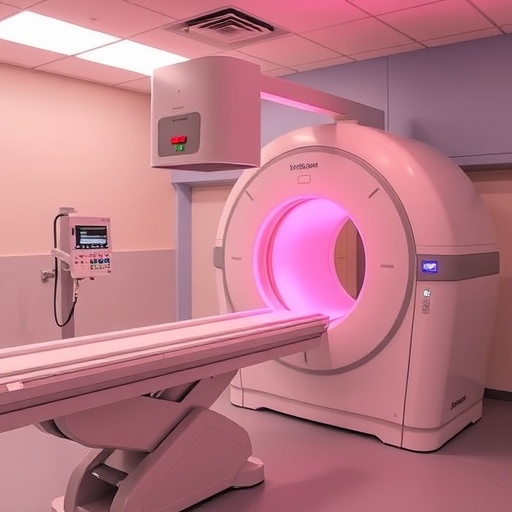
Healthcare professionals working in fluoroscopy laboratories, commonly known as cath labs, frequently face the dual hazards of radiation exposure and orthopedic injuries due to the demanding nature of their work environments. An expert consensus statement, endorsed by six prominent medical societies including the Society for Cardiovascular Angiography and Interventions (SCAI) and the American College of Cardiology (ACC), is now calling for immediate and mandatory action to mitigate these occupational risks. Published in leading journals such as the Journal of Vascular and Interventional Radiology and JACC: Cardiovascular Interventions, the statement underscores a critical shift in occupational safety standards.
Minimally invasive procedures guided by fluoroscopy have revolutionized cardiovascular and interventional medicine, but they expose clinicians to chronic radiation, which accumulates over time and contributes to health risks. Traditional protective gear, largely consisting of heavy lead aprons, has been the frontline defense, but it has inadvertently caused a high incidence of musculoskeletal injuries among practitioners. Newer technologies, termed enhanced radiation protection devices (ERPDs), offer a transformative approach by incorporating engineering controls that reduce radiation exposure drastically—by up to 99%—without relying solely on cumbersome personal protective equipment.
The consensus highlights deeply troubling findings from a 2023 survey revealing that nearly 60% of interventional cardiologists suffer orthopedic injuries related to their work in cath labs, and 17% limit their procedural time to reduce radiation exposure. Notably, female clinicians face additional barriers; 28% were discouraged from cath lab work during pregnancy or while considering pregnancy, and a significant majority desired the option to step away for safety reasons.
Experts emphasize that the acceptance of radiation exposure and injury as an occupational inevitability must end. Innovations in ERPDs not only safeguard against ionizing radiation but also alleviate the physical burden from heavy gear, promoting long-term occupational health. The statement advocates for comprehensive modernization of safety policies, urging healthcare institutions, manufacturers, and regulators to collaboratively adopt these advanced technologies and update regulations accordingly.
Integral to these recommendations is the adoption of real-time dosimetry systems, enabling precise tracking and reporting of individual radiation doses. Such transparency and data-driven monitoring ensure adherence to optimized safety thresholds aligned with the ALARA (As Low As Reasonably Achievable) principle, which has long guided radiation safety protocols. Moreover, the design of fluoroscopy suites must evolve, integrating protective technologies into imaging systems and procedure rooms themselves rather than depending on wearable shields alone.
Beyond technology, the consensus stresses the importance of education and continuous research to facilitate widespread implementation and iterative improvement, guaranteeing that radiation safety keeps pace with procedural complexities and evolving clinical demands. Preserving the health and expertise of this specialized workforce is imperative as minimally invasive interventions grow more prevalent and sophisticated, directly impacting patient outcomes and access to critical cardiovascular care.
This landmark statement marks a decisive moment, transforming radiation protection from a discretionary measure into an ethical and operational imperative. It aligns emerging technology, clinical practice, and policy to forge a safer standard that honors the wellbeing of healthcare workers while sustaining lifesaving interventional procedures.
Cite Scienmag News
Courtney Benton. (July 14, 2026). Six Medical Societies Urge Enhanced Radiation Safety in Fluoroscopy Labs Now. Scienmag. https://scienmag.com/six-medical-societies-urge-enhanced-radiation-safety-in-fluoroscopy-labs-now/
Courtney Benton. "Six Medical Societies Urge Enhanced Radiation Safety in Fluoroscopy Labs Now." Scienmag, 14 July 2026, https://scienmag.com/six-medical-societies-urge-enhanced-radiation-safety-in-fluoroscopy-labs-now/. Accessed 3 September 2026.
Courtney Benton. "Six Medical Societies Urge Enhanced Radiation Safety in Fluoroscopy Labs Now." Scienmag. July 14, 2026. https://scienmag.com/six-medical-societies-urge-enhanced-radiation-safety-in-fluoroscopy-labs-now/


