


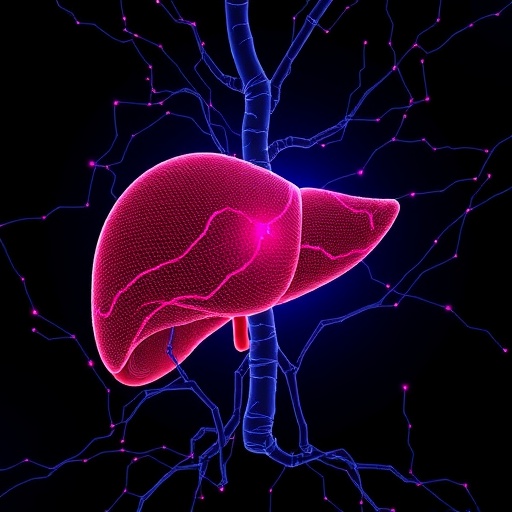
In a groundbreaking study poised to reshape our understanding of metabolic liver diseases, researchers have uncovered a critical molecular axis involving SIRT3, DsbA-L, and TFAM that serves as a powerful regulator against the progression of metabolic dysfunction-associated steatohepatitis (MASH) in male mice. This new insight not only elucidates how mitochondrial integrity and immunometabolic signaling intersect in liver pathology but also opens up promising therapeutic avenues targeting chronic liver inflammation and fibrosis, conditions affecting millions worldwide.
Metabolic dysfunction-associated steatohepatitis, a severe and progressive form of fatty liver disease, has long been a global health challenge, intricately linked to obesity, insulin resistance, and metabolic syndrome. Despite its rising prevalence, the underlying molecular mechanisms driving MASH remain incompletely understood, limiting the development of effective treatments. The research team led by Hu, Bai, and Wen now reveals the crucial role of a molecular cascade involving mitochondrial deacetylase SIRT3, disulfide-bond A oxidoreductase-like protein (DsbA-L), and mitochondrial transcription factor A (TFAM) in controlling inflammation and mitochondrial function, thereby restraining cGAS-mediated immune activation in the liver.
Central to the study is the role of mitochondrial dysfunction as a root cause of MASH progression. Mitochondria, the powerhouses of the cell, are essential for energy metabolism and cellular homeostasis. Their damage or dysregulation has been implicated in the exacerbation of hepatic steatosis and inflammation. SIRT3, a mitochondrial sirtuin, is known to maintain mitochondrial protein function through deacetylation, promoting antioxidant defenses and bioenergetic balance. The researchers identified that SIRT3 directly influences the stability and function of DsbA-L, a mitochondrial protein involved in maintaining redox homeostasis, which in turn stabilizes TFAM, a key regulator of mitochondrial DNA replication and transcription.
This multifaceted SIRT3-DsbA-L-TFAM axis exerts a protective effect by preventing the activation of the cyclic GMP-AMP synthase (cGAS) pathway, a key sensor of cytosolic mitochondrial DNA that triggers inflammatory cascades. Under conditions of mitochondrial stress or damage, mitochondrial DNA can leak into the cytoplasm, where it aberrantly activates cGAS, initiating immune responses that exacerbate hepatic inflammation and fibrosis. The study demonstrates that by preserving mitochondrial integrity via this axis, cGAS activation is significantly curtailed, thereby attenuating the inflammatory milieu characteristic of MASH.
The investigation employed male mice models with genetically engineered deletions of SIRT3, DsbA-L, or TFAM, coupled with high-fat diet-induced metabolic stress. These models recapitulated many features of human steatohepatitis, including lipid accumulation, oxidative stress, and immune cell infiltration. Deletion of any component of this axis led to heightened cGAS activation, increased production of pro-inflammatory cytokines, and severe liver damage, underscoring the axis’s indispensable role in liver health.
On a molecular level, the researchers utilized state-of-the-art techniques including mitochondrial isolation, chromatin immunoprecipitation, and transcriptomic analyses to unravel how the loss of TFAM impacts mitochondrial DNA copy number and integrity. The results showed that TFAM deficiency led to a dramatic decrease in mitochondrial genome maintenance, promoting DNA release into the cytosol and subsequent cGAS activation. Importantly, reconstitution of TFAM or pharmacological activation of SIRT3 restored mitochondrial function and reduced inflammatory signaling, highlighting potential therapeutic interventions.
Alongside mitochondrial metrics, the study investigated immune system involvement, particularly focusing on innate immune signaling pathways within hepatocytes. By exploiting cGAS-knockout mice, the team confirmed that the inflammatory phenotype was indeed dependent on cGAS, positioning the SIRT3-DsbA-L-TFAM axis upstream in regulating immune responses to mitochondrial stress. This insight bridges metabolic dysfunction with innate immunity, two previously parallel fields, and provides a unified framework for understanding steatohepatitis pathogenesis.
The sex-specific aspect of this research is also noteworthy. The exclusive use of male mice revealed nuanced differences in mitochondrial regulation and immune activation compared to female models, suggesting hormonal or genetic factors may modulate the susceptibility and progression of hepatic diseases. The authors propose further exploration into sex differences could lead to personalized therapeutic strategies, factoring in gender-based molecular pathways.
Significantly, the implications of this research extend beyond liver diseases. Given the fundamental role of mitochondria in numerous metabolic and degenerative conditions, the elucidation of the SIRT3-DsbA-L-TFAM axis may shed light on broader pathological mechanisms. Dysfunctional mitochondrial quality control and immune crosstalk is a common thread in neurodegenerative disorders, cardiovascular diseases, and even cancer, pointing toward universal therapeutic targets.
Clinically, the identification of this axis lays the groundwork for novel biomarker development. Detection of aberrations in SIRT3, DsbA-L, or TFAM levels or activity could enhance early diagnosis of MASH and monitor disease progression or response to therapy. Furthermore, small-molecule activators of SIRT3 or stabilizers of mitochondrial transcription may emerge as promising drug candidates. Ongoing trials targeting sirtuins in metabolic and age-related diseases might benefit from incorporating these findings to intensify their efficacy and specificity.
Moreover, the study highlights the central concept that metabolic and immune pathways are intimately intertwined and that mitochondrial health is a pivotal nexus. Chronic metabolic stress fuels mitochondrial damage, which in turn sparks sterile inflammation—fueling a vicious cycle of tissue injury. Interrupting this cycle via enhancement of the SIRT3-DsbA-L-TFAM axis offers hope for halting or even reversing disease progression.
In sum, this seminal research from Hu, Bai, Wen, and their colleagues pushes forward the frontier of liver metabolism and immunology. By decoding and validating the protective role of the SIRT3-DsbA-L-TFAM axis in male mice models of steatohepatitis, they unlock new dimensions in our understanding of mitochondrial-immune interactions. This contributes vital clues to unraveling the complex pathology of MASH and steps toward innovative, mitochondria-focused therapies that could transform clinical practice.
As fatty liver disease continues to rise globally in parallel with obesity and diabetes, these scientific advances have profound public health implications. Understanding the molecular underpinnings that govern disease onset and progression can empower clinicians and patients alike, steering interventions beyond symptomatic relief toward targeted, mechanistic therapies. Future research is expected to build upon this framework to explore therapeutic potential across sexes, species, and stages of liver disease.
This new molecular axis, therefore, stands at the nexus of metabolism, mitochondrial biology, and inflammation. Its elucidation heralds a paradigm shift, blurring the boundaries between metabolic regulation and innate immunity. As the science evolves, it may also spark interest in the development of combination therapies addressing both metabolic dysfunction and immune dysregulation, ultimately reducing the burden of chronic liver diseases worldwide.
By interlinking cellular energy management mechanisms with immune sensing pathways in the liver, the SIRT3-DsbA-L-TFAM axis offers a remarkable example of nature’s intricate regulatory networks. Harnessing this knowledge may soon translate to innovative clinical solutions, improving outcomes for patients suffering from MASH and related metabolic disorders.
Hu, L., Bai, J., Wen, J. et al. The SIRT3-DsbA-L-TFAM axis restrains cGAS-driven metabolic dysfunction-associated steatohepatitis in male mice.
Nat Commun (2026). https://doi.org/10.1038/s41467-026-72395-8
Cite Scienmag News
Ophelia Keating. (May 5, 2026). SIRT3-DsbA-L-TFAM Axis Limits Fatty Liver Disease. Scienmag. https://scienmag.com/sirt3-dsba-l-tfam-axis-limits-fatty-liver-disease/
Ophelia Keating. "SIRT3-DsbA-L-TFAM Axis Limits Fatty Liver Disease." Scienmag, 5 May 2026, https://scienmag.com/sirt3-dsba-l-tfam-axis-limits-fatty-liver-disease/. Accessed 5 September 2026.
Ophelia Keating. "SIRT3-DsbA-L-TFAM Axis Limits Fatty Liver Disease." Scienmag. May 5, 2026. https://scienmag.com/sirt3-dsba-l-tfam-axis-limits-fatty-liver-disease/


