


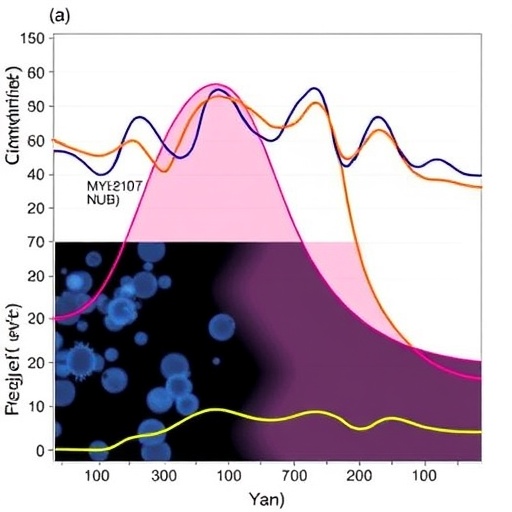
A new study published in Nature Communications is drawing attention to an increasingly important question in immunology: does the immune system age in the same way in women and men? The research, led by H. Park, N. Le Bert and A. Bertoletti, examines sex-specific trajectories of immune aging at the single-cell level, offering a more detailed view of how the body’s defenses change over time. Rather than treating aging as a steady, uniform decline, the study focuses on the possibility that immune deterioration follows nonlinear paths, with periods of relative stability, rapid transition and functional reorganization. The findings are particularly relevant to viral science because age and sex are among the strongest biological factors influencing susceptibility to infection, vaccine responses and the severity of disease.
For decades, researchers have described immunosenescence as a gradual weakening of immune protection. This traditional model emphasizes the shrinking output of new naïve T cells, the accumulation of experienced or exhausted immune cells and a decline in the ability to respond effectively to unfamiliar pathogens. However, the immune system is not a single organ with a single clock. It is a vast network of cell types, signaling pathways and tissue environments that change at different rates. A person may retain strong antibody production while showing altered T-cell diversity, or maintain inflammatory activity while losing the capacity to generate highly adaptable responses. By analyzing immune aging one cell at a time, the researchers address this complexity and explore whether biological aging is better understood as a series of shifting cellular states rather than a smooth downward slope.
Single-cell analysis has transformed the study of human immunity. Conventional laboratory methods often measure average signals across millions of cells, producing a useful but highly compressed picture. That approach can conceal rare populations, opposing trends or differences between cells that appear similar when combined. Single-cell technologies, including high-dimensional sequencing and cytometric profiling, can distinguish individual immune cells according to their gene activity, surface markers and functional programs. These data allow scientists to identify naïve, memory, effector, regulatory and potentially dysfunctional immune populations within the same sample. They can also reveal transitional states that are invisible in bulk measurements. In the context of aging, this resolution is critical because the most meaningful changes may occur not in the total number of immune cells, but in the proportions and interactions of specialized subpopulations.
The term “nonlinear” is central to the study’s message. In a linear model, each additional year of age would be expected to produce roughly the same degree of immune change. Biological systems rarely behave so simply. Immune cell populations can remain relatively stable for years before crossing a threshold that triggers a rapid shift. Other populations may change early, then plateau, or follow different trajectories in response to infections, chronic inflammation or hormonal transitions. A nonlinear framework can capture these turning points and identify periods when the immune system is particularly vulnerable to disruption. It may also help explain why two people of the same chronological age can display dramatically different levels of immune resilience, and why some older adults continue to respond effectively to vaccination while others develop weak or short-lived protection.
The study’s emphasis on sex-specific trajectories adds another layer to this biological picture. Sex influences immunity through chromosomes, hormones, gene regulation and differences in exposure to pathogens and environmental stressors. Many immune-related genes are located on the X chromosome, while hormonal signaling can alter the development, activation and persistence of lymphocytes and myeloid cells. These factors may contribute to differences in autoimmune disease, infection outcomes and vaccine responses observed across populations. They may also shape how immune aging unfolds over the life course. Importantly, identifying sex-associated patterns does not mean that every woman or every man follows the same immune pathway. Instead, it highlights the need to recognize population-level trends while accounting for substantial individual variation.
From a viral science perspective, the implications are broad. Viral infections depend on the timing and coordination of innate and adaptive immunity. Innate defenses provide rapid recognition through mechanisms such as interferon signaling and natural killer cell activity, while adaptive responses rely on the expansion of virus-specific T cells and the production of neutralizing antibodies. Aging can disrupt each stage of this process, but not necessarily in identical ways. A person may generate antibodies after vaccination yet fail to maintain robust cellular memory, or may mount an intense inflammatory reaction that causes tissue damage without efficiently controlling viral replication. If these changes occur at different ages and differ by sex, then a universal strategy for vaccination, antiviral treatment or clinical risk assessment may overlook important biological distinctions.
The single-cell perspective could also improve the search for biomarkers of immune health. Chronological age is an imperfect predictor of how well an individual will respond to infection. Researchers are increasingly interested in biological measures that describe immune age, including the diversity of T-cell receptors, the balance between naïve and memory cells, inflammatory gene signatures and the presence of senescent or exhausted populations. A nonlinear model may reveal that certain combinations of cellular features are more informative than any single marker. Such signatures could eventually help clinicians identify people who need enhanced vaccination schedules, closer monitoring during viral outbreaks or tailored treatment. Before that becomes possible, however, the patterns observed in research settings will need to be validated across larger and more diverse populations.
The work also illustrates why immune aging should be studied as a dynamic process rather than a fixed condition. Viral infections themselves can reshape the immune landscape, sometimes leaving durable memory and sometimes contributing to chronic inflammation or immune exhaustion. Repeated exposure to different pathogens, vaccination histories, medications, metabolic health and lifestyle can all influence the cellular states detected in an older person. A single sample provides a detailed snapshot, but long-term studies are needed to determine how individual immune cells and their populations change over time. The nonlinear trajectories described in the study therefore represent an important conceptual advance, while also pointing to the need for longitudinal research that follows people through infections, vaccinations and major life stages.
By placing sex and cellular resolution at the center of immune-aging research, Park, Le Bert, Bertoletti and colleagues contribute to a more precise framework for understanding why protection against viruses changes across the lifespan. The study does not reduce aging to a simple decline; instead, it presents immune aging as a complex reorganization involving multiple cell types and potentially distinct biological pathways. That perspective could influence the design of future vaccines, the interpretation of antiviral immunity and the development of personalized approaches to infectious-disease prevention. As viral threats continue to emerge in populations with widely varying ages and health profiles, understanding when and how immune defenses change may become as important as identifying the pathogen itself.
Cite Scienmag News
Beatrice Stafford. (August 21, 2026). Single-cell study reveals sex-specific nonlinear trajectories of immune aging. Scienmag. https://scienmag.com/single-cell-study-reveals-sex-specific-nonlinear-trajectories-of-immune-aging/
Beatrice Stafford. "Single-cell study reveals sex-specific nonlinear trajectories of immune aging." Scienmag, 21 August 2026, https://scienmag.com/single-cell-study-reveals-sex-specific-nonlinear-trajectories-of-immune-aging/. Accessed 4 September 2026.
Beatrice Stafford. "Single-cell study reveals sex-specific nonlinear trajectories of immune aging." Scienmag. August 21, 2026. https://scienmag.com/single-cell-study-reveals-sex-specific-nonlinear-trajectories-of-immune-aging/


