


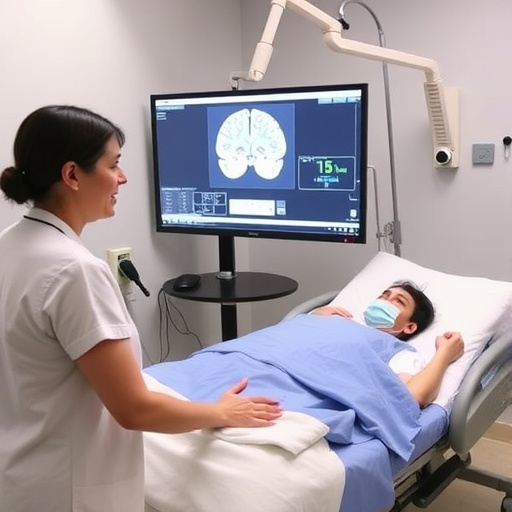
In a groundbreaking study published in BMC Medical Education, researchers have found that acute neurology simulation-based training can significantly enhance the confidence levels and reduce anxiety in novice neurology residents and nursing staff. This research demonstrates not only the importance of educational techniques in burgeoning medical fields but also how the substantive use of simulations can transform the training landscape in neurology. As the healthcare community continually seeks innovative methods to improve patient outcomes, this study could serve as a critical piece in the broader puzzle of medical education.
The phenomenon where healthcare professionals experience anxiety when faced with acute situations is well-documented. Novice residents, especially in high-stakes environments like neurology, often struggle to gain the confidence needed to perform effectively. Anxiety can hinder their ability to make quick, informed decisions, essential in acute care scenarios. This study provides empirical evidence supporting the use of simulation-based training as a viable solution to this pressing issue. By immersing these trainees in simulated scenarios that mimic real-life challenges, they gain hands-on experience that calms their nerves and sharpens their skills.
Throughout the study, various educational methodologies were put to the test to assess their effectiveness in cultivating a supportive learning environment. Participants were subjected to simulations that replicated acute neurological emergencies, allowing them to practice their skills in a controlled setting. The simulation scenarios were intricately designed to evoke real emotional responses, which is critical for preparing participants for actual patient interactions. The findings indicate that not only did participants report heightened confidence, but they also demonstrated improved skill retention and decision-making capabilities.
Moreover, these training sessions were designed to be responsive, enabling trainees to receive immediate feedback about their performance. This feedback loop is invaluable; it reinforces learning and helps residents understand their areas of improvement in real-time. As a result, these individuals left the simulations with a clearer understanding of their competencies and the knowledge that they can handle crisis situations. The reduction in anxiety was not just anecdotal; it was measured through validated assessment tools, providing scientific backing to the claims made by the participants.
In the context of evolving medical education, simulation training offers a multifaceted approach to the traditional learning models. It stands as a testament to how modern technology can be harnessed to create more engaging and effective learning environments. By utilizing high-fidelity simulations, educators can prepare residents and nursing staff not only to face acute medical challenges but also to foster a culture of continuous learning and improvement in their professional practice.
The researchers behind this study highlight that while the impact of simulation training is becoming increasingly recognized, there is still a need for its broader implementation across various medical fields. The implications of this research extend beyond just neurology; they call for a reevaluation of training protocols in different specializations where high levels of anxiety may be prevalent. The mastery of skills in a low-stakes environment can lead to greater confidence when these individuals eventually encounter real patients.
Furthermore, this study could ignite further research exploring how long-term exposure to simulation training affects professional development and patient outcomes. Would continual simulation exposure result in lasting confidence and competence, or would it wear off if not practiced regularly? These questions merit investigation as the medical community seeks to ensure that healthcare providers are not only trained effectively but also remain calm under pressure.
In the age of rapid technological advancement, the integration of simulation in medical education could pave the way toward future innovations in training methodologies. It emphasizes the necessity for adaptability in learning approaches, underscoring the importance of being prepared for the unpredictable nature of healthcare situations. The adaptability of simulation training allows for tailored experiences that can accommodate the diverse learning styles and paces of medical trainees.
Interestingly, the sheer diversity of scenarios that can be simulated—from neurological emergencies to patient interactions—opens doors to novel training frameworks not traditionally explored. The possibilities for expanding this method beyond just neurology into a comprehensive training regimen applicable to all aspects of medicine cannot be overstated. Researchers are already calling for collaborative efforts between institutions to standardize simulation exercises, ensuring all medical trainees benefit from consistent, high-quality education.
In conclusion, the research puts forth a compelling case for the inclusion of simulation-based training in neurology residency programs and nursing education. The reduction of anxiety and enhancement of confidence are critical factors that can significantly improve patient care. As such, it lays a robust groundwork for policy-makers and medical educators to assess and eventually integrate evidence-based simulation training into their curricula, aspiring towards a future where healthcare professionals are better prepared for the demands of their roles.
The findings from this study resonate with an urgent need to revolutionize medical training. It bridges the gap between theoretical knowledge and practical application, reflecting a paradigm shift toward experiential learning in medicine. As we inch closer to implementing more simulation-based methodologies, the anticipation grows for finding the most promising pathways to better prepare healthcare practitioners for their essential work in society.
Yarden, S., Mai, C., Tali, C. et al. Acute neurology simulation-based training boosts confidence and reduces anxiety in novice neurology residents and nursing staff.
BMC Med Educ 25, 1549 (2025). https://doi.org/10.1186/s12909-025-07948-4
Cite Scienmag News
Cassandra Pierce. (November 8, 2025). Simulation Training Enhances Confidence in Neurology Residents. Scienmag. https://scienmag.com/simulation-training-enhances-confidence-in-neurology-residents/
Cassandra Pierce. "Simulation Training Enhances Confidence in Neurology Residents." Scienmag, 8 November 2025, https://scienmag.com/simulation-training-enhances-confidence-in-neurology-residents/. Accessed 4 September 2026.
Cassandra Pierce. "Simulation Training Enhances Confidence in Neurology Residents." Scienmag. November 8, 2025. https://scienmag.com/simulation-training-enhances-confidence-in-neurology-residents/


