

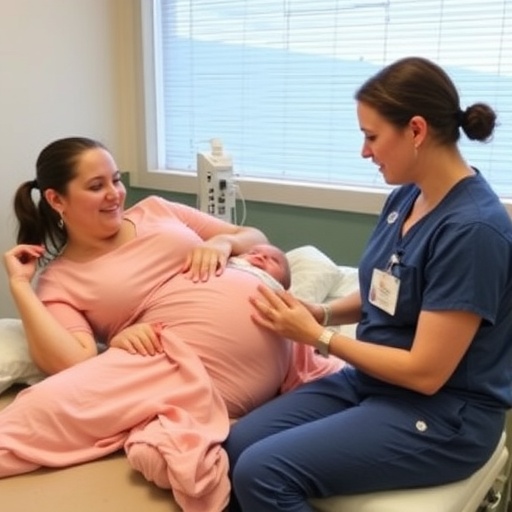
In recent years, the enhancement of educational methodologies in healthcare training has gained significant traction, capturing the interest of educators, policymakers, and healthcare professionals alike. One area that has particularly benefited from innovative teaching approaches is midwifery education. A recent study delves deep into the impact of simulation training on midwifery students, focusing specifically on their practical skills and psychological readiness for neonatal heel prick blood collection—a critical procedure in early neonatal care.
Simulation training has transformed medical education, bridging the gap between theoretical knowledge and practical application. In the context of midwifery, where precision and confidence are paramount, this interactive learning approach allows students to experience realistic scenarios in a controlled environment. The study by Cambaz Ulaş and colleagues explores how this method affects various dimensions of learning, including skill acquisition, satisfaction with the learning experience, anxiety levels, and self-efficacy. These factors play pivotal roles in shaping competent and confident healthcare professionals.
Anxiety is a common experience among medical students, particularly in high-stakes training scenarios. The pressure to perform well can be overwhelming, often affecting their ability to learn and retain information. The research highlights that simulation training significantly reduces anxiety levels among midwifery students. By engaging in hands-on practice under realistic conditions, students can familiarize themselves with the procedural intricacies of neonatal heel prick blood collection. Over time, this exposure diminishes anxiety, as students develop a sense of familiarity and mastery over the procedure.
Moreover, the study emphasizes the importance of self-efficacy—an individual’s belief in their capabilities to execute behaviors required to produce specific performances. Increased self-efficacy is directly correlated with better performance outcomes in clinical settings. Through simulation training, students not only refine their technical skills but also enhance their confidence in their abilities to perform crucial procedures. The findings suggest that as students engage in simulation exercises, their self-assurance grows, which can lead to improved patient interactions and outcomes in real-world settings.
Skill acquisition is another critical aspect analyzed in the research. Traditional educational frameworks often struggle to provide sufficient hands-on experience, particularly for procedures that are complex and require precision. Simulation training serves as a solution, enabling students to practice repeatedly until they achieve proficiency. The study reveals that students who underwent simulation training demonstrated significantly improved skills in executing neonatal heel prick blood collection compared to their peers who relied solely on theoretical learning. This practical training not only prepares students for real-life scenarios but also promotes patient safety and effective care delivery.
Satisfaction with the learning experience is frequently underestimated in educational settings. However, it is a crucial measure that can influence students’ commitment to their training and future careers. The research indicates that students who participated in simulation training reported higher levels of satisfaction with their learning experiences. The interactive nature of simulation fosters an engaging learning atmosphere, allowing students to actively participate and reflect on their experiences, which enhances their overall educational journey.
Another noteworthy element of the study is its broader implications for healthcare education as a whole. As the demand for skilled healthcare professionals continues to rise, educational institutions must adapt their teaching strategies to better prepare students for the realities of clinical practice. The findings advocate for the integration of simulation-based training into midwifery curricula, reinforcing the need for a paradigm shift in how future nurses and midwives are educated. By investing in such educational innovations, institutions can significantly improve the quality of healthcare services provided to patients.
Furthermore, the research contributes to the ongoing discourse about mental health and wellness in medical training. The emotionally taxing nature of healthcare education can lead to burnout and attrition among students. By implementing effective teaching methodologies such as simulation training, educators can alleviate some of the stressors associated with learning complex clinical skills. Reducing anxiety and enhancing self-efficacy not only benefits students during their training but also has long-term implications for their mental health and career longevity.
As these advancements in educational techniques continue to evolve, it is essential for academic and clinical stakeholders to monitor and assess their effectiveness. Continuous evaluation will ensure that simulation training remains relevant and beneficial to future generations of healthcare professionals. This research serves as a stepping stone, highlighting the significance of innovative training methods and encouraging further studies to explore additional areas within midwifery and broader medical education.
In conclusion, the study by Cambaz Ulaş et al. provides valuable insights into the transformative power of simulation training in midwifery education. As healthcare becomes increasingly complex, educators must embrace innovative approaches that foster skill acquisition, enhance self-efficacy, and address the psychological challenges faced by students. This research not only informs current educational practices but also paves the way for future enhancements in training methodologies, ultimately leading to improved patient care and a healthier workforce.
The implications of this study extend beyond midwifery education, potentially influencing other fields within healthcare education. As more institutions recognize the benefits of simulation training, we may witness a cultural shift towards more immersive and interactive learning environments across disciplines. Such changes could revolutionize the way healthcare professionals are trained, resulting in a new generation of practitioners who are better equipped to face the challenges of modern medicine with confidence and competence.
As we explore the future of medical education, the integration of evidence-based practices like simulation training will be crucial. The study’s findings are not only optimistic but also serve as a call to action for educators everywhere. It is time to harness the potential of innovative training methods to ensure that students are not just well-versed in theoretical knowledge but are also proficient in the practical skills necessary to provide high-quality patient care.
Therefore, as we move forward in this era of medical education reform, let us remember the importance of fostering both skill and confidence in our future healthcare providers. Simulation training represents a paradigm shift that can lead to substantial improvements in educational outcomes and, more importantly, in the quality of care delivered to patients.
Subject of Research: The impact of simulation training on midwifery students’ skills, satisfaction with learning, anxiety, and self-efficacy in neonatal heel prick blood collection.
Article Title: The effect of simulation training on midwifery students’ skills, satisfaction with learning, anxiety, and self-efficacy in neonatal heel prick blood collection.
Article References:
Cambaz Ulaş, S., Durgun, S.K. & Okuyan, Y.Ç. The effect of simulation training on midwifery students’ skills, satisfaction with learning, anxiety, and self-efficacy in neonatal heel prick blood collection.
BMC Med Educ (2025). https://doi.org/10.1186/s12909-025-08303-3
Image Credits: AI Generated
DOI: 10.1186/s12909-025-08303-3
Keywords: simulation training, midwifery education, neonatal heel prick blood collection, skill acquisition, self-efficacy, anxiety reduction.


