


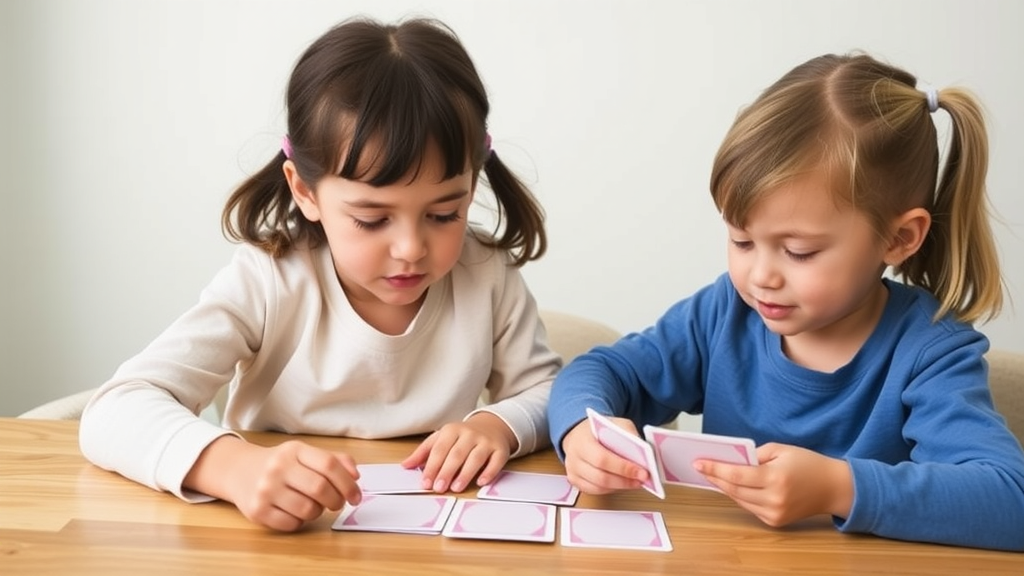
For a child facing surgery, the hours before the operation can be the most frightening part of the entire hospital stay. The unfamiliar gowns, the anticipation of needles, the separation from parents, and the vague threat of an operation performed while they sleep can combine into a potent cocktail of fear. Now, a randomized controlled trial conducted at Children’s Hospital, Zhejiang University School of Medicine in Hangzhou, China, suggests that a surprisingly low-tech remedy may work as well as, or better than, many of the elaborate distraction technologies hospitals have embraced in recent years: a specially designed card game. The study, published in the World Journal of Pediatrics, reports that children who played the game before elective surgery showed significantly lower levels of preoperative anxiety than children who received standard preoperative preparation alone.
Preoperative anxiety in children is far more than a momentary bout of nerves. Decades of pediatric anesthesia research, including classic work by Vernon and colleagues in the 1960s and the influential studies of Zeev Kain, have documented that anxious children are harder to anesthetize, may require more sedative medication, and are at increased risk of negative behavioral changes after hospitalization, including nightmares, separation difficulties, and new-onset bedtime fears. Estimates suggest that well over half of children undergoing elective surgery experience clinically significant anxiety in the preoperative holding area. Because pharmacologic sedation carries its own risks and costs, nonpharmacologic approaches, from parental presence during anesthesia induction to therapeutic medical play and virtual reality distraction, have become a major focus of pediatric perioperative care research.
The research team, led by Jun-Qing Chen and Wei-Fang Zhang, designed their intervention around what children themselves say they want to know. In an earlier qualitative study of Chinese school-age children awaiting elective surgery, the same group found that children consistently reported gaps in their understanding of what would happen to them: why they needed the operation, what the operating room would look like, whether the surgery would hurt, and when they would see their parents again. Rather than delivering that information through a lecture or a pamphlet, which children often ignore or misinterpret, the researchers embedded it in a card game, allowing children to absorb procedural knowledge through play, repetition, and social interaction with trained facilitators.
The trial enrolled children scheduled for elective surgery and randomly assigned them to either the card game intervention or a usual-care control group. Anxiety was assessed with validated instruments, including the modified Yale Preoperative Anxiety Scale, an observational tool that scores behaviors such as vocalizations, emotional expressivity, state of apparent arousal, and use of parents as a source of comfort, together with self-report measures including Chinese versions of the State-Trait Anxiety Inventory. The researchers report that children in the intervention arm displayed significantly lower anxiety scores than controls in the preoperative period, indicating that the game-based preparation translated into measurably calmer behavior at the point where anxiety typically peaks, immediately before transport to the operating room.
The psychology underlying why a simple card game might outperform standard verbal preparation is rooted in several well-established mechanisms. First, play is the natural language of childhood; children process frightening information more readily when it is presented through symbolic, interactive formats rather than abstract explanations. Second, the game provides cognitive control: by turning the surgical journey into a set of cards to be mastered, questions to be answered, and rounds to be won, it converts a passive, threatening experience into an active, comprehensible one. Third, therapeutic play reduces uncertainty, which is a core driver of anxiety. A child who knows what the anesthesia mask feels like, who will be present, and roughly how long everything will take has fewer unknowns to catastrophize about. Finally, the social dimension matters. Playing with a facilitator or peers engages emotion regulation, normalizes the hospital environment, and gives the child a brief, positive relational experience inside an otherwise intimidating setting.
The findings arrive amid a growing evidence base for game-based interventions in pediatric care. A 2022 systematic review and meta-analysis by Suleiman-Martos and colleagues concluded that game-based interventions significantly reduce preoperative pain and anxiety in children, and a 2023 umbrella review by Agüero-Millan and coauthors found moderate evidence supporting nonpharmacologic interventions more broadly. Other trials have tested incentive-based games, group medical play sessions, and immersive virtual reality, with the latter showing striking results for procedures such as venipuncture. What distinguishes the new study is its simplicity and low cost. A deck of cards requires no screens, no software licenses, no charging infrastructure, and no technical support, making it potentially deployable in resource-limited hospitals and rural clinics where virtual reality headsets are out of reach.
The trial was grounded in the emerging discipline of child life services, which the authors have described elsewhere as the heartbeat of healing in pediatric care. Child life specialists use developmentally appropriate preparation, therapeutic play, and coping support to help children navigate medical experiences, a model that is well established in North America but still developing in many parts of Asia. By demonstrating in a rigorous randomized design that a structured play intervention measurably reduces preoperative anxiety, the Hangzhou team provides local evidence that child life principles can be adapted to the Chinese healthcare context using culturally appropriate materials, potentially accelerating the adoption of psychosocial support services in pediatric units across the region.
Methodologically, the study reflects careful attention to ethics and measurement. It was approved by the Ethics Committee of Children’s Hospital, Zhejiang University School of Medicine, and written informed consent was obtained from parents, with written assent from children aged eight and above and verbal assent from younger children. The use of both observer-rated and self-report anxiety instruments strengthens the findings, since children’s self-assessments and clinician observations can diverge, and converging measures reduce the risk that an apparent benefit reflects measurement artifact. The authors note no conflicts of interest, and the study was funded by the Medical Technology and Education program of Zhejiang Province. The datasets generated in the trial are not publicly available because of privacy and ethical restrictions but can be requested from the corresponding authors.
Like all single-center trials, the study has limits that will shape future work. The sample was drawn from one large children’s hospital, and it remains to be seen whether the same card game performs equally well across different age bands, surgical types, and cultural settings. The trial did not, based on the published report, examine downstream outcomes such as anesthesia induction compliance, postoperative analgesic requirements, or emergence delirium, which are the natural next endpoints for testing whether calmer children before surgery translate into safer and smoother operations afterward. Larger multicenter trials and implementation studies will be needed to determine how the intervention integrates into busy preoperative workflows and whether benefits persist across repeated hospital encounters.
Even so, the message for clinicians and parents is strikingly practical. At a moment when hospitals are investing heavily in digital distraction technology, one of the most effective tools against a child’s fear of surgery may be a deck of cards and twenty minutes of guided play. The intervention requires no anesthesia expertise, can be delivered by nurses or trained volunteers, and costs little enough to be sustainable at scale. For the millions of children who undergo elective surgery worldwide each year, a simple game that helps them understand what is coming may do more than win a round: it may quietly reset one of the most stressful experiences in pediatric medicine, replacing fear with familiarity, one card at a time.
Subject of Research: Effectiveness of a card game-based intervention in reducing preoperative anxiety in children
Article Title: Effectiveness of a card game-based intervention in alleviating preoperative anxiety in children: a randomized controlled trial
Article References: Chen, J.-Q., Sun, R.-Y., Wang, Y., Lin, N., Ye, X., Wang, D., Wu, X.-H., Qiu, F., Xu, H.-Z., & Zhang, W.-F. (2026). Effectiveness of a card game-based intervention in alleviating preoperative anxiety in children: a randomized controlled trial. World Journal of Pediatrics. https://doi.org/10.1007/s12519-026-01097-4
Image Credits: AI Generated
DOI: 10.1007/s12519-026-01097-4
Keywords: preoperative anxiety, children, card game intervention, pediatric surgery, randomized controlled trial, therapeutic play, child life services, pediatric anesthesia, nonpharmacologic intervention, World Journal of Pediatrics, modified Yale Preoperative Anxiety Scale, Zhejiang University
Cite Scienmag News
Ophelia Keating. (September 20, 2026). Simple Card Game Helps Ease Children’s Anxiety Before Surgery, Trial Finds. Scienmag. https://scienmag.com/simple-card-game-helps-ease-childrens-anxiety-before-surgery-trial-finds/
Ophelia Keating. "Simple Card Game Helps Ease Children’s Anxiety Before Surgery, Trial Finds." Scienmag, 20 September 2026, https://scienmag.com/simple-card-game-helps-ease-childrens-anxiety-before-surgery-trial-finds/. Accessed 5 October 2026.
Ophelia Keating. "Simple Card Game Helps Ease Children’s Anxiety Before Surgery, Trial Finds." Scienmag. September 20, 2026. https://scienmag.com/simple-card-game-helps-ease-childrens-anxiety-before-surgery-trial-finds/


