


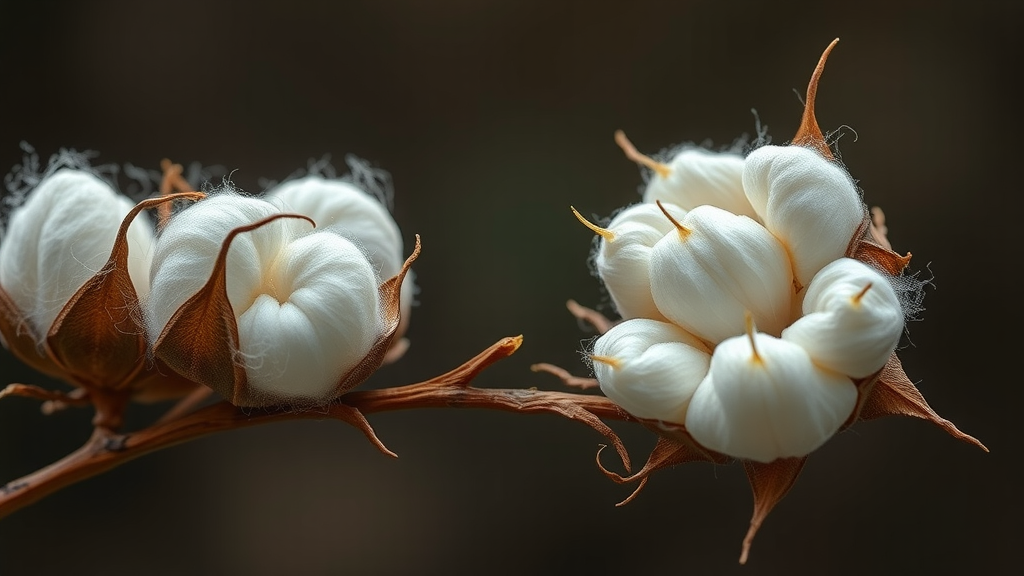
A striking tree with brilliant yellow flowers and capsules stuffed with silky floss is finally getting the seed science attention its survival may depend on. Cochlospermum religiosum, commonly known as yellow silk cotton, is a deciduous dry-forest tree native to tropical Southeast Asia and the Indian subcontinent, and its natural populations across central and southern India are sparse, fragmented, and steadily shrinking. Regional assessments have listed the species as Vulnerable in Madhya Pradesh and Chhattisgarh and Critically Endangered in Rajasthan, driven by overexploitation, habitat degradation, and persistently poor natural regeneration. Yet the species is far from botanical trivia: its bark exudes Gum Katira, a natural exudate prized in pharmaceuticals, confectionery, and industry, while the floss from its mature capsules has long served as lightweight stuffing for bedding and flotation devices. Despite this ecological and economic importance, almost nothing was known about when its seeds mature, how they germinate, and how long they can be stored.
A new open-access study by Manish Kumar Vijay, Neeraj Prajapati, and Neelu Singh of the ICFRE–Tropical Forest Research Institute in Jabalpur, published in Discover Plants, set out to close that gap. Working between January 2022 and November 2024 in the Balaghat Forest Circle of Madhya Pradesh, the team tagged flowering trees, tracked fruit development from anthesis to capsule opening, and combined carpological analysis, germination bioassays, and controlled storage trials into a single integrated framework. Their goal was practical: to produce evidence-based guidelines for seed harvesting, nursery propagation, and ex situ conservation of a threatened tree whose biology had, until now, been largely undocumented.
The developmental story that emerged follows a classic tropical pattern of coordinated change. Sampling fruits at 30, 40, 50, 60, and 80 days after anthesis revealed rapid enlargement and biomass accumulation through the first two months, followed by stabilization, progressive dehydration, and a colour shift from yellow-green to deep brown. Seeds harvested early, at 40 days after anthesis or younger, essentially refused to germinate, confirming they were physiologically immature. Germination capacity climbed sharply between 50 and 60 days after anthesis and peaked at 80 days, when seeds combined maximum dry mass, minimum moisture content, and the highest germination recorded in the study, 40.00 plus or minus 2.88 percent. The researchers concluded that the physiological maturity window spans 60 to 80 days after anthesis, with 80 days representing the optimal harvest stage.
Mature capsules of C. religiosum are large brown structures, roughly 7 to 10 centimetres long, that split into five segments and release some 60 to 80 seeds each, all embedded in abundant yellow silky floss. That floss is no accident. The fine hairs increase aerodynamic drag and buoyancy, a textbook adaptation for wind dispersal, or anemochory. Image-based morphometric analysis using a seed scanner revealed compact, reniform to cochleate seeds about 6 millimetres long, with an area of 0.36 square centimetres, an aspect ratio of 1.18, and a roundness value of 0.90. Seed density ranged from 10,000 to 15,000 seeds per kilogram, indicating impressive reproductive output. Together, the dehiscent capsule and floss-covered seeds paint a picture of a species engineered for aerial dissemination across seasonally dry, open habitats.
One of the study’s most technically revealing experiments examined imbibition, the pattern of water uptake that precedes germination. Members of the family Bixaceae are often associated with physical dormancy caused by water-impermeable seed coats and specialized water-gap structures. But C. religiosum seeds told a different story. Immersed in distilled water at 25 degrees Celsius, freshly harvested seeds gained roughly 65 to 80 percent of their dry weight within the first 6 to 10 hours, and approached near-complete hydration of about 97 percent weight gain by 30 hours. The curve followed the classic triphasic pattern of water-permeable seeds: rapid initial uptake, a plateau of metabolic reorganization and reserve mobilization, and no prolonged hydration delay. In short, the seeds showed substantial permeability and little evidence of strong physical dormancy in the freshly harvested state, although the authors caution that partial impermeability could still develop as seeds dry and age.
Rapid water uptake, however, did not translate into high germination. Around 60 percent of freshly harvested seeds at peak maturity remained ungerminated, hinting at weak physiological dormancy, maturation heterogeneity, or other subtle constraints. To probe this, the team tested six pre-sowing treatments in a completely randomized design: an untreated control, 48 hours of water soaking, gibberellic acid at 500 and 1000 parts per million, 0.5 percent thiourea, and 0.5 percent potassium nitrate. The clear winner was gibberellic acid at 500 ppm, which significantly raised final germination to 26.80 percent and produced the highest seed vigour index, 285.05, compared with controls. Gibberellins are known to stimulate embryo elongation, activate hydrolytic enzymes, and mobilize stored reserves, and the results suggest hormonal stimulation can partially overcome the physiological brakes on germination in this species.
Equally instructive were the failures. Doubling the gibberellin concentration to 1000 ppm actually depressed germination and seedling vigour, echoing reports that supra-optimal hormone levels can disrupt normal seed metabolism. Thiourea and potassium nitrate, chemicals that powerfully break dormancy in strongly dormant species such as Aconitum, provided little or no benefit and reduced seedling vigour, further supporting the conclusion that freshly harvested C. religiosum seeds lack deep physiological dormancy. Water soaking offered a moderate improvement but a slower mean germination time than the optimal hormone treatment, indicating that hydration alone is insufficient to fully awaken the seed’s metabolic machinery. For nursery managers, the message is precise: a 48-hour soak in 500 ppm gibberellic acid is the best documented pre-sowing protocol for this tree.
The storage experiments produced perhaps the most consequential findings for conservation. Seeds were equilibrated to three moisture levels, 11.00, 6.23, and 4.91 percent, and stored at three temperatures: room temperature of 25 to 30 degrees Celsius, 15 degrees Celsius, and 5 degrees Celsius, with viability evaluated at intervals from 0 to 18 months. Seeds held at about 11 percent moisture retained the best germination, 37.05 percent, seedling length, and vigour, while those dried to 4.91 percent fared worst across every metric. This sensitivity to deep drying immediately rules out standard orthodox seed-banking practice, in which seeds tolerate desiccation below 5 percent moisture. Temperature told a parallel story: 15 degrees Celsius preserved germination and vigour significantly better than room temperature, but storage at 5 degrees Celsius caused substantial damage, marking the seeds as chilling-sensitive.
Put together, the moisture and temperature data point to intermediate to near-orthodox but chilling-sensitive storage behaviour, a category well documented in tropical species such as oil palm, Genipa americana, and Calophyllum inophyllum. Time exacted its own toll regardless of treatment: germination held steady for the first three months, declined gradually between 6 and 12 months, and collapsed thereafter, falling to roughly 10 percent by 15 months and 5.40 percent at 18 months. The authors suggest that excessive drying may inflict oxidative damage through reactive oxygen species accumulation, mitochondrial dysfunction, and lipid peroxidation, while chilling likely disrupts membrane integrity. They also note that without tetrazolium viability testing, some non-germinating seeds may simply have entered secondary dormancy rather than died, an important caveat for interpretation.
The practical prescriptions that follow are straightforward but non-negotiable for anyone attempting to conserve or propagate this tree: harvest capsules at about 80 days after anthesis, just before natural dehiscence at 80 to 90 days; treat seeds with 500 ppm gibberellic acid for 48 hours before sowing; equilibrate seeds to roughly 11 percent moisture; and store them at a cool but non-chilling 15 degrees Celsius, using the stock within six months wherever possible. The team acknowledges limitations, including the absence of scarification-versus-control comparisons, tetrazolium assays, population-level sampling, and any data beyond 18 months of storage, and calls for future work on reactive oxygen species dynamics, membrane stability, and moisture sorption. Still, for a Vulnerable-to-Critically-Endangered tree whose gum, floss, and ecological role make it worth saving, the study delivers something rare: a complete, quantitative roadmap from flower to seed bank, built on three seasons of patient field and laboratory work in the dry deciduous forests of central India.
Subject of Research: Seed maturation, germination physiology, and storage behaviour of the threatened tropical tree Cochlospermum religiosum
Article Title: Seed maturation, germination physiology, and storage behaviour of the tropical tree Cochlospermum religiosum (L.) Alston (Bixaceae)
Article References: Seed maturation, germination physiology, and storage behaviour of the tropical tree Cochlospermum religiosum (L.) Alston (Bixaceae). (n.d.). https://doi.org/10.1007/s44372-026-00888-3
Image Credits: AI Generated
DOI: 10.1007/s44372-026-00888-3
Keywords: seed maturation, Cochlospermum religiosum, germination, gibberellic acid, seed storage, physical dormancy, imbibition, seed vigour, ex situ conservation, intermediate storage behaviour, tropical dry forest, threatened tree species
Cite Scienmag News
Alan Morgan. (September 23, 2026). Silk Cotton Tree Seeds Reveal Delicate Balance Between Drying and Survival. Scienmag. https://scienmag.com/silk-cotton-tree-seeds-reveal-delicate-balance-between-drying-and-survival/
Alan Morgan. "Silk Cotton Tree Seeds Reveal Delicate Balance Between Drying and Survival." Scienmag, 23 September 2026, https://scienmag.com/silk-cotton-tree-seeds-reveal-delicate-balance-between-drying-and-survival/. Accessed 5 October 2026.
Alan Morgan. "Silk Cotton Tree Seeds Reveal Delicate Balance Between Drying and Survival." Scienmag. September 23, 2026. https://scienmag.com/silk-cotton-tree-seeds-reveal-delicate-balance-between-drying-and-survival/


