


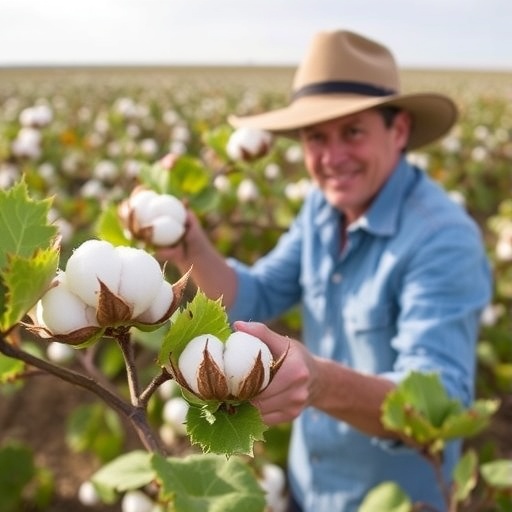
Recent research published in Discover Plants has unveiled groundbreaking insights into the agronomic properties of upland cotton, specifically focusing on the role of silicon in enhancing plant performance. Conducted by a team of researchers led by R. Kupdhoni, the study provides compelling evidence that the application of silicon can significantly improve the physiological efficiency and yield of upland cotton—a crop of paramount importance in the global textile industry. Given the escalating demands of cotton production and the challenges posed by climate change, understanding how to fortify this essential crop is more crucial than ever.
Silicon, often regarded as a beneficial element in plant nutrition, has been shown to contribute positively to the overall health and stress resilience of various plant species. In the context of this study, the researchers meticulously experimented with different concentrations of silicon applied to upland cotton plants. Throughout the growth phases, they recorded a range of physiological processes, including photosynthesis, transpiration rates, and nutrient acquisition capacity. These metrics were carefully analyzed to assess the broader impact of silicon on plant vigor and crop yields.
What the researchers found was nothing short of remarkable. With the application of silicon, the upland cotton displayed enhanced nutrient acquisition capabilities. This improvement was particularly evident in the absorption of critical macronutrients such as nitrogen, phosphorus, and potassium—elements vital for healthy growth and productivity. The study documented a significant increase in both the photosynthetic rate and chlorophyll content in plants treated with silicon, indicating that this element plays a vital role in optimizing photosynthetic efficiency.
Furthermore, the study explored how silicon applications can mitigate the adverse effects of abiotic stressors—such as drought and salinity—on upland cotton plants. These environmental challenges often lead to reduced crop yields, ultimately threatening food security in cotton-producing regions. By improving the resilience of the plants against such stresses, the researchers suggest that silicon could provide a dual benefit: enhancing yield and ensuring sustainability under challenging climatic conditions.
An interesting aspect of the research involves the timing and method of silicon application. The team investigated both foliar and soil applications of silicon, determining that each method had its associated advantages. Foliar application resulted in rapid uptake and immediate physiological responses, while soil integration offered a more sustained release of silicon over time. This nuanced approach to application allows farmers to tailor their practices based on specific environmental conditions and crop needs.
The implications of this research extend beyond just upland cotton cultivation. The documented benefits of silicon could inform practices across a wide range of crops, potentially revolutionizing agricultural strategies. As global temperatures rise and the frequency of extreme weather events increases, incorporating silicon into crop management could offer a viable solution for enhancing resilience not only in cotton but also in other staple crops.
Moreover, the economic viability of silicon applications cannot be overlooked. Given its relatively low cost and the potentially high returns in terms of crop quality and yield, this practice can be particularly appealing to farmers facing tight profit margins. By reducing the need for chemical fertilizers through enhanced nutrient uptake, silicon could also lead to more sustainable farming practices that align with environmental conservation goals.
The study encourages the agricultural community to reconsider the role of silicon in crop nutrition guidelines. Although often overshadowed by macronutrients, this research underscores the significance of silicon as a vital element that contributes to plant health and productivity. It is a call to action for agronomists, farmers, and policymakers to advocate for broader inclusion of silicon-based practices in contemporary agricultural frameworks.
Furthermore, the research team emphasizes the importance of further investigations to fully understand the mechanisms behind silicon’s beneficial effects on plants. While the immediate outcomes were positive, exploring the pathways and interactions at a molecular level could unveil deeper insights that enhance our understanding of plant nutrition. Identifying the specific genes influenced by silicon exposure could pave the way for novel breeding programs aimed at developing silicon-efficient cotton varieties.
As the global cotton market continues to face numerous challenges—from fluctuating prices to environmental concerns—innovative solutions like the application of silicon may provide a viable pathway to sustainable production. This study serves as a testament to the power of scientific research in addressing real-world problems, reinforcing the need for continued investments in agronomic research.
In closing, the findings from Kupdhoni and colleagues contribute to a growing body of evidence that highlights the importance of incorporating silicon into agricultural practices. As climate variability intensifies and global demands for cotton rise, leaning into such research will empower farmers with the tools they need to cultivate resilient crops while balancing economic viability and environmental stewardship. The knowledge gleaned from this study is not merely academic; it holds the potential to influence real change in the agricultural sector.
Through robust agronomic strategies underscored by scientific research, we can look toward a future where upland cotton production is not only sustainable but also capable of thriving amidst the challenges posed by climate change and a growing populace. Challenges ahead may be daunting, but with the right tools and knowledge—such as that provided by the application of silicon—we can forge innovative paths toward sustainable agricultural practice. As the discourse on crop nutrition evolves, integrating elements like silicon into mainstream agricultural wisdom could very well play a pivotal role in shaping the future of food security.
In summary, the research undertaken by Kupdhoni, Somaddar, and Khalil is an urgent reminder of the importance of science-driven agricultural innovations. The potential to enhance upland cotton yields through silicon applications opens new avenues for agricultural practice. Farmers, researchers, and industry stakeholders must come together to champion these findings, ensuring that such innovative practices are implemented on the ground where they can make the most difference.
This research not only highlights the role of silicon in upland cotton but also ignites curiosity for ongoing explorations into plant nutrition. A deeper understanding of plant responses to various nutrients will be indispensable as we navigate the complexities of modern agriculture. As such, this study is an essential milestone in the ongoing journey toward optimizing crop yields while supporting environmental sustainability in the face of global challenges.
Kupdhoni, R., Somaddar, U., Khalil, M.I. et al. Silicon application improves physiological efficiency and yield of upland cotton by increasing nutrient acquisitions. Discov. Plants 2, 308 (2025). https://doi.org/10.1007/s44372-025-00400-3
Cite Scienmag News
Alan Morgan. (November 1, 2025). Silicon Boosts Upland Cotton’s Nutrient Efficiency and Yield. Scienmag. https://scienmag.com/silicon-boosts-upland-cottons-nutrient-efficiency-and-yield/
Alan Morgan. "Silicon Boosts Upland Cotton’s Nutrient Efficiency and Yield." Scienmag, 1 November 2025, https://scienmag.com/silicon-boosts-upland-cottons-nutrient-efficiency-and-yield/. Accessed 4 September 2026.
Alan Morgan. "Silicon Boosts Upland Cotton’s Nutrient Efficiency and Yield." Scienmag. November 1, 2025. https://scienmag.com/silicon-boosts-upland-cottons-nutrient-efficiency-and-yield/


