


Millions of people who gasp through the night with obstructive sleep apnea may be damaging far more than their hearts. A sweeping new review published in Frontiers in Sleep argues that the disorder, long notorious for wrecking cardiovascular health, also quietly erodes the delicate sensory machinery of the inner ear that keeps us upright. The authors, a team of ear, nose and throat specialists from Tunisia, synthesized 31 peer-reviewed studies conducted between 2010 and 2024 to map how sleep-disordered breathing distorts balance, worsens vertigo disorders, and may even respond to the very therapy used to prop open a collapsing airway.
Obstructive sleep apnea, or OSA, is defined by repeated interruptions or reductions of breathing during sleep, each lasting more than ten seconds and occurring at least five times per hour. The condition is extraordinarily common and extraordinarily underdiagnosed. An estimated 80 to 90 percent of affected adults do not know they have it, and recent estimates place the prevalence in the United States at 32.4 percent, roughly 83.7 million people, a dramatic rise from figures recorded in the 1990s. Severity is graded by the apnea-hypopnea index, with mild disease involving 5 to 15 breathing events per hour, moderate disease 15 to 30, and severe disease 30 or more.
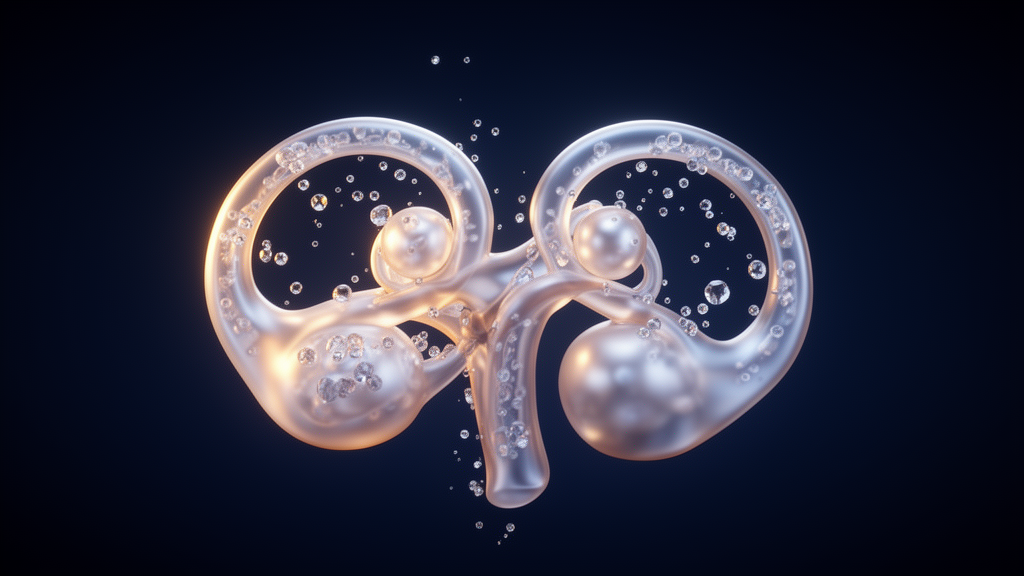
The review’s central question is what happens to the vestibular system, the network of fluid-filled semicircular canals and otolith organs in the inner ear that detects head motion and gravity. Vestibular dysfunction shows up objectively as a reduced vestibulo-ocular reflex gain on the video head impulse test, asymmetrical or absent vestibular-evoked myogenic potentials, or weakened caloric responses. Subjectively, it manifests as dizziness, vertigo, oscillopsia, imbalance, and a heightened risk of falls and accidents that can uproot daily life.
The evidence linking OSA to these deficits is striking. In one study, all 32 patients with moderate-to-severe OSA showed decreased vestibulo-ocular reflex gain compared with healthy controls, and patients with the most severe disease had a significantly higher fall-risk index than those with mild disease or controls. Both ocular and cervical vestibular-evoked myogenic potentials appear significantly lower in OSA patients than in healthy people, indicating damage across the semicircular canals, the saccule and the utricle. A meta-analysis from February 2025 quantified the risk: adults with OSA were significantly more likely to show abnormal vestibular testing, with an odds ratio of 4.8 for abnormal caloric tests, 7.9 for absent cervical vestibular-evoked potentials, and 6.2 for absent ocular vestibular-evoked potentials.
Why would a breathing disorder attack the inner ear? The review lays out three converging mechanisms. The ischemic theory holds that intermittent hypoxia, surging sympathetic tone, and endothelial dysfunction, including elevated levels of the vasoconstrictor endothelin, starve the labyrinth of blood. Because the inner ear is fed exclusively by terminal branches of the anterior inferior cerebellar artery with no collateral circulation, vasospasm or pressure swings can quickly translate into localized oxygen deprivation, and laboratory studies confirm that vestibular hair cells and the vestibular nucleus are vulnerable to hypoxia and reactive oxygen species.
The inflammation theory adds a second assault. Chronic inflammation in OSA releases pro-inflammatory cytokines such as tumor necrosis factor-alpha and interleukin-6, which can trigger apoptosis in vestibular hair cells and atrophy of the stria vascularis. Inflammation also activates monocytes, creating microvascular perfusion deficits within the inner ear that may locally ischemize the vestibular neuroepithelium. A third, anatomical explanation notes that the nasopharynx and oropharynx, the very segments that collapse in OSA, are crucial to eustachian tube function; repetitive mechanical stress and high negative intrathoracic pressure can disrupt middle ear pressure, disturb the endolymph and perilymph, and mechanically stimulate vestibular receptors. Recent work even links semicircular canal dysfunction to altered heart rate variability, implicating autonomic dysregulation as a mediator of the vertigo-apnea connection.
The clinical consequences ripple through three classic vestibular syndromes. Benign paroxysmal positional vertigo, the most common cause of vertigo worldwide, arises when calcium carbonate otoconia dislodge into the semicircular canals, producing brief, violent spinning triggered by head movements. Patients with OSA show significantly higher rates of BPPV than healthy controls, and a 2021 study concluded that BPPV is not a random occurrence in these patients but a systemic consequence of sleep-disordered breathing, although no study has yet screened for BPPV specifically within OSA populations.
Meniere’s disease, a chronic disorder marked by vertigo, hearing loss, tinnitus and aural fullness thought to stem from endolymphatic hydrops, is similarly entangled with sleep apnea. A 2025 study found a staggering 75 percent prevalence of OSA among Meniere’s patients, with moderate-to-severe apnea associated with greater hearing loss. A nine-year longitudinal cohort of more than one million South Koreans showed that adults aged 45 to 64 with OSA had twice the incidence of subsequent Meniere’s disease. Shared risk factors such as obesity, hypertension and metabolic syndrome, along with intermittent hypoxia stressing the blood-labyrinthine barrier, likely explain the association, while fragmented sleep worsens tinnitus.
Vestibular migraine, the leading cause of episodic non-positional vertigo, completes the triad. Among 130 patients with severe OSA, 10.8 percent had vestibular migraine, and OSA was significantly overrepresented in vestibular migraine groups compared with controls. Obesity links the two conditions biologically, and the review’s authors suggest that treating OSA may itself relieve vestibular migraine, an intriguing therapeutic hypothesis that deserves further study.
That therapeutic angle is where the story turns hopeful. Continuous positive airway pressure, the gold standard OSA treatment, keeps the airway splinted open with a steady stream of pressurized air, maintaining consistent oxygen levels and reducing oxidative stress and inflammation. Early evidence suggests CPAP may benefit vestibular function directly: a pilot study of 20 Meniere’s patients with concomitant OSA found that CPAP alone helped control dizziness and vertigo with potential hearing benefit, and CPAP use in migraine sufferers dramatically reduced attack frequency from 5.8 to 0.1 days per month alongside shorter, less painful attacks and less medication use. A 12-month study tracking vestibulo-ocular reflex gain before and after CPAP found no significant improvement yet, hinting that longer treatment windows may be needed. The authors’ prescription is twofold: patients with OSA, especially those with Meniere’s disease or BPPV, should undergo systematic vestibular screening, and anyone with unexplained balance problems should be evaluated for hidden sleep apnea. In a condition that already affects more than 80 million Americans silently, the spinning room may be the clue nobody thought to chase.
Subject of Research: The impact of obstructive sleep apnea on vestibular dysfunction, vertigo syndromes, and balance
Article Title: Vestibular dysfunction in patients with obstructive sleep apnea: from physiopathology to treatment
Article References: Jihène, M., Selima, J., Aymen, S., & Melek, D. (2026). Vestibular dysfunction in patients with obstructive sleep apnea: from physiopathology to treatment. Frontiers in Sleep, 5, Article 1750104. https://doi.org/10.3389/frsle.2026.1750104
Image Credits: AI Generated
DOI: 10.3389/frsle.2026.1750104
Keywords: obstructive sleep apnea, vestibular dysfunction, vertigo, Meniere's disease, benign paroxysmal positional vertigo, vestibular migraine, CPAP, inner ear, intermittent hypoxia, balance disorders, vestibulo-ocular reflex, fall risk
Cite Scienmag News
Ophelia Keating. (October 16, 2026). Silent Night, Spinning World: Sleep Apnea Disrupts the Inner Ear’s Balance System. Scienmag. https://scienmag.com/silent-night-spinning-world-sleep-apnea-disrupts-the-inner-ears-balance-system/
Ophelia Keating. "Silent Night, Spinning World: Sleep Apnea Disrupts the Inner Ear’s Balance System." Scienmag, 16 October 2026, https://scienmag.com/silent-night-spinning-world-sleep-apnea-disrupts-the-inner-ears-balance-system/. Accessed 16 October 2026.
Ophelia Keating. "Silent Night, Spinning World: Sleep Apnea Disrupts the Inner Ear’s Balance System." Scienmag. October 16, 2026. https://scienmag.com/silent-night-spinning-world-sleep-apnea-disrupts-the-inner-ears-balance-system/


