

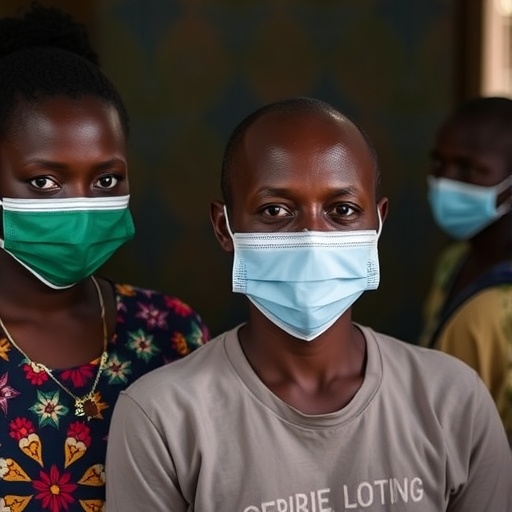
In the shadow of global health crises, Sierra Leone’s recent mpox outbreak has emerged not simply as a public health challenge, but as a pivotal moment for reexamining pandemic equity on an international stage. The mpox virus, a zoonotic pathogen related to smallpox, initially sparked concern due to its rapid transmission in a region already burdened with fragile health infrastructure. Yet, amid adversity, there lies a transformative opportunity to confront inequities that have long hampered effective pandemic response, particularly in low- and middle-income countries.
At the heart of Sierra Leone’s mpox experience is a stark illustration of how systemic disparities in healthcare access and resources continue to determine disease outcomes, often disproportionately affecting marginalized communities. From the onset of the outbreak, health officials noted the limited availability of diagnostic tools, therapeutics, and protective equipment, which starkly contrasted with responses witnessed in wealthier nations during similar viral outbreaks. This discrepancy underscores the broader global health divide and calls into question the fairness of pandemic preparedness and response mechanisms.
Scientifically, mpox presents a significant challenge due to its complex transmission dynamics and clinical presentation. The virus spreads through close contact with infected animals or humans, leading to lesions, fever, and lymphadenopathy, complicating timely diagnosis in settings with scarce laboratory capacity. Molecular surveillance in Sierra Leone revealed the virus’s genomic stability but also highlighted mutations that may impact virulence and transmissibility. Such findings emphasize the critical need for localized epidemiological data to inform targeted interventions.
The constrained healthcare infrastructure in Sierra Leone exacerbated the public health response difficulties. Hospitals and clinics faced overwhelming patient loads, often lacking isolation wards and adequate personnel trained to manage infectious diseases safely. This infrastructural fragility reflected decades of underinvestment influenced by socioeconomic and political factors, which predates the outbreak but dramatically shaped its trajectory. Consequently, efforts to contain mpox necessitated not only immediate medical response but also strategic strengthening of health systems.
Crucially, the outbreak illuminated the global inequities in scientific collaboration and resource allocation. Early in the crisis, Sierra Leonean researchers struggled to access sequencing technologies and antiviral medications housed predominantly in high-income countries. Intellectual property frameworks and market-driven pharmaceutical priorities often sidelined urgent needs in underresourced settings. This imbalance hindered timely data sharing and hampered the development of context-specific interventions that could mitigate the spread effectively.
Community engagement emerged as an essential element in managing the mpox outbreak. Misinformation and stigma associated with skin lesions fueled fear and social ostracism, impeding case identification and isolation measures. Health communication strategies therefore evolved to incorporate culturally sensitive messaging and local leadership involvement, fostering trust and enhancing compliance with public health directives. The integration of anthropological insights into disease control strategies proved vital in navigating social complexities inherent to epidemic contexts.
Meanwhile, international responses offered a mixed picture, reflective of broader geopolitical considerations. While some global health organizations deployed emergency teams and supplies, delays and conditionalities often characterized aid delivery, highlighting tensions between sovereignty, aid dependency, and global solidarity. These challenges exposed the urgent need to rethink mechanisms of international support to prioritize rapid, equitable, and unconditional assistance during health emergencies.
The mpox crisis also catalyzed innovation in diagnostic and therapeutic development tailored for resource-limited environments. Collaborative efforts fostered point-of-care tests with reduced reliance on extensive laboratory infrastructure, enabling quicker detection and isolation. Moreover, research into repurposed antiviral agents demonstrated promising efficacy, providing potential stopgap measures where vaccines were inaccessible. Such technological adaptations affirm the importance of investing in scalable solutions that transcend conventional medical paradigms.
Importantly, this outbreak underscored the interconnectedness of environmental, social, and biological factors in disease emergence. Deforestation and wildlife trade amplified human-animal interactions facilitating zoonotic spillover, while socioeconomic vulnerabilities amplified exposure and disease severity. Addressing mpox thus demands a holistic One Health approach, integrating environmental stewardship, social justice, and biomedical science to curtail future epidemics sustainably.
As Sierra Leone moves beyond the immediate mpox threat, lessons gleaned offer crucial insights for global health equity strategies. The crisis highlighted that pandemic preparedness cannot be decoupled from addressing systemic inequalities—universal access to healthcare, robust surveillance, and equitable scientific partnerships are paramount. Long-term investment in health infrastructure and capacity building within vulnerable regions must be prioritized to form resilient frontline defenses against emerging pathogens.
The mpox outbreak also reignited discourse on intellectual property rights and equitable vaccine and therapeutic distribution. Debate intensified around patent waivers, technology transfer, and local manufacturing capacities as mechanisms to democratize access to life-saving interventions. Enhanced frameworks ensuring that innovations promptly reach affected populations regardless of economic status are now gaining traction as essential aspects of pandemic governance.
Furthermore, this emergency spurred renewed advocacy for community-centered approaches in epidemiology. Empowering local health workers with training and resources, fostering participatory research, and including affected populations in decision-making processes emerged as critical pillars for culturally competent and efficient outbreak response. These models challenge the historically top-down frameworks often employed during global health interventions.
In conclusion, Sierra Leone’s mpox crisis transcends a conventional outbreak narrative, standing instead as a clarion call for pandemic equity. By spotlighting the entrenched disparities in global health architectures and the necessity for an inclusive, multifaceted response, it provides an invaluable case study on how nations and the international community must collaboratively confront future pandemics. Only through sustained commitment to equity, science, and solidarity can the promise of a healthier world be realized.
Subject of Research: Pandemic equity and public health response during the mpox outbreak in Sierra Leone.
Article Title: From outbreak to opportunity: Sierra Leone’s mpox crisis as a wakeup call for pandemic equity.
Article References:
Bai-Sesay, A.U., Jones, R.D. & Sesay, D.K.D. From outbreak to opportunity: Sierra Leone’s mpox crisis as a wakeup call for pandemic equity. Int J Equity Health 25, 2 (2026). https://doi.org/10.1186/s12939-025-02725-7
Image Credits: AI Generated


