


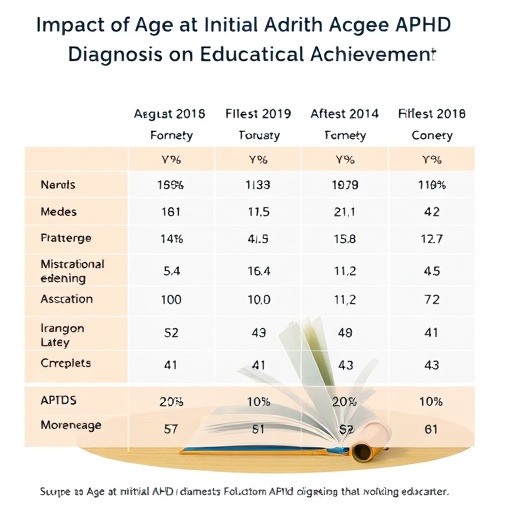
A recent cohort study published in JAMA Psychiatry unveils compelling evidence that the timing of attention-deficit/hyperactivity disorder (ADHD) diagnosis during adolescence significantly influences educational outcomes. This comprehensive investigation highlights the remarkable benefits of receiving an earlier diagnosis of ADHD compared to a diagnosis approaching the age of sixteen, providing important insights into how timely identification can change life trajectories for young individuals.
ADHD, a neurodevelopmental disorder marked by patterns of inattention, hyperactivity, and impulsivity, affects millions worldwide. While much is known about its clinical manifestations and treatment options, this new study focuses keenly on the critical variable of diagnostic timing. Researchers meticulously analyzed data from a large population cohort, unraveling the impact of when ADHD is diagnosed on subsequent academic achievement and school retention. Importantly, the study reveals that earlier detection not only correlates with improved school performance but also enhances the likelihood of pursuing higher academic education.
The methodology underpinning this investigation is rooted in robust longitudinal data analysis, enabling the scientific team to trace developmental trajectories over significant periods. By comparing cohorts diagnosed with ADHD at varying ages, the analysis controls for confounding variables and isolates the effect of diagnosis timing on educational outcomes. Such a comprehensive approach ensures that the findings are both statistically sound and clinically relevant, setting a new benchmark for research on ADHD and education.
One of the most salient discoveries is that individuals diagnosed with ADHD well before reaching adolescence exhibit superior academic performance metrics. These young people are generally more successful in completing their coursework and achieving higher grades, which directly translates into a stronger foundation for continued education. The evidence suggests that earlier intervention allows for more tailored support, adaptive learning strategies, and targeted therapies that collectively boost cognitive engagement and academic resilience.
This early diagnosis advantage extends beyond mere grades. The study finds a positive association between timely ADHD identification and enrollment in advanced educational tracks. Students diagnosed earlier are more likely to access secondary and tertiary educational opportunities, which can profoundly affect vocational prospects, economic stability, and overall life satisfaction. This connection underscores the transformative potential of early mental health screening in shaping not just educational but long-term socioeconomic outcomes.
Conversely, the study critically highlights the risks associated with late diagnosis. Adolescents diagnosed closer to the age of 16 face a steeper educational uphill battle, with markedly higher school dropout rates and diminished academic achievement. The findings imply a narrower window for effective intervention, where the accumulation of untreated ADHD symptoms may have already impeded educational progress and psychosocial development.
From a neurodevelopmental perspective, the timing of diagnosis is pivotal as it corresponds with crucial periods of brain maturation and cognitive development. Early identification enables the mobilization of therapeutic resources during phases when neuroplasticity is still active, potentially mitigating the chronic manifestations of ADHD. These biological underpinnings reaffirm the urgency of prompt recognition and support infrastructures in educational environments.
The study’s implications extend into policy and clinical practice. Schools, healthcare providers, and policymakers are urged to implement proactive ADHD screening programs targeting younger populations. Early detection initiatives could revolutionize educational support systems by allowing for personalized learning plans and mental health interventions that prevent academic decline and school discontinuation.
Beyond the immediate educational sphere, the findings advocate for a broader societal recognition of ADHD’s impact relative to timing of diagnosis. Social services and community-based programs designed to assist adolescents on the cusp of critical educational transitions must prioritize those diagnosed later. Tailored support strategies can address the heightened vulnerability to dropout risk, emphasizing mentorship, counseling, and skill development to bridge academic gaps.
This research also enriches the ongoing discourse about neurodiversity and inclusive education. By illuminating the pathways through which early ADHD diagnosis promotes success, it challenges schools to cultivate environments where neurodevelopmental differences are identified swiftly and supported holistically. Such cultural and institutional shifts are fundamental for fostering resilience and equity among diverse student populations.
While the study marks a significant advance, it opens avenues for future research to explore the mechanisms through which earlier diagnosis translates into improved outcomes. Potential areas include the investigation of specific intervention models, environmental factors, and genetic variables influencing responsiveness to early treatment. Continued multidisciplinary collaboration will be key to deepening understanding and enhancing clinical guidelines.
Importantly, this study’s revelations carry profound emotional and psychological weight for families and adolescents navigating ADHD diagnoses. The knowledge that earlier identification can dramatically alter educational pathways provides hope and a tangible call to action for advocates, educators, and medical professionals alike. It emphasizes that timely diagnosis is a crucial step toward unlocking potential and ensuring that young people with ADHD receive the support necessary to thrive academically and beyond.
In conclusion, this cohort study provides compelling scientific evidence that earlier age at ADHD diagnosis is intricately linked to better academic outcomes, higher educational attainment, and reduced school dropout rates. These findings advocate for systemic changes in diagnostic practices and educational policy, highlighting that timely recognition and intervention can profoundly influence the life course of adolescents with ADHD. Targeted support for those diagnosed later remains essential to bridge the gaps in educational achievement and retention, ensuring equity and opportunity for all affected individuals.
News Publication Date: [Not provided]
Web References: [Not provided]
References: (10.1001/jamapsychiatry.2026.0181)
Cite Scienmag News
Ophelia Keating. (April 8, 2026). Impact of Age at Initial ADHD Diagnosis on Educational Achievement. Scienmag. https://scienmag.com/impact-of-age-at-initial-adhd-diagnosis-on-educational-achievement/
Ophelia Keating. "Impact of Age at Initial ADHD Diagnosis on Educational Achievement." Scienmag, 8 April 2026, https://scienmag.com/impact-of-age-at-initial-adhd-diagnosis-on-educational-achievement/. Accessed 4 September 2026.
Ophelia Keating. "Impact of Age at Initial ADHD Diagnosis on Educational Achievement." Scienmag. April 8, 2026. https://scienmag.com/impact-of-age-at-initial-adhd-diagnosis-on-educational-achievement/


