


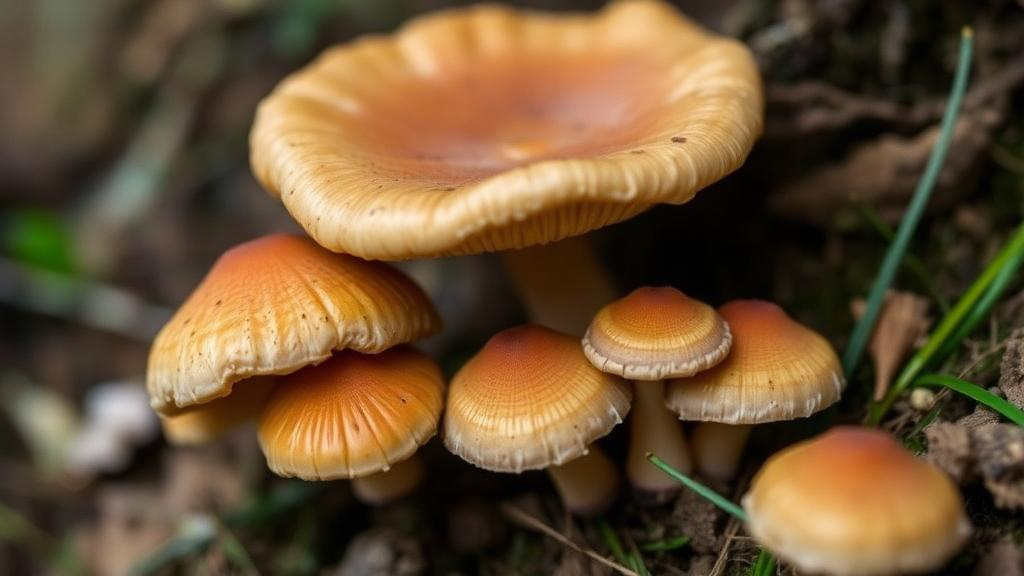
On the high pastures of Sicily’s Madonie mountains, a single white mushroom has become one of the most closely watched fungi in Europe. Pleurotus nebrodensis, first described in 1863 by the eminent Italian mycologist Giuseppe Inzenga, is the only fungal species currently reported as endemic to Sicily, and one of the very few Italian fungi listed on the International Union for Conservation of Nature’s Red List of Threatened Species. It also features in the TOP 50 Mediterranean Island Plants, a distinction that underscores just how precarious its existence has become. A new study published in Italian Botanist brings together taxonomy, ecology, molecular genetics and cultivation science to map out what it will take to keep this prized basidiomycete from sliding toward extinction.
The numbers behind the species’ conservation status are stark. According to IUCN criteria, the Extent of Occurrence of the P. nebrodensis population is less than 100 square kilometers, the population is severely fragmented, and the number of localities where the mushroom fruits has declined to fewer than ten. Fewer than 150 mature individuals are estimated to survive, with fruiting alternating between years and averaging around 70 basidiomata annually. The main culprit is human pressure: professional and amateur collectors, drawn by the mushroom’s remarkable organoleptic qualities and a market price of 50 to 60 euros per kilogram, have intensified harvesting despite the absence of a genuine commercial market for the wild product. Particularly damaging is the practice of picking young, immature fruiting bodies, which may seriously compromise future fruiting of the species.
Legal protections exist on paper. Article 5 of the Madonie Park’s 2017 Regulation on the Collection of Epigean Mushrooms prohibits collection of P. nebrodensis in zone A, a wild zone under total protection, and bans the harvesting of basidiomata smaller than 3 centimeters elsewhere in the park. The species is also covered by Sicilian Regional Law No. 3 of February 1, 2006, and its subpopulations fall within Natura 2000 sites across the Madonie territory, including Monte San Salvatore, Monte Quacella and the evergreen oak forests of Geraci Siculo and Castelbuono. Yet the study’s authors note that these rules are often ignored by gatherers because controls on the ground are weak, leaving the species effectively unprotected by any international conservation framework.
The habitat itself is highly specialized. Field research conducted in 2022 and 2023, during the fruiting period that runs from late April to early June, found the mushroom growing on dead roots of Prangos ferulacea, a perennial herb of the Apiaceae family distributed across the Mediterranean Basin, the Bulgarian Black Sea coast and the Caucasus. The collection sites, Monte dei Cervi at 1,794 meters and the canyon of Vallone Faguare at 1,263 meters, sit within xerophilous, basiphilous plant communities on dolomitic substrates, in bioclimatic zones classified as mesomediterranean and supramediterranean, with rainfall ranging from subhumid to humid. This tight ecological coupling is precisely what makes endemic species so vulnerable: evolution has fitted them to a single place, and climate change or habitat disturbance can eliminate them entirely.
Taxonomy has been a persistent source of confusion for the species. Inzenga originally named it Agaricus nebrodensis, and over the following decades the binomial was shuffled through synonyms, with Saccardo in 1915 even demoting it to a variety of the widespread Pleurotus eryngii. The decisive breakthrough came from herbarium work at the Muséum National d’Histoire Naturelle in Paris, where a Sicilian exsiccatum filed under Agaricus nebrodensis proved perfectly superimposable on Inzenga’s original 1863 drawing, confirming that P. nebrodensis is a valid species. The related binomial Agaricus fossulatus, meanwhile, refers to an Asiatic taxon now treated as P. nebrodensis subsp. fossulatus, which also grows on P. ferulacea but is genetically distinct.
That distinction matters enormously for commerce, because the name Pleurotus nebrodensis has been widely misapplied on the international market. A closely related Chinese species, Pleurotus eryngii subsp. tuoliensis, has frequently been sold under the Sicilian name. To test the genetic purity of material marketed in Italy, the researchers analyzed twelve cultivation bags, spanning four strains in triplicate, supplied by a leading substrate producer in southern Italy that had applied for certification. DNA was extracted from fresh basidiomata, the internal transcribed spacer (ITS) region of ribosomal DNA was amplified with the ITS1F and ITS4 primers, and the sequences were compared against GenBank entries and representatives of the P. eryngii species complex using ClustalW alignments and Neighbour-Joining phylogenetic analysis with bootstrap support calculated from 1,000 resamplings.
The molecular results were revealing but troubling. Mushrooms from bags labeled 1 and 8 clustered convincingly with true P. nebrodensis, and two of the three replicates of bag 6 did as well, but the third replicate of that batch, which showed completely different mycelial morphology, turned out to be Irpex latemarginatus, almost certainly a contaminant. Worse, the mushrooms grown in the bag labeled G fell squarely within the Pleurotus eryngii sensu stricto cluster, meaning a leading Italian company was selling a different species under the coveted nebrodensis name. The study also highlights a long-standing practice among mushroom hunters in the Madonie mountains of mixing P. nebrodensis basidiomata with those of Pleurotus eryngii var. elaeoselini, a white fungus that is macroscopically almost impossible to distinguish but genetically separated, belonging to the P. eryngii complex.
The most promising path forward may lie outside the wild altogether. Because P. nebrodensis is saprotrophic and its mycelium can be readily reproduced in the laboratory, ex situ cultivation offers a dual benefit: it relieves harvesting pressure on natural populations while lowering the price of a mushroom currently beyond the reach of most consumers. Cultivated basidiomata have been shown to possess the same organoleptic features as wild ones, and the species can be grown at different altitudes in semi-shaded tunnels. These foundations underpin the PLEURÒN project, approved in 2023 by the Sicilian Administrative Region, which aims to cultivate the mushroom on a pilot scale in a protected environment for food, medicinal and phytogenic purposes, in a partnership of research consortia, universities and farms in the Madonie territory. The approach builds on positive Italian experiences with cultivating Pleurotus species, which account for roughly 10 to 20 percent of total mushroom production in the Mediterranean region.
Medicinal potential adds another dimension to the species’ value. Water extracts of P. nebrodensis have been shown to suppress the proliferation of colon cancer cells without significantly affecting normal cells, and to stimulate immunomodulation and natural killer cell activity. Cold water extracts tested in vivo also showed activity against medically relevant bacteria including Pseudomonas aeruginosa, Staphylococcus epidermidis, Staphylococcus aureus and Escherichia coli, suggesting a possible role in countering the biofilm mode of growth of human pathogens. These findings position the Sicilian endemic as a candidate for inclusion among the most valuable mushroom-based products in integrated medicine, giving conservation an economic and public-health argument as well as an ecological one.
The study closes with a set of recommendations that blend science and policy. Accurate taxonomic identification must underpin all commercial exploitation, covering both fresh mushrooms for the food market and dried powders for mushroom-based products, especially given recent evidence that the Italian market for such products is characterized by goods of dubious origin. The authors suggest that, based on the outcomes of the PLEURÒN project, cultivation of species related to P. nebrodensis should not be allowed in the Madonie territory, to avoid genetic mixing between congeneric species. Above all, they call for greater awareness among policymakers, scientists and citizens, arguing that public engagement with this extraordinary fungus, from its nineteenth-century discovery to its twenty-first-century rescue plan, is the surest guarantee that Sicily’s white gold will keep fruiting on the Madonie ridges for generations to come.
Subject of Research: Conservation, taxonomy and cultivation of the endemic Sicilian mushroom Pleurotus nebrodensis
Article Title: Pleurotus nebrodensis ( Basidiomycota ), a rare endemic mushroom of Sicily: current and future issues
Article References: Gargano, M. L., Venturella, G., Balenzano, G., Ferraro, V., Cirlincione, F., & Mirabile, G. (2024). Pleurotus nebrodensis (Basidiomycota), a rare endemic mushroom of Sicily: current and future issues. Italian Botanist, 17, 55-68. https://doi.org/10.3897/italianbotanist.17.123048
Image Credits: AI Generated
DOI: 10.3897/italianbotanist.17.123048
Keywords: Pleurotus nebrodensis, Sicily, Madonie mountains, fungal endemism, IUCN Red List, ITS barcoding, phylogenetics, ex situ cultivation, medicinal mushrooms, biodiversity conservation, Pleurotus eryngii complex, PLEURÒN project
Cite Scienmag News
Margaret Porter. (October 19, 2026). Sicily’s rarest mushroom: DNA sleuthing and pilot farms race to save Pleurotus nebrodensis. Scienmag. https://scienmag.com/sicilys-rarest-mushroom-dna-sleuthing-and-pilot-farms-race-to-save-pleurotus-nebrodensis/
Margaret Porter. "Sicily’s rarest mushroom: DNA sleuthing and pilot farms race to save Pleurotus nebrodensis." Scienmag, 19 October 2026, https://scienmag.com/sicilys-rarest-mushroom-dna-sleuthing-and-pilot-farms-race-to-save-pleurotus-nebrodensis/. Accessed 19 October 2026.
Margaret Porter. "Sicily’s rarest mushroom: DNA sleuthing and pilot farms race to save Pleurotus nebrodensis." Scienmag. October 19, 2026. https://scienmag.com/sicilys-rarest-mushroom-dna-sleuthing-and-pilot-farms-race-to-save-pleurotus-nebrodensis/


