


Adolescents with obesity face a well-documented emotional burden: higher rates of negative affect, including sadness, tension, and avoidance, that compound the physical risks of excess weight. A new randomized controlled trial published in Frontiers in Pediatrics suggests that a surprisingly modest dose of high-intensity interval training (HIIT) delivered during regular school hours can shift both sides of that equation, improving body composition and estimated aerobic fitness while measurably reducing negative emotional states.
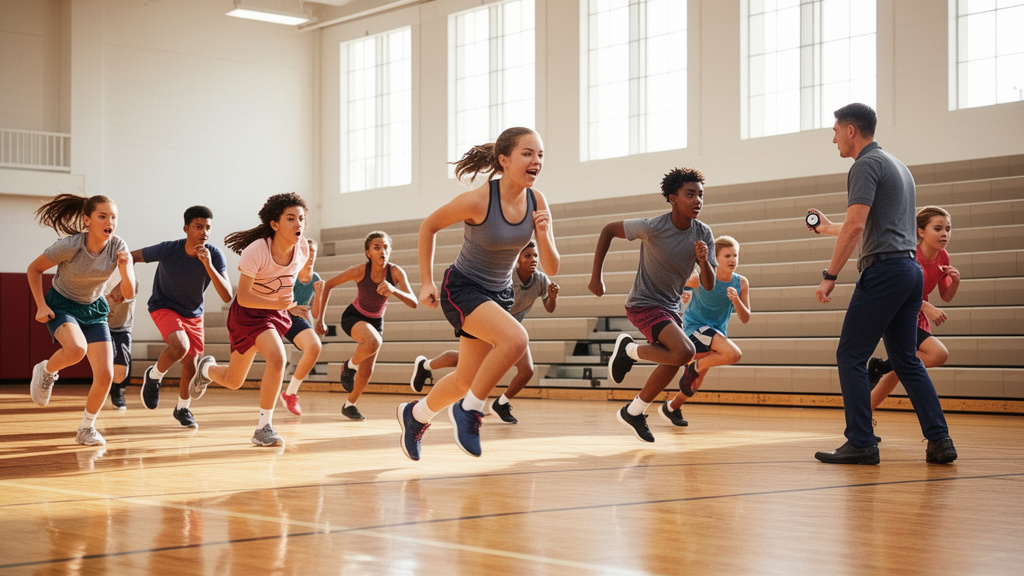
The trial, conducted by researchers at Henan University in Kaifeng, China, enrolled 30 adolescents with obesity and randomly assigned them to either an eight-week school-based HIIT program or a control group continuing standard physical education classes. The HIIT protocol was deliberately brief: three sessions per week of short running sprints at 90 percent of each participant’s maximal aerobic speed, alternating with equal-duration recovery periods. Total weekly training time amounted to roughly 30 minutes—a dose the authors argue could realistically be embedded in school timetables without specialized equipment or additional staffing.
After eight weeks, the HIIT group showed statistically significant improvements across every primary outcome measured. Body mass index decreased by an average of 1.24 units relative to controls, body fat percentage fell by 2.52 points, and visceral fat area—a marker of metabolically harmful internal fat—declined by 0.44 square centimeters. Estimated maximal oxygen uptake, the standard indicator of aerobic fitness, improved by 2.52 milliliters per kilogram per minute. Most strikingly, negative affect scores dropped by 3.76 points relative to the control group, while self-efficacy—the belief in one’s own capability to execute tasks—rose by 2.52 points.
The psychological findings carry particular weight because adolescent obesity is strongly associated with elevated rates of depression, anxiety, and negative emotional states. Prior research has shown that weight stigma itself can reduce physical activity, creating a self-reinforcing cycle in which emotional distress discourages the very exercise that would improve both mood and metabolic health. The trial’s results suggest that even a minimal exercise dose can interrupt this cycle, though the authors caution that the study was not designed to identify which specific mechanism—endorphin release, improved HPA-axis regulation, enhanced body image, or social connection—drove the emotional improvement.
Not every hypothesis was confirmed. The researchers had proposed that self-efficacy would mediate the relationship between HIIT and reduced negative affect—that is, that the fitness gains would first boost confidence, which would then improve mood. Statistical mediation analysis using bootstrapped confidence intervals did not support this pathway. The authors suggest several possible explanations: the eight-week window may have been too brief for confidence gains to consolidate into emotional change, the self-efficacy measure may not have captured the domain-specific confidence most relevant to exercise, or the emotional benefits may operate through physiological rather than cognitive channels. They call for longer trials with repeated mediator measurement to resolve the question.
The trial also contributes a methodological note for future exercise psychology research. Because the HIIT and control groups were tested in the same school environment, the authors recommend that future studies account for potential attention effects—the possibility that simply receiving a novel, structured program produces psychological benefits independent of the exercise itself. They also note that the estimated VO2max measure, while standard, is an indirect estimate rather than a laboratory-measured value, and recommend that future trials include direct cardiopulmonary exercise testing.
Despite these limitations, the authors argue that the findings have immediate practical relevance. The HIIT protocol required no equipment, no additional staff, and roughly 30 minutes of weekly training time—constraints that make it feasible for adoption in ordinary school settings. Given that adolescent obesity rates have risen sharply worldwide and that school-based physical education often fails to provide sufficient intensity to drive metabolic change, the trial suggests that embedding short, structured HIIT sessions into existing school timetables could offer a scalable, low-cost intervention with benefits for both physical and emotional health.
The researchers emphasize that the emotional improvements were observed after only eight weeks, a window brief enough to suggest that even modest changes in training dose could produce meaningful psychological change. They call for longer follow-up periods to determine whether the benefits persist, whether higher training doses produce larger emotional gains, and whether the mediating role of self-efficacy emerges over longer timeframes. They also recommend that future trials include repeated measurement of both physical and psychological outcomes to better characterize the temporal relationship between fitness gains and emotional change.
The trial was published in Frontiers in Pediatrics as part of a growing body of research examining school-based exercise interventions for adolescents with obesity. The authors state that the findings support the integration of brief, structured HIIT sessions into existing school physical education programs as a feasible, scalable approach to improving both metabolic and emotional health in this population.
Subject of Research: Exercise Psychology
Article Title: Effects of high-intensity interval training on negative affect in adolescents with obesity: an exploratory analysis of the role of self-efficacy
Article References: Wang, S., Liu, C., & Xu, Y. (2026). Effects of high-intensity interval training on negative affect in adolescents with obesity: an exploratory analysis of the role of self-efficacy. Frontiers in Pediatrics, 14, Article 1977400. https://doi.org/10.3389/fped.2026.1977400
Image Credits: AI Generated
DOI: 10.3389/fped.2026.1977400
Keywords: Effects, high-intensity, interval, training, negative, affect, adolescents, obesity, exploratory, analysis, role, self-efficacy
Cite Scienmag News
Daisy Hatcher. (October 17, 2026). Short Sprints, Big Gains: School-Based HIIT Lifts Mood and Fitness in Teens with Obesity. Scienmag. https://scienmag.com/short-sprints-big-gains-school-based-hiit-lifts-mood-and-fitness-in-teens-with-obesity/
Daisy Hatcher. "Short Sprints, Big Gains: School-Based HIIT Lifts Mood and Fitness in Teens with Obesity." Scienmag, 17 October 2026, https://scienmag.com/short-sprints-big-gains-school-based-hiit-lifts-mood-and-fitness-in-teens-with-obesity/. Accessed 17 October 2026.
Daisy Hatcher. "Short Sprints, Big Gains: School-Based HIIT Lifts Mood and Fitness in Teens with Obesity." Scienmag. October 17, 2026. https://scienmag.com/short-sprints-big-gains-school-based-hiit-lifts-mood-and-fitness-in-teens-with-obesity/


