


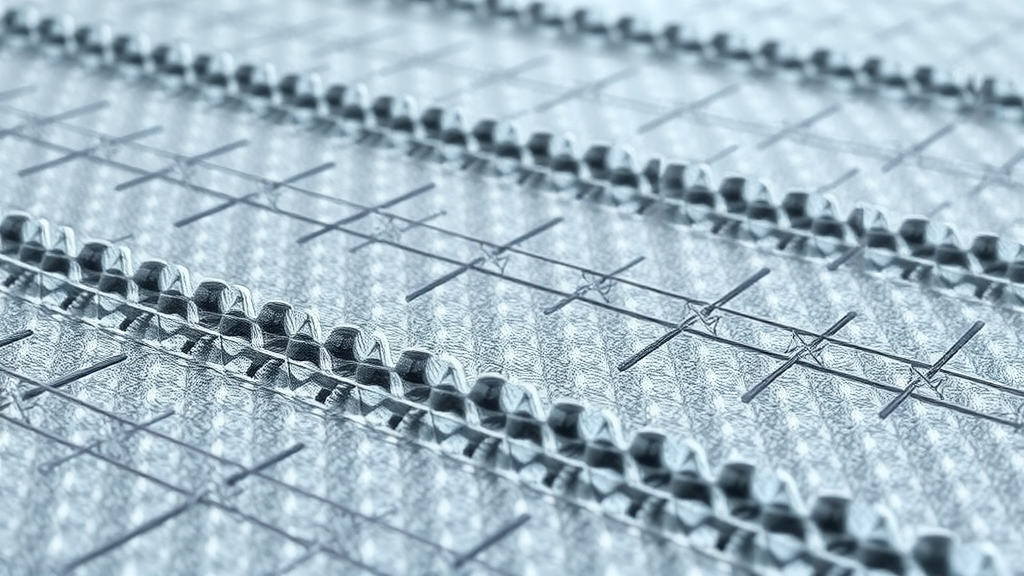
Some of the strongest materials in nature owe their remarkable properties not to exotic chemistry but to exquisite architecture. Nacre, the iridescent material lining abalone shells, is built from microscopic mineral platelets stacked in near-perfect register, and this laminated order is what allows a brittle ceramic to deflect cracks and absorb energy. Materials scientists have chased that architectural ideal for decades, trying to coax synthetic two-dimensional nanosheets—graphene oxide, MXenes, clays, and transition-metal dichalcogenides—into similarly disciplined arrangements within polymer matrices. The problem has always been control. Conventional assembly routes such as vacuum filtration, layer-by-layer deposition, and solution casting tend to leave nanosheets misoriented, aggregated, or both, capping the mechanical performance of the resulting films far below what the individual building blocks should allow.
A detailed protocol published in Nature Protocols by Chaojun Zhang, Zhewei Yan, Jing Li, and Mingjie Liu of Beihang University now lays out a practical, step-by-step route around that bottleneck. The method, which the authors call nanosheet superspreading alignment, exploits shear-flow forces generated at the interface between two immiscible phases to drive long-range, high-order alignment of two-dimensional nanosheets. Once the sheets are oriented, in situ interfacial crystallization or cross-linking locks the configuration in place, and subsequent solvent dewetting spreads the material into continuous films over large areas without destroying the carefully engineered microstructure. The full procedure, from precursor preparation through film fabrication and characterization, can be completed in twenty-three days or less.
The physics at the heart of the technique is deceptively simple. When a nanosheet-laden droplet contacts an immiscible phase, it spreads rapidly across the interface, and the resulting flow field subjects the platelets to intense shear. Because nanosheets are extremely anisotropic—atomically thin but laterally large—shear flow torques them until their planes align with the flow direction. The protocol reports an orientation order parameter exceeding 0.85, a figure that indicates a degree of registry approaching the idealized laminated structures of biological materials. Crucially, the alignment is not transient: interfacial crystallization or cross-linking immediately after spreading freezes the oriented configuration before thermal motion or capillary forces can scramble it.
The authors describe two complementary implementation routes. In the first, gelation-assisted superspreading, the nanosheet dispersion spreads across a gel surface where polymerization or gelation locks the aligned sheets into a solid film. In the second, alignment occurs on hydrophilic solid substrates through crystallization-driven confinement, a variant the team highlights as suitable for assembling components of magnetoelectric sensors, where crystalline polymer-inorganic interfaces couple mechanical strain to electrical signals. Both routes share the same core principle—shear first, lock second—and both are compatible with a broad palette of nanosheet chemistries, including graphene oxide, MXenes, transition-metal dichalcogenides, and layered clays.
The mechanical results are striking. Nanocomposite films built from graphene oxide and clay nanosheets reach a tensile strength of up to 1,215 ± 80 megapascals, with a Young’s modulus of 198.8 ± 6.5 gigapascals—figures that place these bioinspired films among the strongest synthetic layered materials reported. Clay-based nanocomposite films achieve a toughness of 36.7 ± 3.0 megajoules per cubic meter, demonstrating that the method does not simply trade ductility for stiffness. In aligned lamellar architectures, load transfers efficiently along the stiff nanosheet planes while the polymer matrix and interlayer interfaces deflect cracks, dissipate energy, and prevent catastrophic failure, echoing the design logic of nacre and mineralized collagen.
What distinguishes this protocol from earlier demonstrations is its explicit bridge between structural precision and scalability. Vacuum filtration produces well-ordered films but only slowly and in limited areas; layer-by-layer assembly offers exquisite control but at impractical throughput for bulk applications; solution casting is fast but yields poorly oriented structures. The superspreading approach sidesteps these trade-offs and, importantly, can be scaled using a multi-nozzle extrusion setup compatible with commercial heating and film-collection components. Schematics in the protocol illustrate how adjacent superspreading droplets coalesce during continuous fabrication, allowing large-area films to form seamlessly while preserving the aligned microstructure across the entire web of material.
The protocol is written as a working laboratory manual rather than a conceptual overview. It covers nanosheet precursor preparation—including considerations for exfoliation quality and dispersion stability—followed by continuous-film fabrication and microstructural characterization. The authors emphasize troubleshooting-oriented detail: controlling spreading kinetics, tuning the viscosity of the immiscible phases, selecting cross-linking chemistries that cure on the timescale of the alignment process, and managing dewetting so that films remain continuous rather than fragmenting into islands. Characterization guidance covers the tools needed to verify orientation order and lamellar spacing, the parameters that ultimately govern mechanical performance.
The versatility of the approach extends well beyond structural mechanics. Because aligned nanosheet films can also serve as membranes, conductors, sensors, and energy-storage components, the protocol positions superspreading alignment as a general platform for functional nanocomposites. Prior work by the same community showed that shear-flow-induced alignment could produce layered nanocomposites with exceptional properties, and more recent studies demonstrated strain-coupled crystalline polymer-inorganic interfaces for efficient magnetoelectric sensing. By codifying those advances into a reproducible procedure, the new protocol lowers the barrier for laboratories worldwide to adopt the technique and adapt it to their own material systems.
The broader significance lies in what scalable, high-order nanosheet alignment makes possible. Lightweight composites approaching the specific strength of advanced structural materials could transform aerospace panels, protective equipment, and flexible electronics. Aligned MXene and graphene oxide films could serve as electromagnetic shielding, thermal management layers, or ion-selective membranes with precisely confined nanochannels. Magnetoelectric composites built on crystalline interfacial coupling could enable ultrasensitive, room-temperature magnetic field sensors for biomedical diagnostics. In each case, the limiting factor has been the same: turning atomically thin, intrinsically strong building blocks into macroscopic materials whose architecture preserves that strength. The superspreading protocol offers a concrete, tested answer, and its publication in a methods journal signals that shear-flow-induced assembly is moving from laboratory curiosity toward a manufacturing-ready tool for the next generation of bioinspired materials.
Subject of Research: Shear-flow-induced alignment of two-dimensional nanosheets for fabricating high-strength bioinspired nanocomposite films
Article Title: Shear-flow-induced assembly of 2D nanosheets for the fabrication of composite films with high tensile strength
Article References: Zhang, C., Yan, Z., Li, J., & Liu, M. (2026). Shear-flow-induced assembly of 2D nanosheets for the fabrication of composite films with high tensile strength. Nature Protocols. https://doi.org/10.1038/s41596-026-01442-x
Image Credits: AI Generated
DOI: 10.1038/s41596-026-01442-x
Keywords: 2D nanosheets, shear flow alignment, superspreading, nanocomposite films, graphene oxide, MXenes, layered clays, tensile strength, bioinspired materials, nacre mimetics, Nature Protocols, materials science
Cite Scienmag News
Neil Sanderson. (September 12, 2026). Shear-Driven Superspreading Aligns 2D Nanosheets Into Ultrastrong Bioinspired Films. Scienmag. https://scienmag.com/shear-driven-superspreading-aligns-2d-nanosheets-into-ultrastrong-bioinspired-films/
Neil Sanderson. "Shear-Driven Superspreading Aligns 2D Nanosheets Into Ultrastrong Bioinspired Films." Scienmag, 12 September 2026, https://scienmag.com/shear-driven-superspreading-aligns-2d-nanosheets-into-ultrastrong-bioinspired-films/. Accessed 5 October 2026.
Neil Sanderson. "Shear-Driven Superspreading Aligns 2D Nanosheets Into Ultrastrong Bioinspired Films." Scienmag. September 12, 2026. https://scienmag.com/shear-driven-superspreading-aligns-2d-nanosheets-into-ultrastrong-bioinspired-films/


