


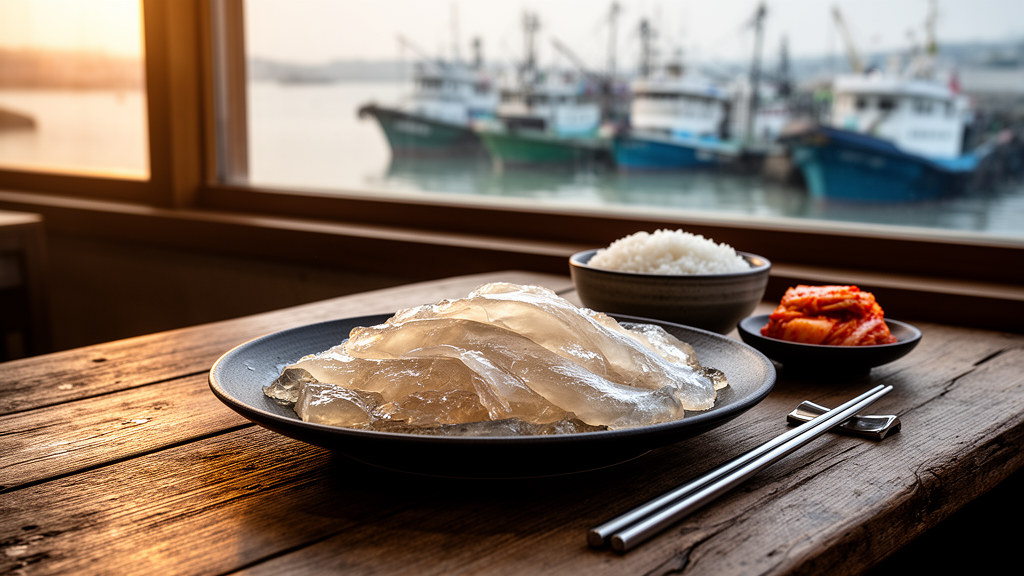
A beloved ceremonial dish from the eastern coast of South Korea carries mercury concentrations far above international safety limits, according to a new study published in Environmental Monitoring and Assessment. Doochi, a traditional specialty of the Gyeongju region made by boiling shark skin and intestine, has been served at ancestral memorial ceremonies and family gatherings for generations. But researchers led by Jeong Woo Park of Yeungnam University Hospital, along with Eun-Sook Lee and Kiook Baek of Dongguk University, found that the boiled shark skin at the heart of the dish can contain total mercury levels approaching three times the European Union limit for shark products. The findings raise questions about how an obscure regional food, now being promoted for wider commercial production, could quietly become a significant dietary source of one of the world’s most notorious neurotoxins.
Sharks sit near the top of marine food webs, a position that makes them efficient accumulators of methylmercury, the organic and most toxic form of mercury. This compound is produced by microbes in aquatic sediments from inorganic mercury and then absorbed by plankton and small organisms. As prey are eaten by predators, the methylmercury climbs each step of the food chain, a process known as biomagnification. Because methylmercury binds strongly to proteins in muscle and other tissues and is excreted very slowly, large, long-lived predatory fish can carry concentrations thousands of times higher than the surrounding seawater. Previous studies of shark populations worldwide, including a systematic review of elasmobranch pollutants published in 2020, have repeatedly documented elevated mercury burdens in shark meat, cartilage, and organs, and earlier Korean research has already linked shark meat consumption among workers in Gyeongsangbuk-do province to higher blood mercury levels.
What makes Doochi unusual as an exposure route is that it uses parts of the shark that most cuisines discard: the skin and the intestine. Local producers boil these by-products, slice them, and serve the resulting chewy, gelatin-rich dish, which has been marketed as a signature specialty of the Gampo coastal area. Efforts to scale up production were reported in Korean media as early as 2009, and the Gyeongju city government has listed Doochi among its local specialty products. In other words, a food traditionally eaten a few times a year by a small community may soon appear on far more plates, which is precisely the scenario that motivates the new risk assessment.
The research team approached the problem in two phases, separated by nearly a decade. In 2013, they purchased 32 servings of prepared Doochi from local markets, along with 32 pieces of raw shark skin sold as the dish’s ingredient, and measured total mercury in untreated fragments of the boiled skin and in the raw material. Total mercury analysis, performed according to Korean food code test methods, captures all forms of the element but does not by itself distinguish methylmercury from less harmful inorganic species. Because established regulations in Korea and the European Union are expressed as limits on total mercury for shark, and as methylmercury limits for deep-sea fish in Korea, the researchers worked with both frameworks, estimating methylmercury content using standard conversion assumptions.
The 2013 data already told a striking story. The geometric mean total mercury concentration in the boiled skin fragments was 0.349 micrograms per gram, while the raw skin measured 0.122 micrograms per gram in its outer layer and 0.137 micrograms per gram in its inner layer. More alarming than the averages, however, was the scatter. Concentrations among individual fragments of boiled skin varied by a factor of 167, and a statistical test of variance, Levene’s test, confirmed that the fragment measurements were far more dispersed than those of the raw skin, with a p-value below 0.001. The authors attribute this extreme patchiness to the nature of the dish itself: a single serving of Doochi is assembled from irregular pieces of skin, so a fragment taken from one corner of a plate might contain vastly more mercury than one taken from another.
Recognizing that analyzing small untreated fragments could either miss or exaggerate the true mercury content of a serving, the team repeated the work in 2022 with a more rigorous design. A fresh serving of Doochi was carefully separated into its skin and intestine components, each of which was fully homogenized into a uniform mixture before analysis. The homogenized samples were then measured in triplicate at an accredited laboratory to ensure the results reflected genuine contamination rather than analytical noise or sampling bias. This approach effectively answers a different and more practical question: if you ate an entire serving of Doochi, how much mercury would you actually ingest on average?
The answer was sobering. The fully homogenized boiled skin contained between 2.667 and 2.882 micrograms of total mercury per gram, a level that clearly exceeds the European Union maximum limit of 1.0 microgram per gram set for shark products. The estimated methylmercury concentration likewise surpassed the Korean limit of 1.0 microgram per gram that applies to deep-sea fish. The intestine, by contrast, contained far less mercury, at 0.295 to 0.333 micrograms per gram, suggesting that mercury is concentrated predominantly in the skin. Because the skin is the main ingredient and the signature component of the dish, its outsized contribution dominates the exposure calculation for anyone eating Doochi in the traditional way.
To translate these concentrations into health risk, the researchers compared estimated mercury intake with the United States Environmental Protection Agency reference dose for methylmercury, the daily exposure level considered likely to be without appreciable harmful effects over a lifetime. Under the traditional pattern of ceremonial consumption, the calculated hazard quotients ranged from 0.15 to 0.57 depending on the assumptions used, meaning that a typical diner eating Doochi a few times a year would remain below the threshold of concern. The intake estimates under this pattern corresponded to 7 to 25 percent of the provisional tolerable weekly intake established by the Joint FAO/WHO Expert Committee on Food Additives. However, the margins shrink rapidly as frequency increases: the hazard quotient would exceed 1, the conventional line separating acceptable from potentially harmful exposure, at somewhere between 10 and 36 servings per year depending on the assumptions, and the provisional tolerable weekly intake would be reached at between 22 and 81 servings annually.
Those numbers may sound like a generous allowance, but the authors caution that the traditional consumption frequency is precisely what may change as Doochi gains commercial traction. A dish once confined to memorial rites in a handful of coastal towns is being positioned as a regional brand, and anyone eating it weekly rather than seasonally could cross into the risk zone. The researchers also emphasize that body weight matters. The reference dose is defined per kilogram of body weight per day, so the same number of servings delivers a proportionally larger dose to lighter individuals. Children, smaller adults, and women who are pregnant or planning pregnancy are the groups for whom methylmercury is most concerning, given its well-documented developmental neurotoxicity and its ability to cross the placenta and accumulate in the fetal brain.
The study carries broader lessons beyond one Korean specialty. It demonstrates that fishery by-products, the skins, organs, and trimmings usually hidden inside processed foods, can carry contaminant burdens as heavy as or heavier than the fillets that dominate regulatory attention. It also highlights a methodological pitfall in food monitoring: analyzing untreated fragments of a heterogeneous dish can produce wildly misleading estimates in either direction, which is why the authors’ shift to full homogenization and triplicate accredited analysis in 2022 matters so much. Under the assumptions of the analysis, traditional levels of Doochi consumption remain below the methylmercury reference dose, and the researchers do not call for a ban on the dish. What they do call for is vigilance, in the form of continued monitoring as availability widens, clearer guidance for frequent consumers and vulnerable groups, and awareness that a cherished local tradition, like the shark it comes from, has been quietly collecting the ocean’s mercury all along.
Subject of Research: Mercury contamination and dietary risk assessment of a traditional Korean shark skin and intestine dish
Article Title: High mercury levels in Doochi, a local shark skin and intestine dish of the Eastern coast of Korea
Article References: Park, J. W., Lee, E.-S., & Baek, K. (2026). High mercury levels in Doochi, a local shark skin and intestine dish of the Eastern coast of Korea. Environmental Monitoring and Assessment, 198(11), Article 1222. https://doi.org/10.1007/s10661-026-16032-3
Image Credits: AI Generated
DOI: 10.1007/s10661-026-16032-3
Keywords: mercury, methylmercury, shark, Doochi, Korea, food safety, seafood contamination, biomagnification, risk assessment, dietary exposure, heavy metals, Environmental Monitoring and Assessment
Cite Scienmag News
Daisy Hatcher. (October 19, 2026). Shark Skin Delicacy Serves Up Hidden Doses of Mercury in Coastal Korea. Scienmag. https://scienmag.com/shark-skin-delicacy-serves-up-hidden-doses-of-mercury-in-coastal-korea/
Daisy Hatcher. "Shark Skin Delicacy Serves Up Hidden Doses of Mercury in Coastal Korea." Scienmag, 19 October 2026, https://scienmag.com/shark-skin-delicacy-serves-up-hidden-doses-of-mercury-in-coastal-korea/. Accessed 19 October 2026.
Daisy Hatcher. "Shark Skin Delicacy Serves Up Hidden Doses of Mercury in Coastal Korea." Scienmag. October 19, 2026. https://scienmag.com/shark-skin-delicacy-serves-up-hidden-doses-of-mercury-in-coastal-korea/


