

Tuesday, May 26, 2026
Science
No Result
View All Result
  • Login
  • HOME
  • SCIENCE NEWS
  • CONTACT US
  • HOME
  • SCIENCE NEWS
  • CONTACT US
No Result
View All Result
Scienmag
No Result
View All Result
Home Science News Chemistry

Shaping the future of polymer nanocarriers

July 11, 2024
in Chemistry
Reading Time: 2 mins read
0
Shaping the future of polymer nanocarriers
65
SHARES
594
VIEWS
Share on FacebookShare on Twitter
ADVERTISEMENT

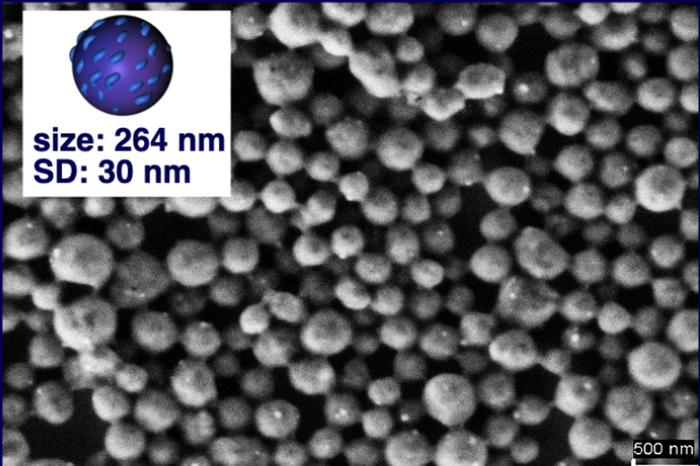
Scientists have taken a significant step towards the development of tailor-made chiral nanocarriers with controllable release properties. These nanocarriers, inspired by nature’s helical molecules like DNA and proteins, hold immense potential for targeted drug delivery and other biomedical applications.

Shaping the future of polymer nanocarriers

Credit: Félix Freire – CiQUS

Scientists have taken a significant step towards the development of tailor-made chiral nanocarriers with controllable release properties. These nanocarriers, inspired by nature’s helical molecules like DNA and proteins, hold immense potential for targeted drug delivery and other biomedical applications.

The study, led by Professors Emilio Quiñoá and Félix Freire at the Center for Research in Biological Chemistry and Molecular Materials (CiQUS), highlights the intricate relationship between the structure of helical polymers and their self-assembly into nanospheres. By carefully designing the secondary chain, the researchers were able to modulate the acidity of the polymers, influencing their aggregation patterns and leading to the formation of nanoespheres with varying densities. Intriguingly, the size of these nanoespheres could be precisely controlled by simply adjusting the water-to-solvent ratio during their preparation, eliminating the need for stabilizers. This eco-friendly approach paves the way for sustainable synthesis of these particles.

The researchers further demonstrated the remarkable ability to control the release of encapsulated substances within these nanoespheres using light. A photochemical reaction triggered the degradation of the polymers, releasing their cargo – in this case, tiny metallic and fluorescent particles. The chirality and folding of the helix played a crucial role in this process. Stretched helices exhibited slower photodegradation compared to their more compact counterparts. This opens up exciting possibilities for gradual release of encapsulated substances, a highly desirable feature for controlled drug delivery.

The findings, published in the renowned journal Angewandte Chemie, represent a significant advancement in understanding the governing parameters of helical polymer behavior. By manipulating these parameters, the researchers envision a broad spectrum of applications for these versatile compounds, spanning the fields of biology and materials science. This breakthrough paves the way for the development of next-generation nanocarriers with enhanced control over their properties and functions, offering promising avenues for targeted drug delivery, bioimaging, and nanomaterial design.


Journal

Angewandte Chemie

DOI

10.1002/anie.202403313

Article Title

Size Control of Chiral Nanospheres Obtained via Nanoprecipitation of Helical Poly(phenylacetylene)s in the Absence of Surfactants

Article Publication Date

14-May-2024

Share26Tweet16
Previous Post

Movement sensors show promise in identifying horses at injury risk

Next Post

Understanding the origin of superconductivity in high-temperature copper oxide superconductors

Related Posts

Lanthanide Nanocrystals Unlock Room-Temperature Organic Phosphorescence — Chemistry
Chemistry

Lanthanide Nanocrystals Unlock Room-Temperature Organic Phosphorescence

May 25, 2026
Study Reveals How Valproate Affects Early Brain Development: Insights into the Antiepileptic Drug’s Impact — Chemistry
Chemistry

Study Reveals How Valproate Affects Early Brain Development: Insights into the Antiepileptic Drug’s Impact

May 22, 2026
Sustainable Chemistry: Iron Replaces Noble Metals in Catalytic Reactions — Chemistry
Chemistry

Sustainable Chemistry: Iron Replaces Noble Metals in Catalytic Reactions

May 22, 2026
Simple Adjustment in 3D Printing Enhances Fit of Dental Crowns — Chemistry
Chemistry

Simple Adjustment in 3D Printing Enhances Fit of Dental Crowns

May 22, 2026
Advancing Thin-Film Device Manufacturing with Imaging Ellipsometry for Enhanced Process Control — Chemistry
Chemistry

Advancing Thin-Film Device Manufacturing with Imaging Ellipsometry for Enhanced Process Control

May 22, 2026
Tropical Primary Forest Plants Boost Root Exudation to Cope with Prolonged High Nitrogen Deposition — Chemistry
Chemistry

Tropical Primary Forest Plants Boost Root Exudation to Cope with Prolonged High Nitrogen Deposition

May 22, 2026
Next Post
Long-range charge density wave (CDW) order induced by strain in optimally doped Bi2Sr2-xLaxCuO6+δ superconductor

Understanding the origin of superconductivity in high-temperature copper oxide superconductors

  • Mothers who receive childcare support from maternal grandparents show more parental warmth, finds NTU Singapore study

    Mothers who receive childcare support from maternal grandparents show more parental warmth, finds NTU Singapore study

    27649 shares
    Share 11056 Tweet 6910
  • University of Seville Breaks 120-Year-Old Mystery, Revises a Key Einstein Concept

    1052 shares
    Share 421 Tweet 263
  • Bee body mass, pathogens and local climate influence heat tolerance

    680 shares
    Share 272 Tweet 170
  • Researchers record first-ever images and data of a shark experiencing a boat strike

    543 shares
    Share 217 Tweet 136
  • Groundbreaking Clinical Trial Reveals Lubiprostone Enhances Kidney Function

    529 shares
    Share 212 Tweet 132
Science

Embark on a thrilling journey of discovery with Scienmag.com—your ultimate source for cutting-edge breakthroughs. Immerse yourself in a world where curiosity knows no limits and tomorrow’s possibilities become today’s reality!

RECENT NEWS

  • Quality of Life Predictors in Zoroastrian Elders
  • Corrosion-Blast Impact on Buried Cast Iron Damage
  • Advances and Strategies in Antibody-Oligonucleotide Conjugates
  • Cuproptosis Disrupts Mitochondria, Arrests Oocyte Meiosis

Categories

  • Agriculture
  • Anthropology
  • Archaeology
  • Athmospheric
  • Biology
  • Biotechnology
  • Blog
  • Bussines
  • Cancer
  • Chemistry
  • Climate
  • Earth Science
  • Editorial Policy
  • Marine
  • Mathematics
  • Medicine
  • Pediatry
  • Policy
  • Psychology & Psychiatry
  • Science Education
  • Social Science
  • Space
  • Technology and Engineering

Subscribe to Blog via Email

Success! An email was just sent to confirm your subscription. Please find the email now and click 'Confirm Follow' to start subscribing.

Join 5,146 other subscribers

© 2025 Scienmag - Science Magazine

Welcome Back!

Login to your account below

Forgotten Password?

Retrieve your password

Please enter your username or email address to reset your password.

Log In
No Result
View All Result
  • HOME
  • SCIENCE NEWS
  • CONTACT US

© 2025 Scienmag - Science Magazine
