


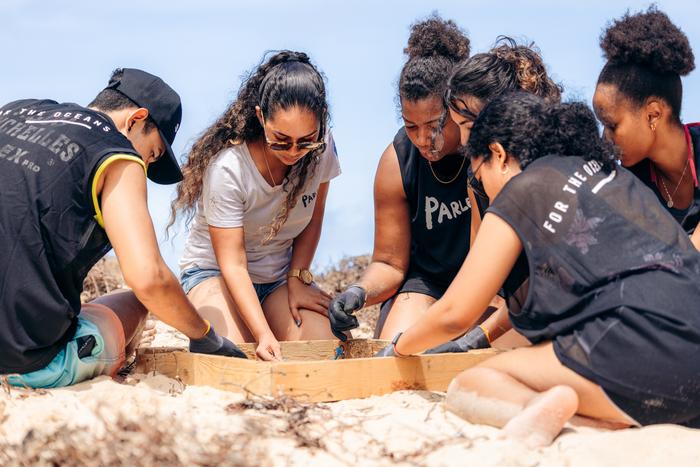
Volunteer clean-ups have resulted in almost nine tonnes of marine litter being cleared from beaches across the Seychelles, in what researchers have described as a powerful demonstration of the potential of citizen science.

Credit: Italian boy Seychelles Photography/Parley for the Oceans
Volunteer clean-ups have resulted in almost nine tonnes of marine litter being cleared from beaches across the Seychelles, in what researchers have described as a powerful demonstration of the potential of citizen science.
More than 1,220 volunteers were recruited to clear 52 beaches on ten islands at various points between June 2019 and the end of July 2023. In that time, they surveyed around 930,000m2 of beaches, with volunteers picking up items ranging from foam and rubber to metals and plastics.
In total, the clean-ups resulted in the retrieval of 6,135kg of non-plastic debris and 2,835kg of plastic, such as food packaging, plastic bottles and more weathered items that had originated offshore.
In some locations, the volunteers recorded much of the debris as having been generated locally but in others, up to 75% of the items were found to have been transported from elsewhere.
The findings have been detailed in a study published in Marine Pollution Bulletin, led by the University of Plymouth and the environmental organisation, Parley for the Oceans.
They say it demonstrates some of the challenges facing island communities when it comes to managing waste, but also the role local people can play in helping to address the problem.
Alvania Lawen, a BSc Environmental Management and Sustainability student at the University and Seychelles country manager for Parley for the Oceans, is the study’s lead author.
She said: “This study, and the years of work that led to it, highlight the potential of citizen science and the positive impacts it can have. As an islander myself, I know how people living in the Seychelles rely on the ocean for every part of their lives. But because we are a collection of remote islands, there are challenges in managing waste and we also have to deal with large quantities of items coming from elsewhere. Initiatives such as the beach clean-ups give people the opportunity to be part of the solution, and to tell their own stories about how they are being impacted by environmental issues.”
The Seychelles, at the heart of the Indian Ocean, consists of more than 115 islands with a combined population of about 100,000 people, numbers swelled each year by a considerable influx of tourists to the region.
Waste material is also transported onto the islands’ beaches by ocean currents and is then trapped by vegetation, which is where much of the waste highlighted in the current study was found.
This research is the latest by the University of Plymouth to examine the global threat posed by plastic pollution, but also some of the solutions being developed to address it.
In 2019, it was awarded a Queen’s Anniversary Prize in recognition of its pioneering research on microplastics pollution in the ocean and its impact on the environment and changing behaviour.
Dr Andrew Turner, Associate Professor in Environmental Sciences and the study’s corresponding author, added: “As is often the case with environmental pollution, this is a clear example of waste generated in one place having significant impacts elsewhere. The quantity of litter collected during the beach cleans is astounding, and a testament to the efforts of citizen scientists living and working in the Seychelles. However with climate change anticipated to increase the quantity and severity of storm surges, and plastic and other waste being generated in increasing quantities, items will continue to wash up on the beaches unless other, highly populated and industrialised Indian Ocean nations engage in more sustainable waste management.”
Journal
Marine Pollution Bulletin
Method of Research
Experimental study
Subject of Research
Not applicable
Article Title
Beached plastic and other anthropogenic debris in the inner Seychelles islands: Results of a citizen science approach
Article Publication Date
16-Mar-2024
Cite Scienmag News
Courtney Benton. (April 17, 2024). Seychelles beach cleans demonstrate potential for citizen science to tackle marine litter. Scienmag. https://scienmag.com/seychelles-beach-cleans-demonstrate-potential-for-citizen-science-to-tackle-marine-litter/
Courtney Benton. "Seychelles beach cleans demonstrate potential for citizen science to tackle marine litter." Scienmag, 17 April 2024, https://scienmag.com/seychelles-beach-cleans-demonstrate-potential-for-citizen-science-to-tackle-marine-litter/. Accessed 4 September 2026.
Courtney Benton. "Seychelles beach cleans demonstrate potential for citizen science to tackle marine litter." Scienmag. April 17, 2024. https://scienmag.com/seychelles-beach-cleans-demonstrate-potential-for-citizen-science-to-tackle-marine-litter/

